
Introduction

Getting visitors from search engines starts with knowing what people are actually looking for. A website may contain useful information, but without understanding the searches connected to that information, it can be difficult to reach the right audience.
Keyword research helps solve this problem. It gives website owners an idea of the words, questions, and phrases people enter into search engines. These findings can then be used to plan blog posts, service pages, product descriptions, landing pages, and other website content.
This Keyword Research Guide explains a practical way to discover keywords, examine them, understand user intent, and select terms that fit your website.
What Is Keyword Research?
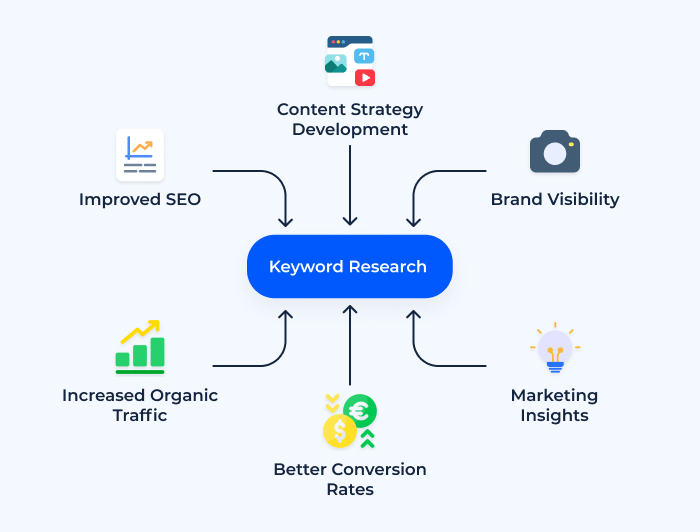
Keyword research is the process of discovering the words and phrases users enter into search engines to find information, products, services, or answers online.
Suppose someone owns a website about digital marketing. Instead of targeting only the broad term “digital marketing,” they can explore more specific searches such as:
- digital marketing course
- digital marketing for small businesses
- social media marketing tips
- SEO basics for beginners
- online marketing strategies
Each search represents a possible topic or content opportunity.
The goal is not to create a long list of unrelated search terms. The real objective is to discover searches that are relevant to your audience and useful for your website.
Why Keyword Research Matters
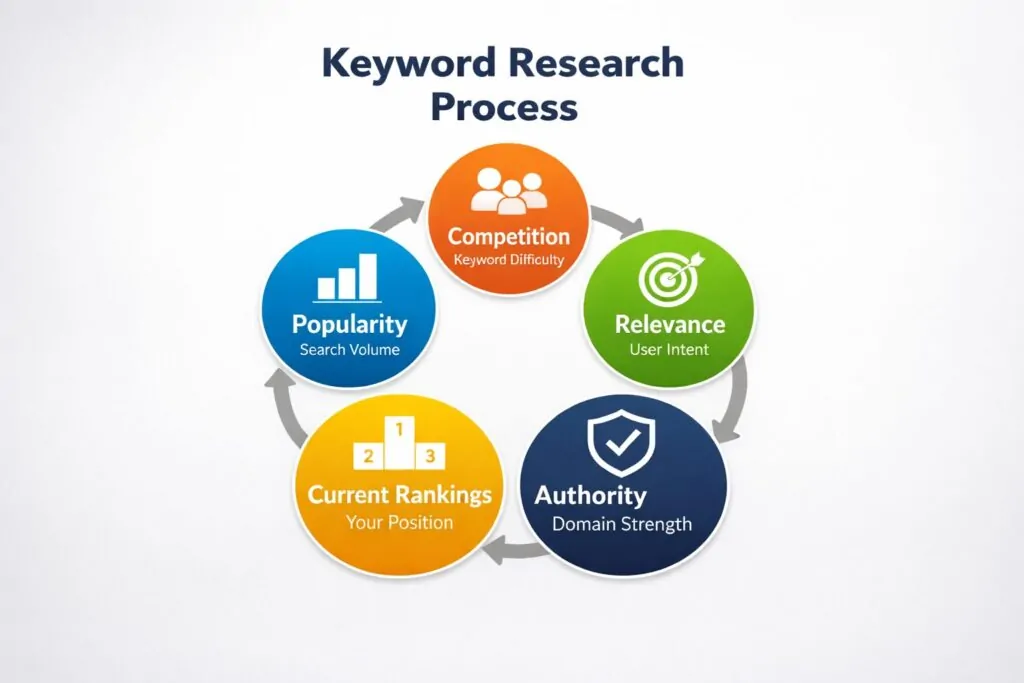
Keyword research can influence almost every part of an SEO campaign.It guides you in selecting valuable topics and determining which information to include in your content.
For example, if people frequently search for “how to learn SEO,” an educational article may be appropriate. If users search for “SEO course near me,” they may be looking for a training provider instead.
This difference is important because successful SEO is not only about including words on a page.Your content should directly address what the user is trying to find through their search.
Start With Your Main Topic
The easiest way to begin keyword research is to choose a broad topic connected to your website.
Imagine that your website provides IT training. Your initial topics could include:
- Web development
- SEO
- Digital marketing
- Graphic design
- Freelancing
- WordPress
- Application development
These broad subjects are sometimes called seed topics.These topics serve as a foundation for finding more focused and relevant keyword variations.
Write down several subjects before opening a keyword research tool. This simple step can keep your research focused.
Find Related Keyword Ideas

After selecting your core topics, turn them into more specific and targeted search queries.
For example, the topic SEO could generate ideas such as:
- SEO course for beginners
- SEO training
- SEO classes
- SEO learning guide
- how to learn SEO
- SEO training online
More keyword opportunities can be discovered through Google’s suggestions, related queries, common user questions, and dedicated SEO research tools.
Do not immediately select every suggestion. First collect the ideas, then analyze them.
Check Search Volume

Search volume represents the estimated number of searches a keyword receives within a particular period.
This helps determine whether people are actively searching for a particular topic. However, search volume should not be the only factor used when selecting a keyword.
A keyword with a large search volume may attract many competing websites. A more specific phrase with fewer searches may bring visitors who have a clearer purpose.
For this reason, compare search volume with relevance, competition, and search intent before making a decision.
Examine Keyword Difficulty
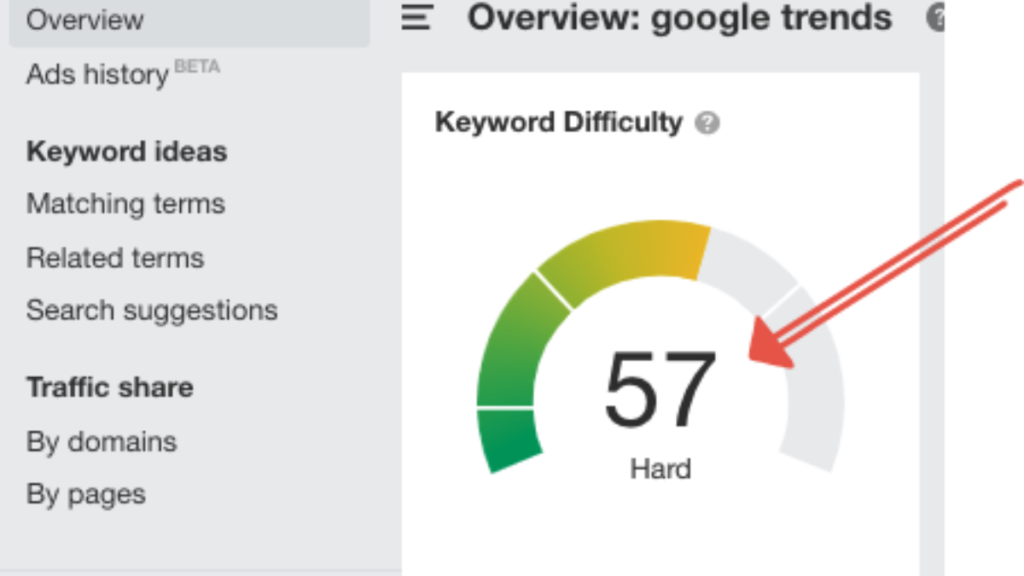
Keyword difficulty is an SEO metric that indicates how much competition a search term has and how difficult it may be to rank for it in search engine results.
Highly competitive keywords can have many established websites targeting them. New websites may therefore need a more focused approach.
When researching keywords, beginners can look for terms where the competition appears manageable. However, the number shown by an SEO tool should be treated as an estimate rather than an absolute ranking rule.
The actual results can depend on website authority, content quality, backlinks, relevance, and many other factors.
Understand Search Intent

Search intent describes the purpose behind a user’s search and what they expect to find or achieve through it.
Consider these examples:
“What is keyword research?”
The person probably wants an explanation.
“Best keyword research tools”
The user might be evaluating and comparing several tools before making a choice.
“Buy SEO software”
The person appears to have a purchasing purpose.
These searches have different goals. Creating the same type of page for all of them would not necessarily satisfy users.
Before creating content, search the keyword and examine the pages appearing in Google.This can help reveal what kind of information users are looking for.
Explore Long-Tail Keywords

Long-tail keywords are specific search phrases made up of multiple words and often target a particular topic or need.
For example:
Broad: keyword research
More specific: keyword research for beginners
More specific: how to conduct keyword research for a newly launched website
Using specific search terms can help you develop more targeted and relevant content.
They may also reveal questions that are easier to address with a dedicated article.
Long-tail research is particularly useful when building a new website because it allows you to discover narrower topics rather than competing only for extremely broad terms.
Study the SERP

SERP means Search Engine Results Page.It is the results page that appears after a user enters a query into a search engine.
Studying the SERP can reveal useful information about a keyword.
Check:
- What type of pages appear
- How the results are structured
- Whether guides or product pages dominate
- What questions appear
- Which subjects are repeatedly discussed
- Whether local results are displayed
This research helps you understand the environment surrounding a keyword before producing content.
Organize Your Keywords
After collecting keywords, place them into a spreadsheet. A simple structure could contain:
| Keyword | Volume | Intent | KD | Topic |
| SEO course | — | Commercial | — | SEO |
| SEO for beginners | — | Informational | — | SEO |
| digital marketing course | — | Commercial | — | Digital Marketing |
The actual numbers should come from your selected SEO tool.
Organizing your research prevents confusion and makes it easier to decide which keyword belongs to which page.
Avoid Targeting the Same Keyword Everywhere
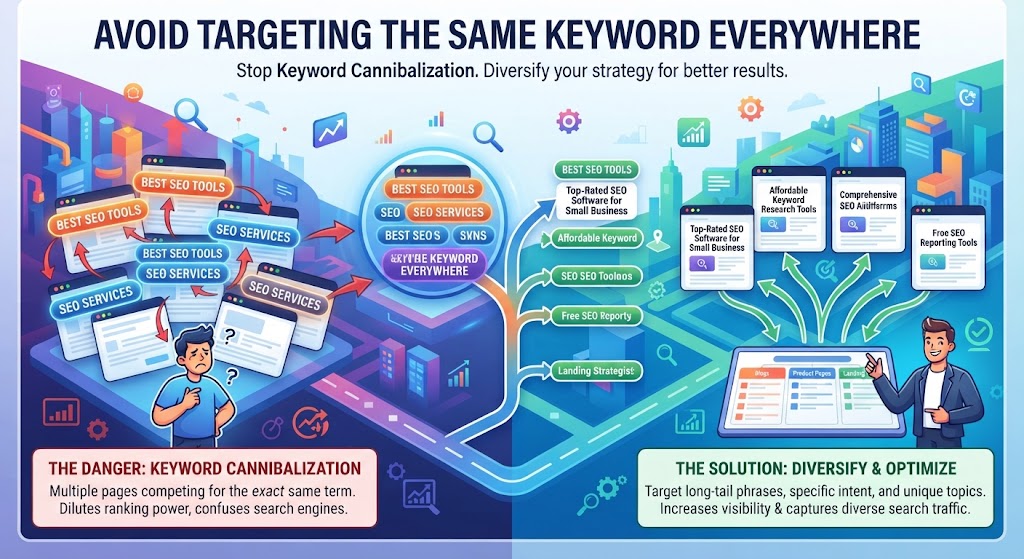
One common mistake is creating several pages that are almost identical in purpose.
For example, if three articles are all trying to rank for the same search and provide nearly the same information, they may compete with each other.
Instead, assign a clear primary topic to each page. Related phrases can then be covered naturally within the appropriate content.
This approach creates a more organized website structure.
Use Keywords Naturally

After selecting your target terms, use them where they genuinely make sense.
A keyword can appear in places such as:
- Page title
- Main heading
- Introduction
- Relevant subheadings
- Body content
- URL when appropriate
- Image alt text when descriptive
Avoid repeating a phrase simply to increase its frequency. Content should remain natural and easy to read.
Build a Keyword-Based Content Plan

Keyword research becomes much more useful when it turns into an actual publishing plan.
You can create separate content categories based on your research. For example, an SEO website could have articles about keyword research, technical SEO, on-page optimization, link building, and search intent.
Each article can target a specific topic while internally linking to other related pages.
Over time, this creates a connected collection of useful resources instead of unrelated articles.
Common Keyword Research Mistakes

Several mistakes can reduce the value of keyword research.
One mistake is selecting keywords only because their search volume looks high. Another is ignoring search intent. Some people also copy keywords from competitors without checking whether those terms are relevant to their own audience.
Using outdated metrics without reviewing current search results can also lead to poor decisions.
The better approach is to combine keyword data with actual SERP observation and a clear understanding of your audience.
Final Thoughts

Keyword research provides the foundation for a focused SEO content strategy. It helps you discover what people search for, understand their purpose, examine competition, and organize topics before creating pages.
A strong Keyword Research Guide should not be about collecting the biggest possible list of keywords. Instead, research should help you identify relevant opportunities that match your website and audience.
Start with broad topics, expand them into specific phrases, check important metrics, study search intent, review the SERP, and organize the results. With consistent research and useful content, your keyword strategy can become much more structured and effective.
FAQs
1. What is keyword research?
Keyword research is the process of finding and analyzing search phrases that people use when looking for information, products, or services online.
2. Why is keyword research important?
It helps you discover topics with search demand and understand what your audience wants to find.
3. What is search intent?
Search intent describes the reason behind a user’s search, such as learning something, comparing options, finding a website, or making a purchase.
4. What are long-tail keywords?
Long-tail keywords are more specific search phrases that usually contain multiple words and describe a narrower topic.
5. Should beginners focus on low-difficulty keywords?
Keyword difficulty can be one useful factor, especially for newer websites, but relevance, intent, content quality, and the actual search results should also be considered.
6. Which tools can be used for keyword research?
Google Keyword Planner, Semrush, Ahrefs, and other SEO platforms can provide keyword ideas and metrics. Different tools may report different estimates.
7. How many keywords should one article target?
There is no universal number. It is generally more useful to focus an article on one main topic and naturally cover closely related searches where they add value.