
Keyword research is the foundation of every successful SEO campaign. Whether you run a personal blog, an eCommerce store, a business website, or a YouTube channel, choosing the right keywords helps your content reach the right audience. Instead of guessing what people search for, keyword research tools provide valuable insights into search volume, competition, and user intent. The good news is that you do not always need an expensive subscription to perform effective keyword research. Several free tools offer powerful features that help beginners and professionals create smarter SEO strategies.
This guide explains six of the best free keyword research tools, their features, advantages, limitations, and the situations where each tool performs best.
Why Keyword Research Matters
Every search begins with a keyword. When users type a question into Google, they expect useful answers that match their search intent. If your content targets the wrong keywords, even a well-written article may struggle to attract visitors.
Good keyword research helps you:
- Find topics your audience is searching for.
- Understand search intent before writing content.
- Discover low-competition keyword opportunities.
- Increase organic traffic.
- Improve search engine rankings.
- Create content that answers real user questions.
Choosing the right keyword is the first step toward building content that delivers long-term SEO results.
1. Google Keyword Planner
Google Keyword Planner is one of the most trusted free keyword research tools because the data comes directly from Google Ads. Originally built to support online advertisers, the platform is now widely used by content creators and SEO specialists for keyword discovery.
The tool allows users to enter a topic, product, or website URL and receive hundreds of related keyword suggestions. It also provides estimated search volume, competition level, and keyword trends.
Key Features
- Keyword suggestions based on Google data.
- Monthly search volume estimates.
- Competition analysis.
- Location and language targeting.
- Related keyword ideas.
Best For
Google Keyword Planner is ideal for bloggers, marketers, businesses, and website owners who want reliable keyword data directly from Google.
Advantages
- Completely free with a Google account.
- Reliable keyword information.
- Excellent for local and global SEO.
- Easy to export keyword lists.
Limitations
Exact search volume is sometimes shown as a range unless an active Google Ads campaign is running.
2. Google Trends

Google Trends focuses on keyword popularity instead of search volume. It helps users understand whether a topic is becoming more popular or losing interest over time.
This tool is especially useful for identifying seasonal topics, trending searches, and comparing multiple keywords before creating content.
For example, if you are deciding between two article topics, Google Trends can quickly show which keyword currently attracts more interest.
Key Features
- Trend analysis over time.
- Country-specific data.
- Real-time search trends.
- Keyword comparison.
- Seasonal search insights.
Best For
Content creators, bloggers, news websites, affiliate marketers, and businesses looking to publish timely content.
Advantages
- Completely free.
- Excellent for trend analysis.
- Helps discover seasonal opportunities.
- Easy-to-read graphs.
Limitations
Google Trends does not provide exact monthly search volume.
3. Ahrefs Free Keyword Generator
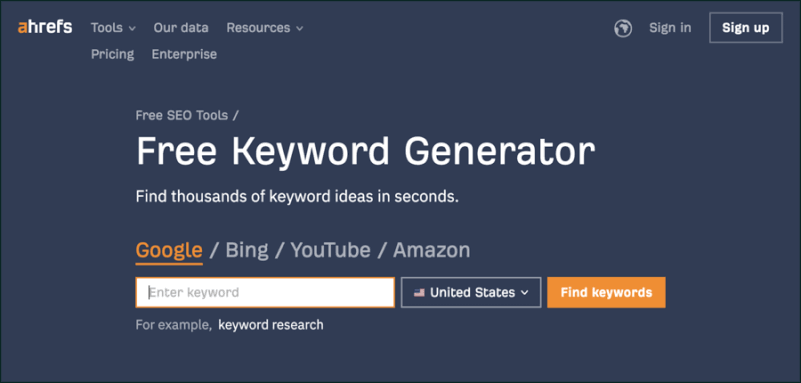
Ahrefs is a well-known SEO platform, and its Free Keyword Generator offers valuable insights without requiring a paid subscription.
Users simply enter a keyword and choose a search engine to receive related keyword ideas, keyword difficulty estimates, and frequently searched questions.
This tool is particularly useful for finding long-tail keywords that are easier to rank for than broad, highly competitive terms.
Key Features
- Keyword ideas.
- Long-tail keyword suggestions.
- Question-based searches.
- Keyword difficulty score.
- Country selection.
Best For
SEO beginners, bloggers, niche website owners, and content marketers looking for fresh keyword ideas.
Advantages
- Easy to use.
- Provides useful SEO metrics.
- Excellent long-tail keyword suggestions.
- Supports multiple countries.
Limitations
The free version provides limited results compared to the premium subscription.
4. Ubersuggest
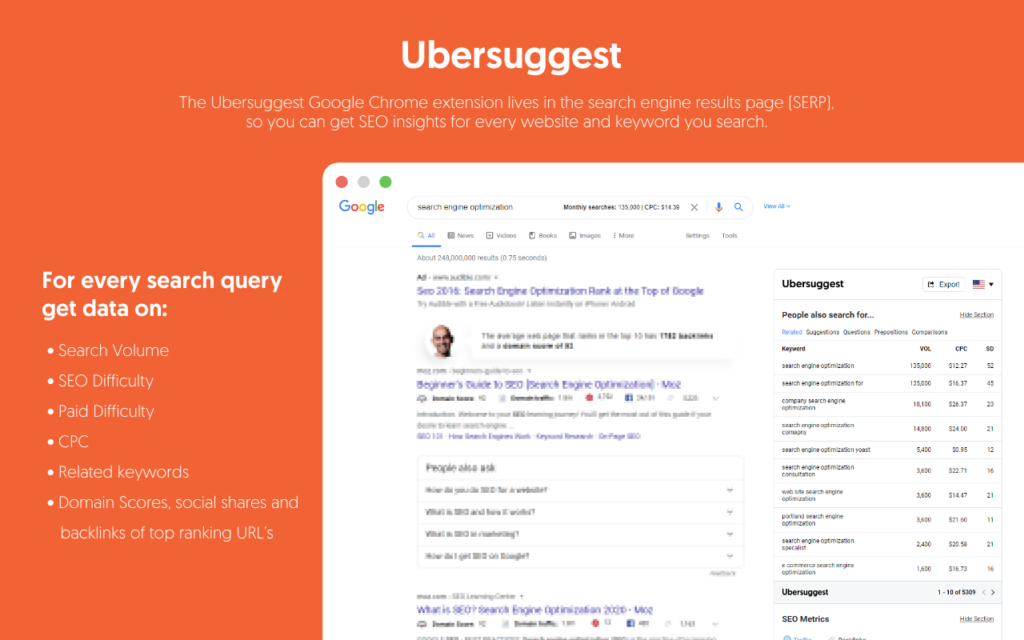
Ubersuggest offers a mix of keyword discovery and SEO insights through a simple interface, making it a practical option for users who are new to search engine optimization. Developed by Neil Patel, the tool helps users discover keyword ideas, search volume, SEO difficulty, paid difficulty, and content suggestions in one place.
It also allows users to analyze competitor domains, making it easier to understand which keywords drive traffic to other websites. This feature is especial valua for creating a stronge content strategy and identify keyword opportunities that competitor are already target.
Key Features
- Keyword suggestions
- Search volume data
- SEO difficulty score
- Competitor keyword analysis
- Content ideas
Best For
Bloggers, website owners, freelancers, and digital marketers who want an all-in-one SEO research tool without spending money.
Advantages
- Beginner-friendly interface
- Multiple SEO features in one dashboard
- Useful competitor insights
- Helpful content suggestions
Limitations
The free version limits the number of daily searches, so heavy users may eventually need a paid plan.
5. Keyword Surfer

Keyword Surfer is a free Chrome extension that makes keyword research simple and fast. Instead of opening a separate website, it displays keyword data directly on Google search results. This allows users to check keyword ideas while searching online, saving both time and effort.
The extension provides estimated monthly search volume, keyword suggestions, similar search terms, and basic traffic insights. It is especially helpful when you are researching blog topics or planning SEO content because the information appears instantly as you browse.
Key Features
- Displays keyword search volume in Google Search
- Related keyword suggestions
- Estimated website traffic
- Content word count suggestions
- Easy Chrome extension
Best For
Keyword Surfer is a great choice for bloggers, freelance writers, affiliate marketers, SEO beginners, and website owners who want quick keyword insights without leaving Google’s search page.
Advantages
- Completely free to use
- Easy installation and setup
- Saves research time
- Provides keyword ideas while browsing
Limitations
It offers fewer advanced SEO features than premium keyword research platforms.
6. AnswerThePublic

AnswerThePublic is one of the most useful tools for discovering the questions people ask online. Instead of showing only keyword ideas, it organizes search queries into categories such as “What,” “Why,” “How,” “When,” and “Where.” This makes it easier to create content that directly answers user questions.
If your goal is to write informative blog posts or improve your chances of appearing in featured snippets, AnswerThePublic can provide excellent content ideas based on real search behavior.
Key Features
- Question-based keyword ideas
- Long-tail keyword suggestions
- Visual keyword reports
- Search intent discovery
- Content inspiration
Best For
Bloggers, content creators, SEO specialists, educators, and businesses looking to answer customer questions through valuable content.
Advantages
- Excellent for blog topic research
- Helps understand search intent
- Encourages content planning
- Beginner-friendly interface
Limitations
The free version has a limited number of daily searches.
How to Choose the Right Keyword Research Tool
Every keyword research tool serves a different purpose, so selecting the right one depends on your goals. Before making a choice, consider what type of information you need and how you plan to use it.
If you want reliable search volume data, Google Keyword Planner is an excellent starting point. For identifying trending topics, Google Trends provides valuable insights into changing search behavior. Ahrefs Free Keyword Generator works well for discovering long-tail keywords with lower competition, while Ubersuggest combines keyword research with competitor analysis.
Keyword Surfer is ideal if you prefer researching directly in Google Search, and AnswerThePublic is perfect for finding question-based keywords that match real user intent.
Choosing the right tool becomes easier when you understand your content goals and the audience you want to reach.
Tips for Better Keyword Research
Finding keywords is only the first step. Using them effectively is what improves SEO performance.
Keep these best practices in mind:
- Focus on keywords that match user intent.
- Include long-tail keywords whenever possible.
- Avoid stuffing keywords into your content.
- Analyze competitor keywords for new opportunities.
- Update your keyword research regularly.
- Use keywords naturally in titles, headings, and body content.
- Create content that genuinely solves readers’ problems.
- Track keyword performance using Google Search Console.
Following these practices helps improve both search rankings and the overall user experience.
Final Thoughts
Keyword research is one of the most important parts of any successful SEO strategy. The right keywords help search engines understand your content while making it easier for users to find the information they need.
The six tools covered in this guide each offer unique strengths. Google Keyword Planner provides dependable keyword data, Google Trends highlights emerging topics, Ahrefs Free Keyword Generator uncovers valuable keyword ideas, Ubersuggest combines research with SEO analysis, Keyword Surfer simplifies on-page keyword discovery, and AnswerThePublic helps you understand the questions your audience is asking.
Instead of relying on a single platform, consider using several of these free tools together. Combining different sources of keyword data gives you a broader understanding of search behavior and helps you create content that is both relevant and competitive. With consistent research and high-quality content, these free tools can support long-term growth for blogs, business websites, online stores, and digital marketing projects.
Frequently Asked Questions
1. Which free keyword research tool is the most accurate?
Google Keyword Planner is widely trusted because its keyword data comes directly from Google, making it a reliable option for estimating search demand.
2. Can free keyword research tools improve SEO performance?
Yes. Free tools help you identify relevant keywords, understand search trends, and create content that better matches what people are searching for.
3. Are long-tail keywords better than short keywords?
Long-tail keywords often have lower competition and clearer search intent, making them easier to rank for and more likely to attract targeted visitors.
4. Should I use more than one keyword research tool?
Yes. Using multiple tools allows you to compare keyword ideas, verify trends, and discover opportunities that a single platform might miss.
5. How often should I perform keyword research?
Reviewing your keyword strategy every few months or before publishing new content helps you stay aligned with changing search trends and audience interests.