

Search engine optimization is changing as artificial intelligence becomes part of the way people discover information, compare products, and make decisions online. Businesses no longer need to depend entirely on manual keyword research, spreadsheet analysis, and time-consuming content reviews. Modern AI tools for SEO can help marketers identify search opportunities, understand user intent, improve existing pages, detect technical problems, and organize content more efficiently.
However, using AI does not automatically make a website successful. A tool can generate hundreds of keywords or draft an entire article in minutes, but those results are only valuable when they meet genuine user needs. Effective optimization still requires accurate information, a clear content strategy, a technically accessible website, and a strong understanding of the target audience.
This guide explains how AI-powered SEO software works, which tools are worth considering, how to use them in practical workflows, and how to prepare content for traditional search engines and AI-powered answers. It also explores Answer Engine Optimization (AEO) and Generative Engine Optimization (GEO), helping businesses build a more sustainable search visibility strategy.
The goal is simple: use AI to make SEO research and execution more efficient without sacrificing originality, credibility, or the human value that makes content worth reading.
What Are AI Tools for SEO and How Do They Work?
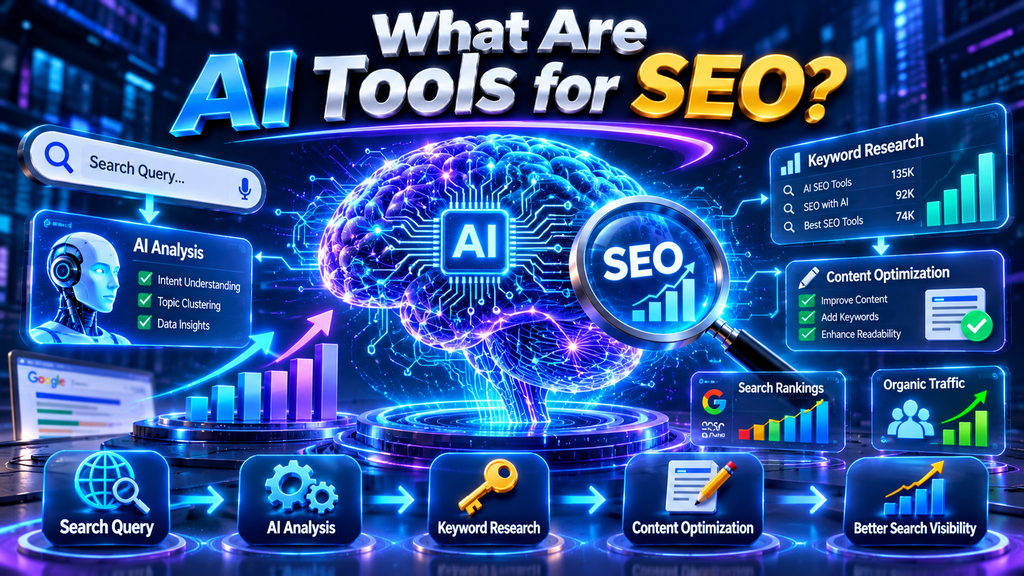
AI tools for SEO are software applications that use artificial intelligence, machine learning, natural language processing, or automated data analysis to support search optimization tasks. Depending on the platform, they can analyze search queries, identify topic relationships, evaluate website pages, suggest content improvements, summarize performance data, and assist with technical audits.
Traditional SEO often involves gathering information from multiple sources and reviewing it manually. AI-assisted workflows can speed up parts of this process by grouping keywords according to intent, highlighting missing subtopics, summarizing large datasets, and producing recommendations that marketers can evaluate.
For example, an online store selling running shoes might use an AI tool to discover that its audience searches for lightweight running shoes, shoes for beginners, and footwear suitable for long-distance training. Instead of creating one generic product article, the business can develop focused pages that address these distinct needs.
AI tools generally perform several core functions:
- Research: Discover relevant keywords, questions, entities, and content opportunities.
- Analysis: Identify patterns in rankings, competitors, and website performance.
- Optimization: Recommend improvements to titles, headings, internal links, and content coverage.
- Automation: Reduce repetitive tasks such as reporting, classification, and routine content checks.
- Content assistance: Help create outlines, revise drafts, and improve clarity.
The most important distinction is that AI provides assistance rather than guaranteed results. Recommendations must be checked against reliable data, business priorities, and the actual needs of readers.
Best AI Tools for SEO and Their Main Uses
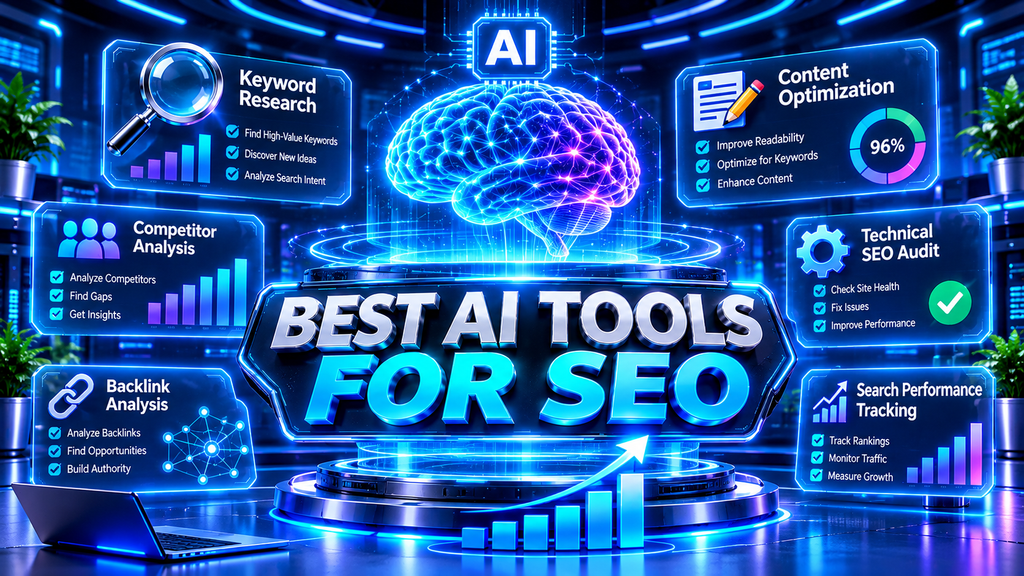
Different tools solve different problems, so selecting software should begin with a clearly defined SEO objective rather than a long list of features. Some platforms specialize in keyword research, others focus on content optimization, and some provide technical analysis or performance monitoring.
Semrush
Useful for keyword research, competitor analysis, site audits, and tracking search visibility. AI-assisted features can support content planning and marketing workflows. It is particularly useful for teams managing several SEO activities in one platform.
Best for: Broad SEO research and campaign management.
Best AI Tools for Content Writing Top 10 Picks and Uses
Ahrefs
Helps researchers examine keywords, competing pages, backlinks, and content opportunities. Its data can support decisions about which topics to target and which pages deserve further investigation.
Best for: Competitive research and link analysis.
Google Search Console
Provides first-party information about search impressions, clicks, queries, indexing, and eligible search appearance data. It is essential for validating whether SEO changes correspond with measurable search performance.
Best for: Monitoring actual Google Search performance.
Surfer
Supports content planning and on-page optimization through topic analysis and recommendations. Writers can use it to identify gaps in a draft, then apply editorial judgment instead of blindly following every suggestion.
Best for: Content briefs and on-page optimization.
Screaming Frog SEO Spider
Crawls websites to help identify issues such as broken links, duplicate page titles, missing metadata, redirects, and other technical problems. AI can complement the analysis, but the crawler’s findings should be interpreted carefully.
Best for: Technical SEO investigations.
ChatGPT
Can assist with keyword clustering, search intent analysis, outlines, title variations, FAQ drafting, content editing, and spreadsheet interpretation. Results should be verified, especially when they contain search volumes, rankings, or technical claims.
Best for: Flexible SEO research and editorial assistance.
No single platform is best for every website. A small blog may need a writing assistant and Search Console, while a large ecommerce website may require crawling software, competitive research tools, and more detailed reporting. Compare the actual features, pricing, data access, and limitations before committing to a paid subscription.
How AI Improves Keyword Research and Search Intent
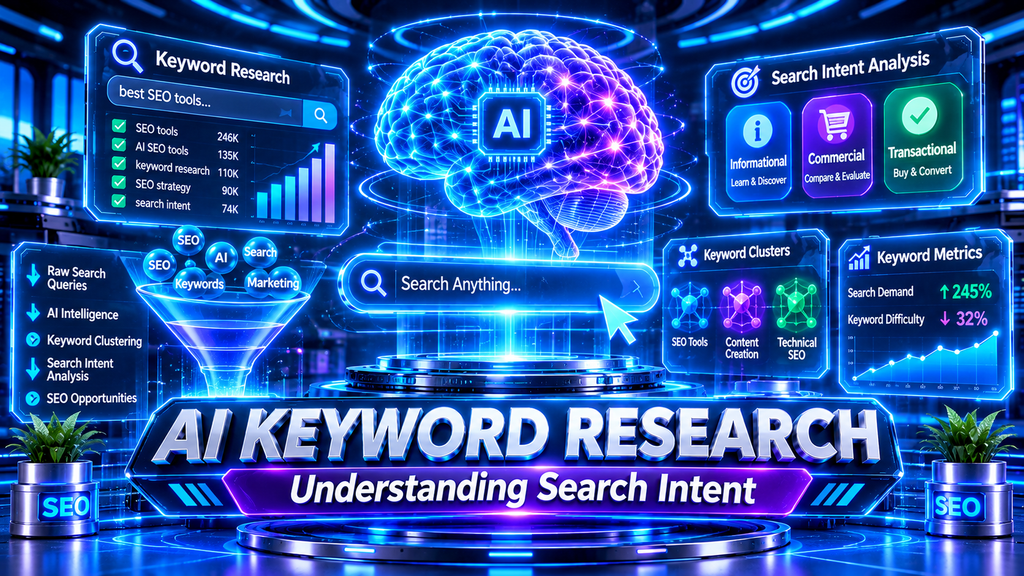
Keyword research is not simply about finding phrases with high search volume. Successful keyword selection considers relevance, competition, intent, business value, and the type of information a searcher expects to find.
AI can help organize large keyword lists into meaningful groups. For example, a travel website researching the topic of family holidays might uncover informational searches about planning a trip, commercial searches comparing destinations, and transactional searches involving bookings. Each group requires a different content approach.
A practical AI-assisted keyword research workflow begins with a core topic. Gather candidate keywords from a dedicated research platform, Google Search Console, customer questions, sales conversations, and relevant search suggestions. Next, use AI to classify the keywords according to intent and related themes.
For example, the phrase “best budget laptops for students” suggests comparison and purchase research, whereas “how much RAM does a student need” indicates a more informational need. Combining both phrases into one poorly organized page may leave readers without a satisfying answer.
AI can also help identify long-tail opportunities, which are specific searches that may have a smaller audience but clearer intent. A local service provider might target a precise service and location rather than competing immediately for a broad term such as “plumber.”
Before choosing a keyword, check the real search results and available data. An AI-generated keyword list does not prove that people search for every suggested phrase. Search volume, keyword difficulty, and estimated traffic are tool-specific metrics rather than guarantees.
Finally, assign each important topic to an appropriate page. This helps reduce unnecessary duplication and makes the site’s content architecture easier for readers and search engines to understand.
AI Content Optimization for SEO, AEO, and GEO
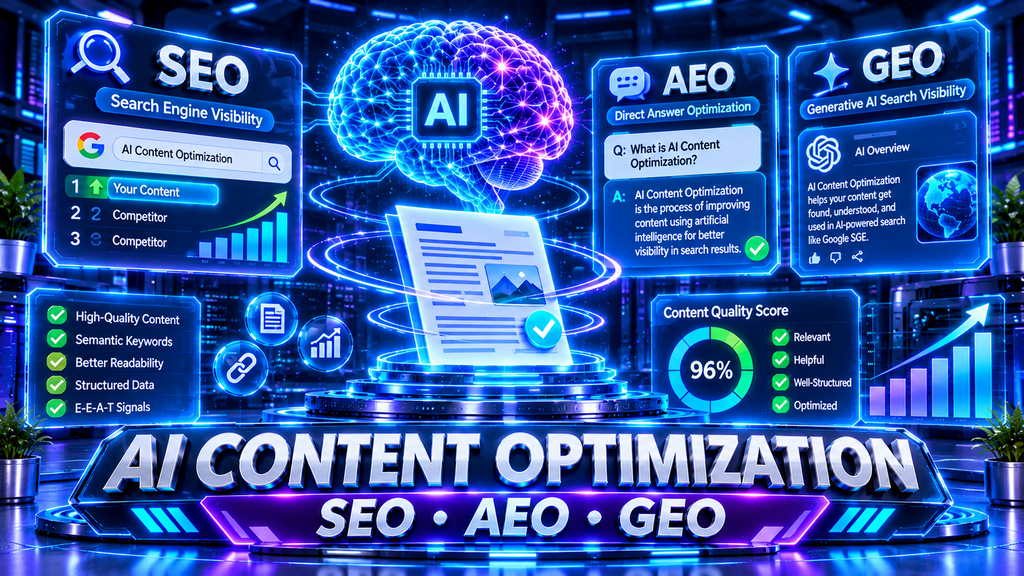
Content optimization means making a page more useful, accurate, comprehensive, and easy to navigate. AI can assist with drafting, editing, outlining, summarization, and identifying missing information, but it should not replace the research and judgment required to publish reliable content.
For traditional SEO, the fundamentals include a descriptive page title, a clear main heading, relevant subheadings, useful internal links, and content that satisfies the query. The focus keyword should appear naturally where appropriate, including in the title, introduction, and relevant sections. Repeating it excessively makes writing less natural and does not create genuine relevance.
Answer Engine Optimization (AEO) focuses on making information easy to locate and interpret when people seek direct answers. A practical technique is to answer a specific question clearly near the beginning of the relevant section, then provide supporting details, examples, or qualifications.
Generative Engine Optimization (GEO) refers to improving the likelihood that useful content can be discovered, understood, and potentially referenced by generative AI search experiences. It benefits from clear explanations, credible sources, original insights, and well-organized information. However, no writing technique guarantees that an AI system will cite a particular page.
For instance, an article about website speed could begin with a direct explanation of what website speed means, describe how it affects visitors, and then explain how to investigate performance problems. This structure serves readers while making the information easier to interpret.
AI can help editors identify unanswered questions, unclear sentences, unsupported claims, and inconsistent terminology. Human reviewers should then confirm factual accuracy, add expertise, and ensure that the finished article offers something more valuable than a generic summary.
Google’s published guidance confirms that established SEO fundamentals remain relevant to its AI-powered search experiences. It emphasizes useful, original, people-first content rather than special tricks designed exclusively for AI systems.
Google for Developers+1
Technical SEO, Automation, and Website Audits
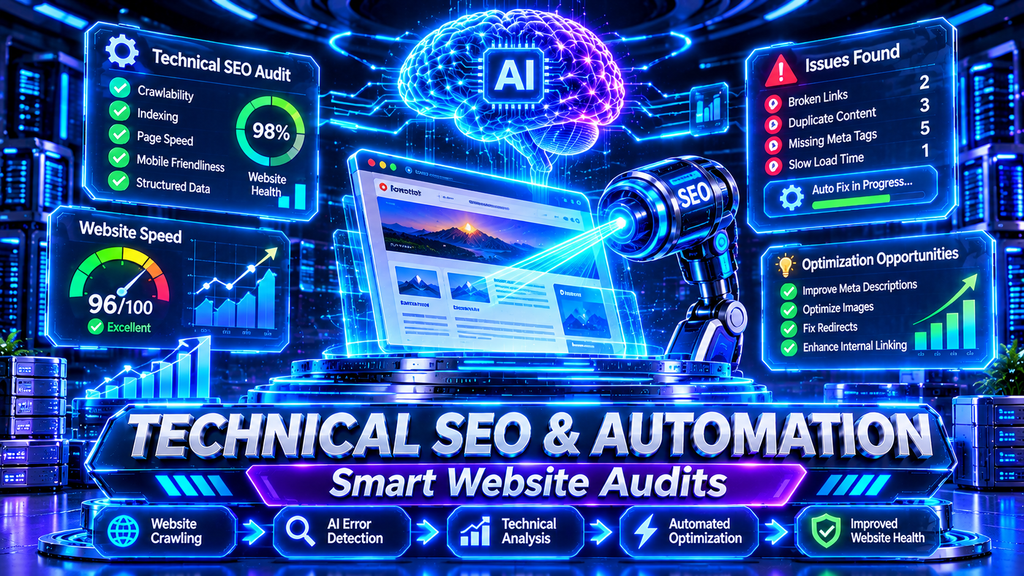
Even excellent content can struggle to perform if search engines cannot properly discover, crawl, or index the relevant pages. Technical SEO helps ensure that a website’s infrastructure supports its content strategy.
AI-assisted analysis can make technical audits easier to interpret. A crawler may find broken links, redirect chains, duplicate titles, missing descriptions, or pages with limited internal links. An AI assistant can help group these findings, explain possible causes, and prepare a prioritized action list.
However, not every reported issue has equal importance. A broken link on an important conversion page may deserve immediate attention, while a missing description on a low-value page may be less urgent. Recommendations should reflect business impact, search accessibility, and the effort needed to fix each problem.
A useful audit workflow includes these steps:
- Crawl the website with a suitable technical SEO tool.
- Check indexing and search performance in Google Search Console.
- Group findings by issue type, affected URLs, and potential impact.
- Ask AI to help explain patterns and suggest possible fixes.
- Validate each proposed fix before implementing it.
- Crawl the website again and monitor the outcome.
Automation is particularly valuable for recurring checks and reporting. For example, a team can create a consistent process for identifying new broken links or monitoring pages that lose organic clicks. Automated alerts should still be reviewed because normal fluctuations, seasonal demand, and changes in search results can produce misleading signals.
Security, access controls, and backups also matter when automating website operations. AI-generated code or configuration changes should be tested in an appropriate environment before they are deployed to a live website.
The objective is not to automate every SEO decision. It is to reduce repetitive work so that people can focus on strategy, quality assurance, and improvements that matter to visitors.
Measuring AI SEO Performance and Avoiding Common Mistakes
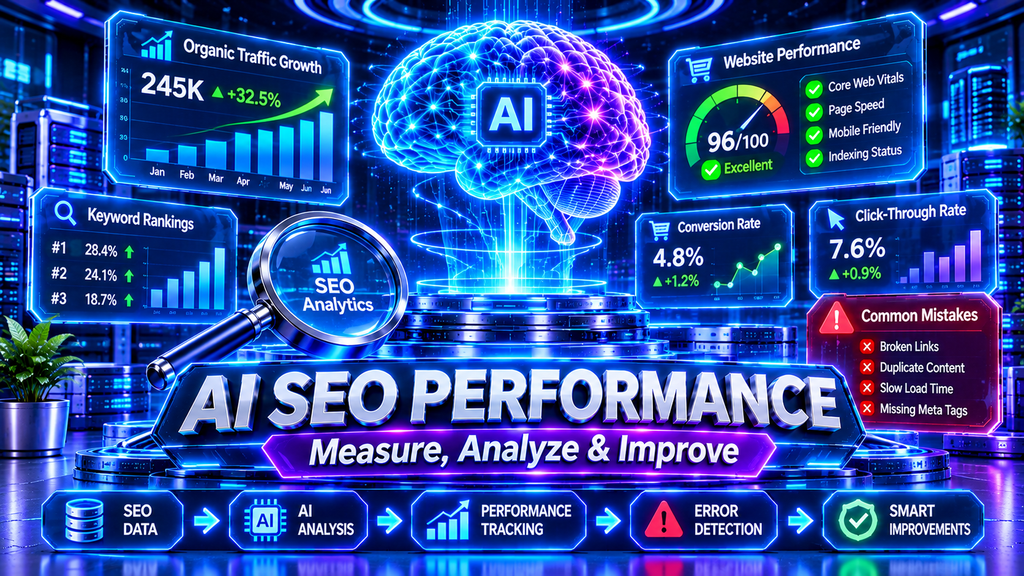
An SEO strategy needs measurement to determine whether its activities produce meaningful results. AI tools can summarize performance reports, identify unusual patterns, and help marketers investigate why some pages improve while others lose visibility. The quality of these insights depends on the underlying data and the assumptions used to interpret it.
Start by defining the purpose of the website. An informational blog may prioritize relevant organic traffic, engaged readers, and newsletter subscriptions. An ecommerce store may focus on product discovery, qualified visits, sales, and revenue. A local business may care most about relevant enquiries and completed bookings.
Useful metrics include:
- Organic clicks and impressions: Understand how pages appear and attract visits from search.
- Query-level performance: Identify which searches bring relevant visitors.
- Conversions: Measure whether visitors complete meaningful actions.
- Indexing and technical health: Monitor whether important pages can be discovered and processed.
- Content engagement: Evaluate whether pages help users complete their intended task.
- AI search visibility: Monitor available referral, mention, citation, or reporting data where reliable measurement is possible.
Compare performance over appropriate periods and account for seasonality, website changes, and fluctuations in demand. Avoid attributing every improvement to an AI tool simply because the tool was used before the results changed.
Several mistakes can weaken an AI-assisted SEO strategy. Publishing large volumes of generic articles, inventing statistics, copying competitors, stuffing keywords, and accepting automated recommendations without verification can reduce quality and trust. AI-generated content should be reviewed for factual errors, originality, usefulness, and relevance before publication.
Another common mistake is believing that a particular AI tool can guarantee first-page rankings or placement in AI-generated answers. Third-party tools can estimate opportunities and provide useful analysis, but they do not control search engine ranking systems. Google’s guidance explicitly warns against treating third-party predictions as guaranteed outcomes.
Google for Developers+1
The strongest measurement approach connects SEO activity to actual user value. If a page gains impressions but fails to answer the query, the next step may be improving its content rather than producing more articles.
Building a Practical AI SEO Strategy for Long-Term Growth
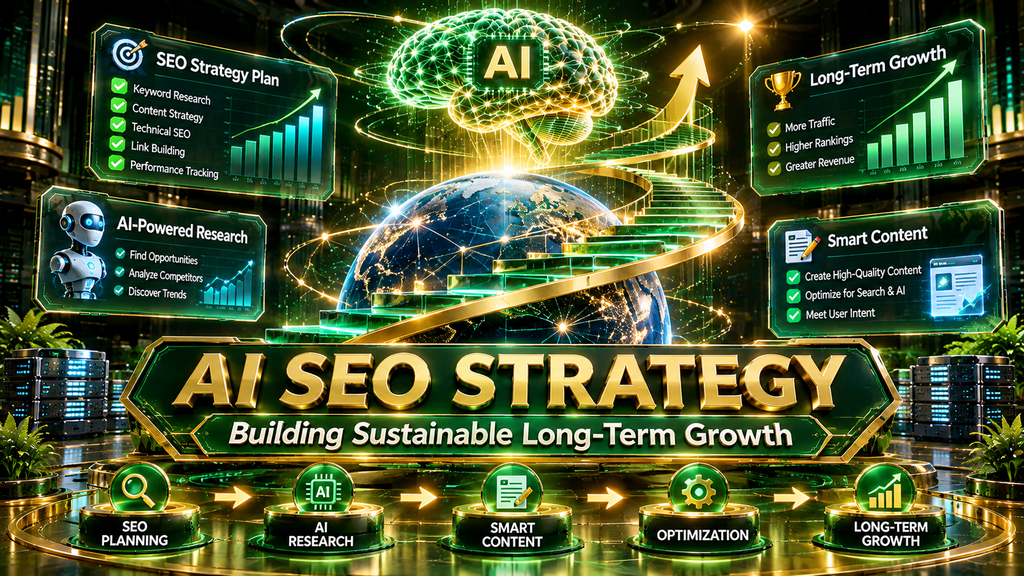
A sustainable AI SEO strategy combines suitable software, reliable research, useful content, and regular evaluation. It does not require buying every available platform. Instead, start with the tasks that consume the most time or create the greatest uncertainty.
During the first stage, establish a baseline. Review the site’s current organic performance, identify important landing pages, check technical health, and list the questions customers most frequently ask. This provides a realistic starting point for future comparisons.
During the second stage, select a focused set of topics. Use keyword research and audience insights to identify relevant search opportunities, then group related queries into logical content plans. Give each page a clear purpose so that it does not compete unnecessarily with other pages on the same website.
During the third stage, improve the content. Use AI to develop outlines, test alternative explanations, identify missing sections, and edit for clarity. Add original examples, credible references, practical instructions, and information that demonstrates genuine understanding. For commercial content, explain the differences between options rather than merely repeating product descriptions.
During the fourth stage, review technical accessibility and internal linking. Make sure important pages can be found through the site’s navigation and links, use descriptive headings, and investigate any crawling or indexing problems. Add appropriate structured data when it is relevant and valid, without assuming that markup guarantees a special search appearance.
During the fifth stage, measure results and refine the process. Track changes in clicks, impressions, conversions, and other meaningful indicators. Review whether the content meets user expectations and update it when important information becomes outdated.
A small business could begin with Google Search Console, a spreadsheet, and an AI writing assistant. A larger organization may benefit from additional keyword research, crawling, and content optimization platforms. The appropriate setup depends on website size, available skills, budget, and business goals.
Ultimately, AI tools for SEO are most valuable when they support thoughtful decisions rather than replace them. A strong strategy uses automation for efficiency, human expertise for accuracy, and meaningful performance data to guide improvement. By following this approach, businesses can build content that serves readers, supports conventional search visibility, and remains useful as AI-powered discovery continues to develop.
Frequently Asked Questions About AI Tools for SEO
1. What are the best AI tools for SEO?
The best AI tools for SEO depend on your goals. Semrush and Ahrefs are useful for keyword and competitor research, Google Search Console helps monitor search performance, Screaming Frog supports technical audits, Surfer assists with content optimization, and ChatGPT can help with research, outlining, and editing.
2. Can AI tools improve Google rankings?
AI tools can support activities that contribute to better SEO, including content improvement, keyword research, and technical problem detection. However, no tool can guarantee higher rankings. Results depend on content quality, relevance, competition, website accessibility, and many other factors.
3. Are free AI SEO tools available?
Yes. Google Search Console provides useful search performance data, while free tiers or limited-access versions of various AI assistants and SEO platforms can support research and content planning. Check current feature limits before choosing a tool.
4. How does AI help with keyword research?
AI can group related keywords, identify search intent, discover question-based topics, and organize content opportunities. Dedicated keyword research tools should be used to verify search volume, competition estimates, and other metrics before finalizing a strategy.
5. Can I use AI to write SEO articles?
Yes. AI can help create outlines, draft explanations, improve readability, and identify missing topics. Review every article for factual accuracy, originality, usefulness, and appropriate sourcing. Add meaningful expertise rather than publishing generic text without editorial review.
6. What is the difference between SEO, AEO, and GEO?
SEO focuses on improving visibility in search engines. AEO focuses on making information useful and accessible for direct-answer experiences. GEO focuses on visibility within generative AI search experiences. Their practices overlap, particularly around helpful content, clear organization, and reliable information.
7. Do AI-generated articles get penalized by Google?
AI assistance alone does not automatically make an article ineligible to rank. The important consideration is whether the published content complies with Google’s policies and provides genuine value. Content produced primarily to manipulate rankings, especially at scale without added value, can create spam-policy risks.
8. How can AI help with technical SEO?
AI can help interpret website crawl reports, organize technical errors, explain potential causes, and prioritize fixes. Tools such as Screaming Frog and Google Search Console provide useful diagnostic information, but technical recommendations should be validated before implementation.
9. How do I optimize content for AI search engines?
Create accurate, well-organized content that directly answers relevant questions. Include original insights, explain important concepts clearly, cite trustworthy sources when appropriate, and maintain a technically accessible website. No specific format or technique guarantees inclusion in AI-generated answers.
10. Are paid AI SEO tools worth the investment?
Paid tools may be worthwhile when they save substantial time, provide useful research data, or support measurable business goals. Smaller websites can often begin with free tools and a focused workflow. Compare the cost, accuracy, usability, and practical value of each platform before upgrading.