
Introduction
Creating high-quality content consistently is one of the biggest challenges for bloggers, digital marketers, business owners, and freelance writers. From researching topics to writing engaging articles and correcting grammatical mistakes, the entire process can require considerable time and effort. Fortunately, AI tools for content writing are making this process faster, easier, and more organized.
AI-powered writing software can help users generate blog ideas, create article outlines, improve sentences, check grammar, and develop marketing content. These tools use artificial intelligence to understand instructions and generate relevant text based on user requirements.
Whether you are a beginner starting your first blog or an experienced content creator managing multiple websites, the right AI writing assistant can improve your productivity. In this guide, we will explore 10 popular AI writing tools, their features, benefits, and practical uses.
What Are AI Tools for Content Writing?
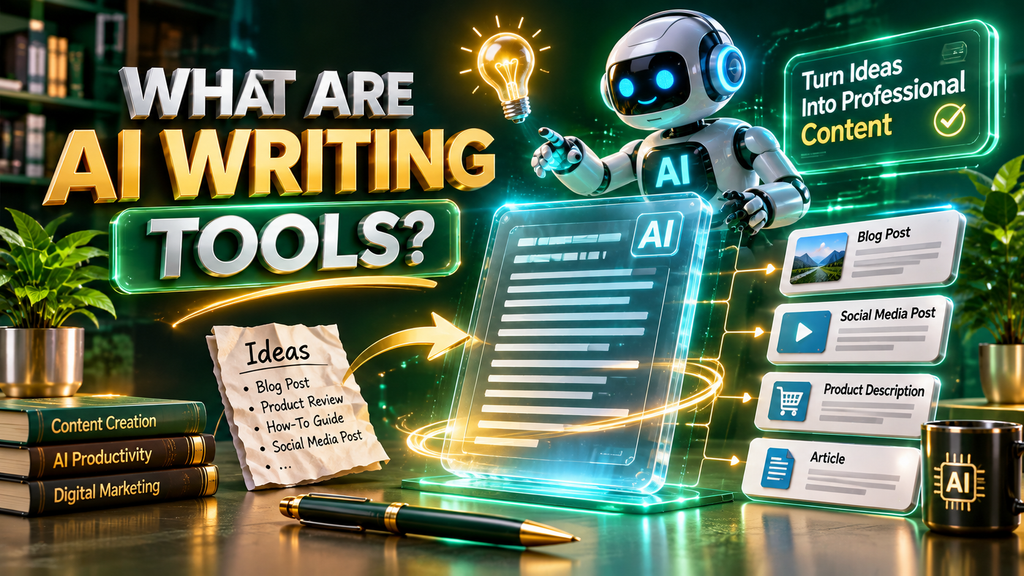
AI tools for content writing are software applications that use artificial intelligence and natural language processing to assist with creating and editing written material.
Instead of starting every article from scratch, writers can provide a topic or instruction and receive suggestions for headings, introductions, paragraphs, and content ideas.
For example, you can ask an AI writing assistant to create a blog outline about website security, explain a technical concept in simple language, or rewrite a confusing sentence.
These tools are useful for bloggers, students, marketers, website owners, and businesses that regularly produce digital content.
10 Best AI Tools for Content Writing
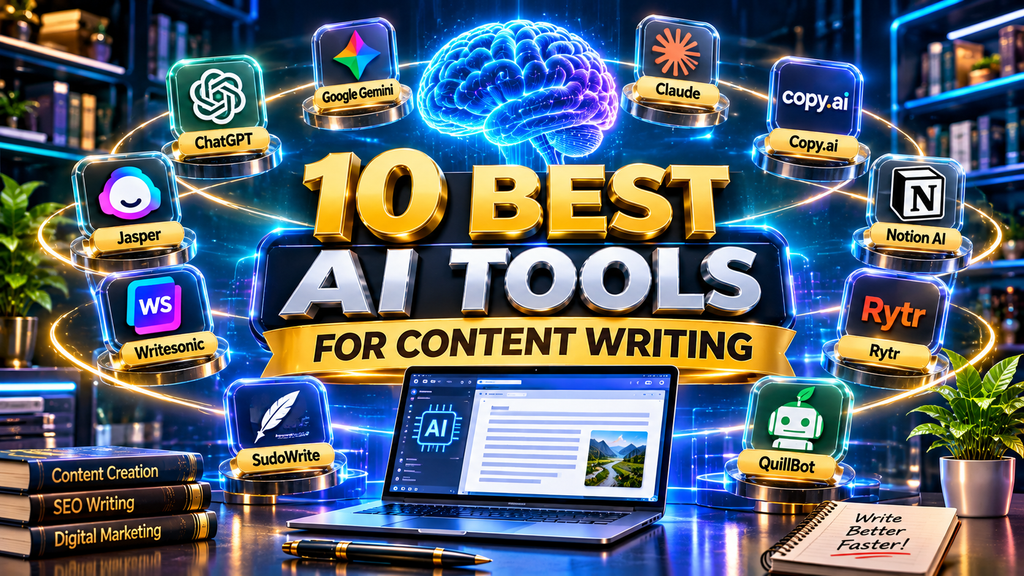
Different AI writing platforms offer different features. Here are 10 popular options that can help improve your writing workflow.
1. ChatGPT
ChatGPT is a versatile AI assistant that helps users brainstorm ideas, create article outlines, write drafts, and improve existing content.
It can also explain complicated topics, suggest relevant headings, and generate frequently asked questions for blog articles.
Best uses:
- Generating blog topics and ideas.
- Creating article outlines and introductions.
- Writing product descriptions.
- Improving paragraphs and sentence structure.
- Developing social media content.
It is a useful starting point for writers who need assistance throughout the content creation process.
2. Grammarly
Grammarly is a writing assistant designed to improve grammar, spelling, punctuation, and sentence clarity. It helps writers identify mistakes and make their content easier to understand.
It is particularly useful when preparing professional emails, website pages, academic documents, and blog posts.
Best uses:
- Correcting grammar and spelling.
- Improving sentence clarity.
- Checking punctuation.
- Adjusting writing tone.
- Proofreading completed articles.
3. Jasper AI
Jasper AI focuses on marketing and business content. It offers features that help teams create promotional messages, advertising copy, product descriptions, and blog drafts.
Businesses can use it to develop consistent marketing content and reduce repetitive writing tasks.
Best uses:
- Marketing campaigns.
- Advertising content.
- Product descriptions.
- Brand-focused messaging.
- Blog post drafts.
4. Copy.ai
Copy.ai is a smart AI writing tool that helps businesses and content creators develop creative marketing ideas, write engaging promotional content, and create compelling text for different platforms.
It can assist with social media captions, website copy, sales messages, and product descriptions.
It is especially useful for businesses that frequently need short-form marketing content.
5. Writesonic
Writesonic provides AI writing capabilities for articles, advertisements, landing pages, and other online content. It helps users develop initial drafts and explore different ways to communicate their ideas.
Bloggers and marketers can use it to speed up content production while maintaining an organized writing process.
6. QuillBot
QuillBot is widely used for paraphrasing, summarizing, and improving written sentences. It offers different ways to express an idea while preserving its intended meaning.
Best uses:
- Rewriting sentences.
- Improving readability.
- Summarizing longer text.
- Correcting grammar.
- Refining paragraphs.
However, paraphrasing should not be used to disguise copied material. Always provide original explanations and properly acknowledge external sources.
7. Rytr
Rytr is an AI writing platform designed to assist with everyday writing tasks. It can help users prepare emails, product descriptions, short articles, and social media posts.
Its straightforward writing workflow makes it worth considering for beginners who need help producing short-form content.
8. Notion AI
Notion AI is an intelligent writing assistant built into Notion that helps users organize information, improve written content, summarize notes, and manage their work more efficiently.
It helps users summarize information, improve drafts, organize notes, and develop content ideas.
It is particularly useful for bloggers and teams who already manage their writing projects, research, and editorial calendars in Notion.
9. Wordtune
Wordtune focuses on rewriting and improving sentences. It can suggest alternative expressions, adjust tone, and make paragraphs easier to read.
Writers can use it when their sentences sound repetitive, confusing, or unnecessarily complicated.
10. Google Gemini
Google Gemini is an AI assistant that can help users research general topics, brainstorm ideas, explain concepts, and prepare content drafts.
It is useful for exploring different perspectives and organizing information before writing a complete article.
Benefits of Using AI Writing Tools
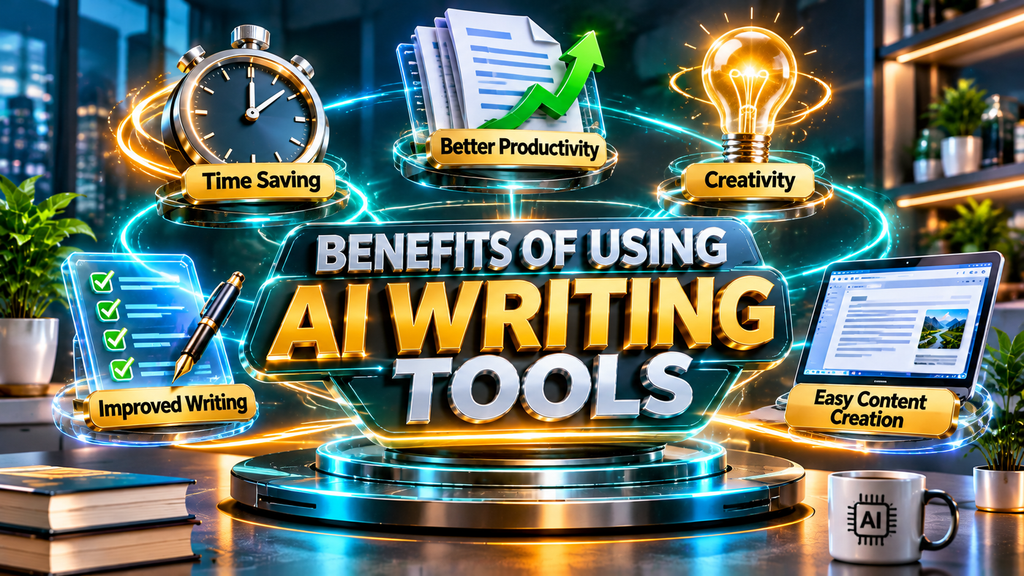
AI writing software offers several advantages for people who regularly create digital content.
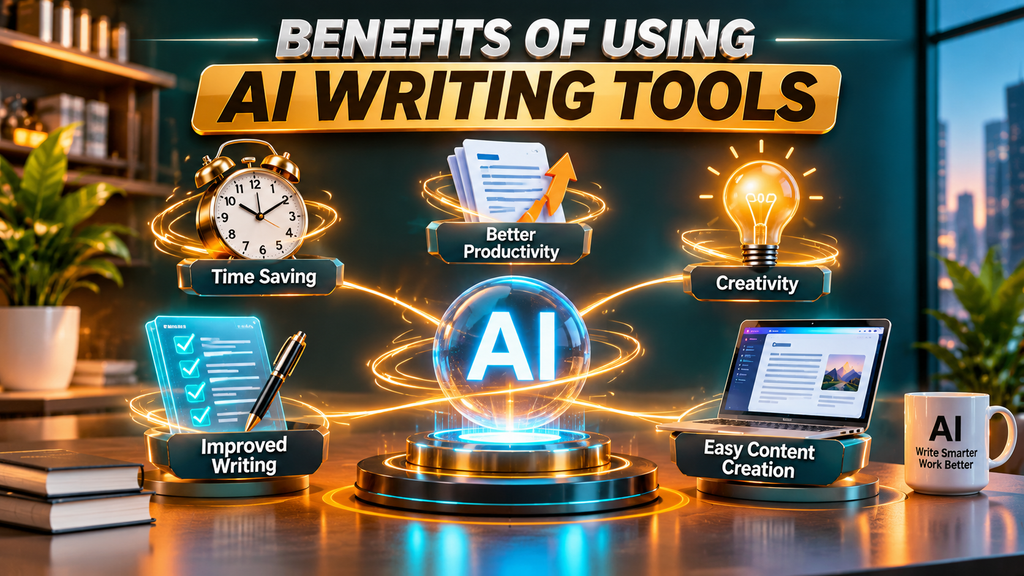
1. Save Time
AI can generate initial outlines, draft paragraphs, and content ideas within seconds. This reduces the time spent planning and starting an article.
2. Generate Fresh Ideas
Writers sometimes struggle with finding new topics. AI assistants can suggest content ideas, alternative headings, and different approaches to a subject.
3. Improve Writing Quality
Grammar checkers and rewriting tools help identify spelling mistakes, unclear sentences, and readability problems.
4. Support SEO Content Creation
AI can help organize article headings, suggest related keywords, prepare FAQs, and develop content outlines. These features can support an effective SEO workflow.
5. Increase Productivity
By automating repetitive writing tasks, content creators can spend more time on research, editing, strategy, and developing original ideas.
How to Use AI Tools for Content Writing Effectively
Getting useful results from AI requires more than simply entering a topic. Follow these practical steps:
- Choose a Relevant Topic: Select a subject that matches your audience’s interests and search intent.
- Create an Article Outline: Ask an AI assistant to suggest useful headings and subheadings.
- Generate an Initial Draft: Provide clear instructions about the audience, tone, length, and purpose.
- Verify Important Information: Check facts, statistics, examples, and technical details using reliable sources.
- Add Original Insights: Include personal experience, practical examples, and explanations that make the article more valuable.
- Optimize for SEO: Use your focus keyword naturally in the title, introduction, relevant headings, and body content.
- Proofread Before Publishing: Review grammar, readability, accuracy, originality, and formatting.
Following this process helps you use AI as a writing assistant while maintaining control over the final content.
Can AI-Generated Content Rank on Google?

Yes, AI-assisted articles can appear in Google search results. Google’s approach focuses on the quality and usefulness of content rather than simply whether it was written by a human or generated with AI.
However, publishing large amounts of automatically generated content without meaningful information, original value, or proper research can create quality and spam-policy problems.
To improve your chances of creating successful content, focus on answering readers’ questions, providing accurate information, sharing useful examples, and demonstrating genuine knowledge of the subject.
Remember that using AI does not guarantee better rankings. Helpful information, search intent, website quality, and a good user experience remain important.
Conclusion
AI tools for content writing have transformed how bloggers, businesses, marketers, and freelance writers approach content creation. Platforms such as ChatGPT, Grammarly, Jasper AI, QuillBot, and Google Gemini offer different features for generating ideas, improving grammar, rewriting sentences, and preparing article drafts.
However, choosing the right software is only the beginning. Successful content creation still requires proper research, human editing, originality, and an understanding of your audience.
Use AI to simplify repetitive tasks, but make sure every article provides accurate information and genuine value. By combining artificial intelligence with human creativity and effective SEO practices, you can build a more productive and reliable content creation process.
Frequently Asked Questions (FAQs)
1. What are the best AI tools for content writing?
Some popular options include ChatGPT, Grammarly, Jasper AI, Copy.ai, Writesonic, QuillBot, and Google Gemini. The best choice depends on your writing goals and budget.
2. Can I use AI tools to write blog posts?
Yes. AI tools can help generate blog ideas, outlines, introductions, headings, and initial drafts. However, you should review, edit, and fact-check the content before publishing.
3. Are there free AI tools for content writing?
Yes. ChatGPT, Google Gemini, Grammarly, and QuillBot offer free access options, although some features and usage limits may require paid subscriptions.
4. Is AI-generated content good for SEO?
AI-assisted content can perform well in search results when it is original, accurate, helpful, and created to satisfy readers’ needs. Content quality matters more than the writing method.
5. Can AI writing tools replace human writers?
No. AI can assist with repetitive writing tasks, but human writers provide creativity, personal experience, critical thinking, and meaningful editorial judgment.
6. How can I make AI-written content more original?
Include your own research, practical examples, personal insights, and clear explanations. Verify information and avoid copying existing articles or publishing unedited AI-generated drafts.
7. Which AI writing tool is best for beginners?
ChatGPT and Grammarly are useful starting options. ChatGPT can help with ideas and drafts, while Grammarly can assist with grammar and readability.
[…] AI-powered writing features can help users rewrite sentences, summarize information, create drafts, or improve the clarity of text. […]
[…] Best AI Tools for Content Writing Top 10 Picks and Uses […]
[…] AI writing tools help users complete work faster without sacrificing quality. Instead of spending hours researching or drafting content, you can use AI to organize ideas, improve grammar, rewrite paragraphs, and generate creative suggestions. […]
[…] which Gutenberg editor WordPress native content plugins are worth installing, how they improve content creation, and how to choose the right ones for your […]
[…] writing assistance […]
[…] Treat its first draft as a starting point, never a final listing. AI can invent a feature that does not exist if your prompt is vague, so check every fact against the property. For more ideas, see the best AI tools for content writing. […]