
Artificial intelligence has quickly become part of everyday work. Writers use it for research, marketers use it for ideas, developers use it for debugging, and businesses use it to improve productivity.
Among the companies shaping this space, two names often come up: OpenAI and Anthropic.
Both build advanced AI assistants. Both can answer questions, generate content, explain concepts, summarize documents, and help with professional tasks.
But one common question remains: Which one actually delivers better results?
The answer depends on what you want to do.
This guide explains the differences in simple language so beginners can understand where each platform performs well and which one may fit their needs better.
OpenAI vs Anthropic Complete Comparison for Beginners
At a basic level, both companies develop large language models. These systems are trained on huge amounts of text and can generate human-like responses.
Although they may seem similar at first, their product style, response behavior, and practical strengths can feel quite different in everyday use.
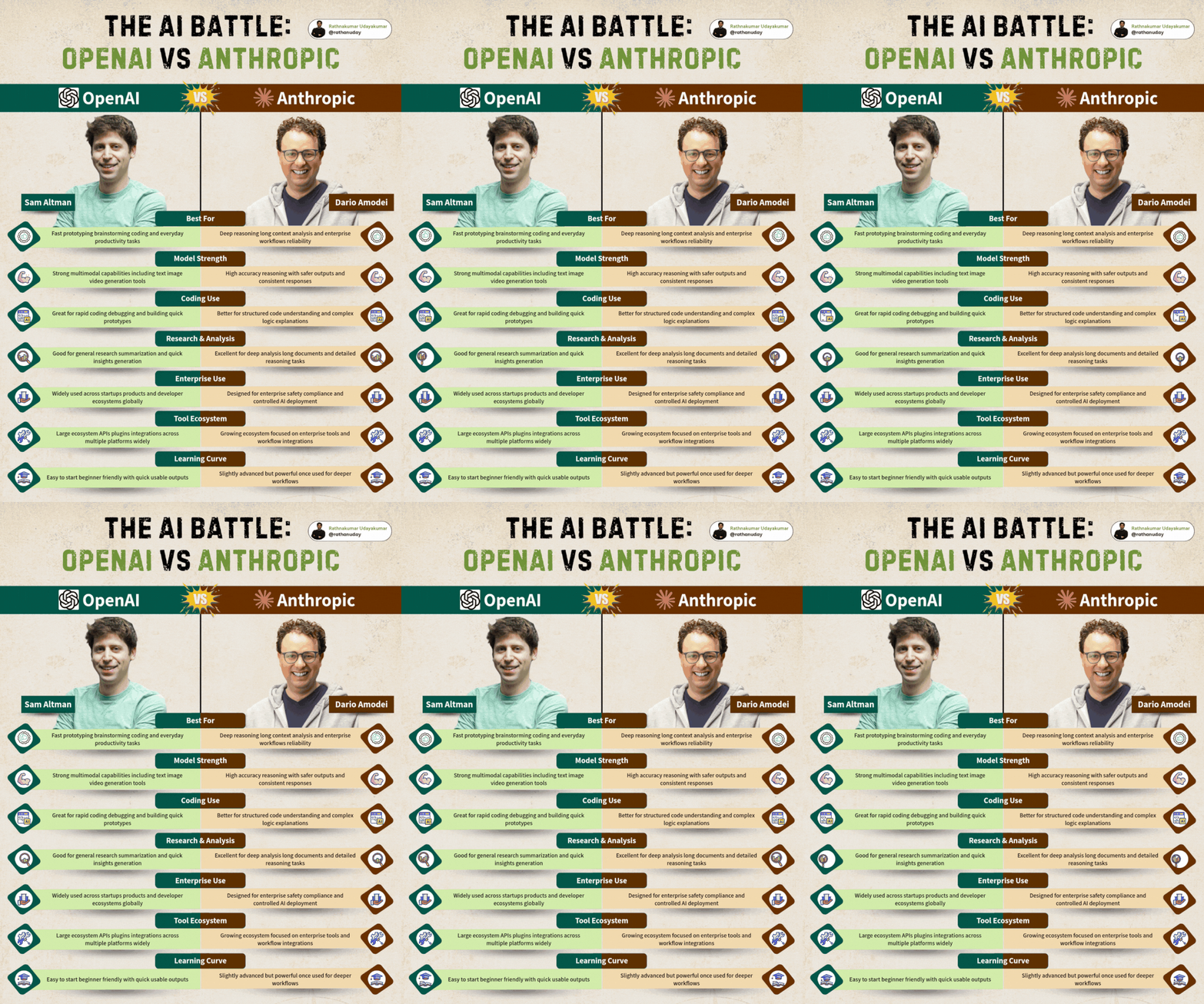
What OpenAI focuses on
OpenAI is widely known for ChatGPT. It is used by individuals, students, developers, marketers, and businesses around the world.
Its ecosystem includes:
- writing assistance
- coding support
- document analysis
- research help
- image generation
- workflow integrations
OpenAI has built a broad general-purpose platform that works well across many tasks.
What Anthropic focuses on
Anthropic created Claude.
Anthropic is often associated with safety-focused design, careful reasoning, and strong handling of longer documents.
Many users like Claude for reading lengthy material, structured explanations, and natural conversation flow.
OpenAI vs Anthropic Which AI Assistant Should You Choose?
Choosing between them depends less on brand and more on your daily use case.
A person writing blog posts may prefer one experience. A developer may prefer another. A researcher working with long documents may care about different strengths.
That is why comparing practical performance matters more than comparing marketing claims.
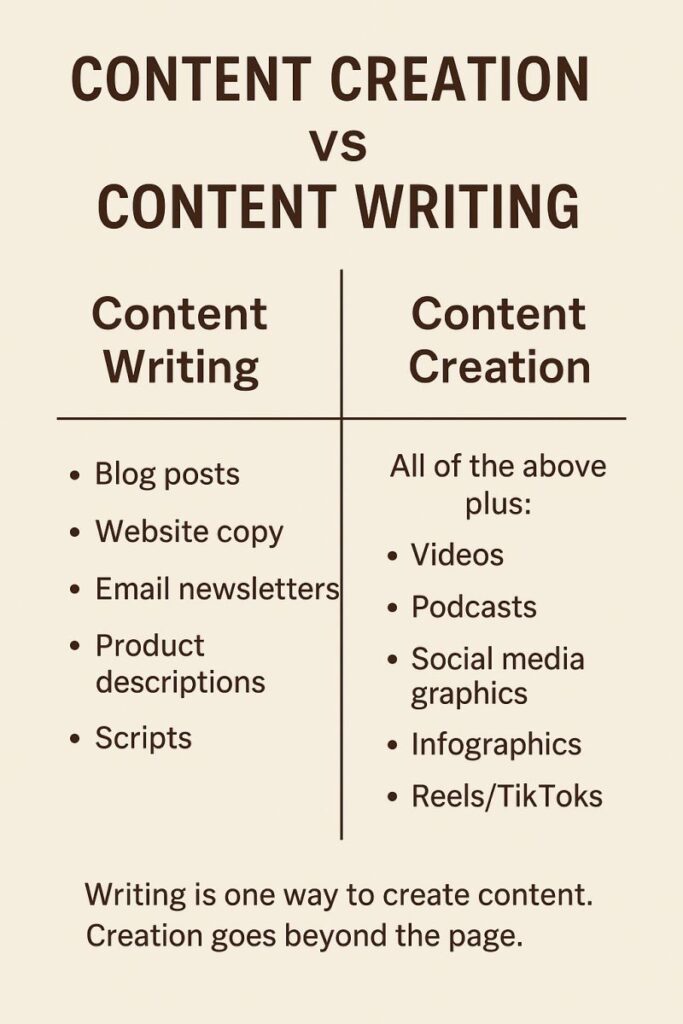
Writing Quality and Content Creation
For bloggers, marketers, freelancers, and content teams, writing quality is often one of the most important factors.
OpenAI for writing
ChatGPT is flexible and adapts well to different writing styles.
It can help with:
- blog outlines
- product descriptions
- headline ideas
- SEO drafts
- rewriting content
- tone adjustments
It often performs well when you want structured output and fast creative assistance.
Anthropic for writing
Claude often feels calm, clear, and natural in longer writing tasks.
It is particularly useful when:
- summarizing reports
- rewriting long passages
- improving clarity
- working with detailed documents
For long-form reading and interpretation, many users find it comfortable.
Coding and Technical Tasks
Developers often compare these tools based on practical usefulness rather than general conversation.
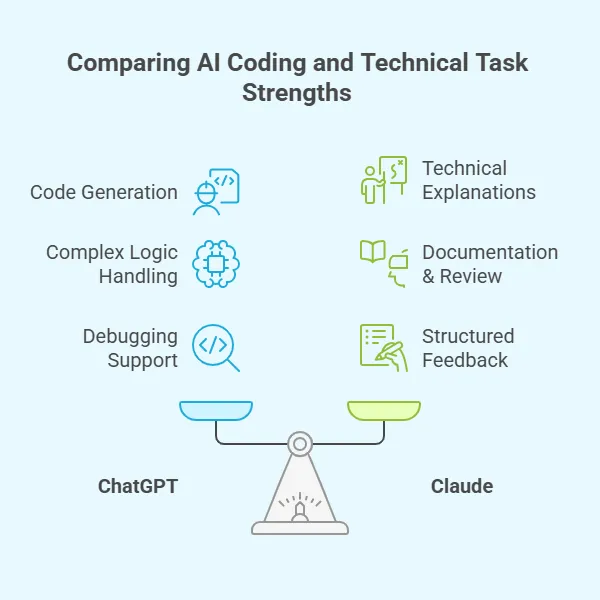
OpenAI for coding
OpenAI is widely used for:
- debugging code
- generating snippets
- explaining functions
- suggesting structure
- technical brainstorming
It tends to perform strongly for everyday programming assistance.
Anthropic for coding
Anthropic also performs well in technical tasks, especially when large blocks of code or long technical context need explanation.
It can be useful when you want step-by-step reasoning and detailed interpretation.
Handling Long Documents
This is one of the areas where users often notice a practical difference.
OpenAI
OpenAI can work with long material, but task behavior depends on model choice, input structure, and workflow.
Anthropic
Anthropic is often appreciated for handling large documents more comfortably.
For example:
- research papers
- contracts
- long reports
- policy documents
- lengthy drafts
That makes it attractive for analytical reading tasks.
Response Style and Conversation Experience
The experience of using an AI assistant is not only about correctness. It is also about how the interaction feels.
OpenAI response style
OpenAI often feels:
- flexible
- energetic
- fast
- adaptable
It usually works well when you want quick iteration and rapid idea generation.
Anthropic response style
Anthropic often feels:
- measured
- structured
- thoughtful
- steady
Many users appreciate this when working through complex topics.
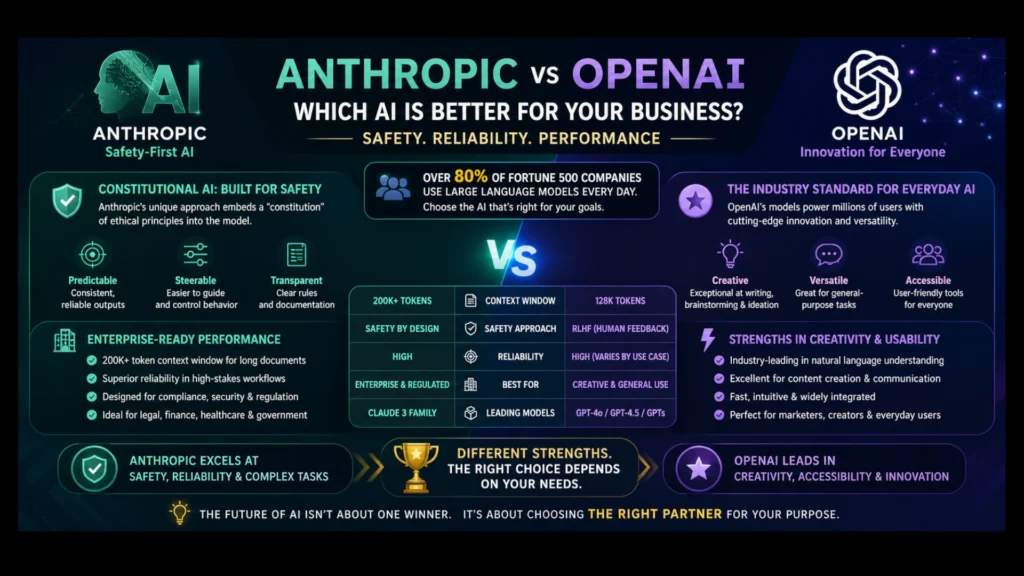
Which One Is Better for Business Use?
Businesses often care about reliability, workflow usefulness, and practical efficiency.
OpenAI for business
OpenAI offers broad ecosystem usefulness.
Common business uses include:
- customer support workflows
- content production
- research assistance
- productivity automation
- internal knowledge tasks
Anthropic for business
Anthropic can be attractive for:
- document-heavy environments
- internal analysis
- policy interpretation
- long-form knowledge work
The better choice depends on workflow requirements rather than a universal winner.
Speed and Everyday Productivity
Speed matters when AI becomes part of daily work.
Many users find OpenAI helpful for quick brainstorming and rapid output generation.
Anthropic is often appreciated when thoughtful interpretation matters more than quick short responses.
In practice, productivity depends on what kind of work you do repeatedly.
Which One Gives Better Results?
There is no single answer for everyone.
OpenAI may be better if you want
- broad versatility
- strong creative workflows
- practical writing support
- coding help
- fast idea generation
Anthropic may be better if you want
- long document understanding
- structured reasoning
- detailed reading assistance
- calm conversational output
For many users, the best approach is practical testing.
Use both for real tasks and compare which one fits your workflow better.
What Beginners Should Do First
If you are new to AI tools, start with simple real-world tasks.
Try:
- asking both tools to summarize an article
- generating a short blog outline
- explaining a technical topic
- rewriting a paragraph
- analyzing a long document
Real usage usually reveals the most useful differences.
Final Thoughts
The discussion around OpenAI vs Anthropic is not about finding one universal winner.
Both companies build strong AI assistants.
OpenAI often feels broader and highly practical across many everyday tasks.
Anthropic often feels especially strong in careful reasoning and longer-context analysis.
The better tool depends on your work style, goals, and the type of problems you solve regularly.
The smartest way to choose is simple: test both with real tasks and measure which one gives better results for you.
FAQs
Is OpenAI better than Anthropic for beginners?
Both are beginner-friendly. OpenAI often feels flexible for general tasks, while Anthropic can feel more structured during longer explanations.
Which AI is better for writing blog content?
Both can help. OpenAI is often useful for fast drafts and ideas, while Anthropic can be helpful for refining long-form writing.
Can both tools help with coding?
Yes. Both can explain code, suggest improvements, and assist with debugging.
Which platform is better for long documents?
Many users prefer Anthropic for reading and analyzing larger documents.
Should I use only one AI assistant?
Not necessarily. Many users compare both depending on the task and choose the one that fits their workflow best.