
What Is Artificial Intelligence in Business?
Artificial Intelligence in Business refers to using AI-powered technologies to improve business operations, analyze information, automate repetitive activities, and support better decision-making.
Businesses of different sizes can use artificial intelligence for tasks such as customer support, marketing, data analysis, sales forecasting, content creation, and workflow automation.
Instead of replacing every human task, AI can work alongside employees and help them complete certain activities more efficiently. The exact benefits depend on how the technology is implemented and what problems a business wants to solve.
Why Are Businesses Using Artificial Intelligence?
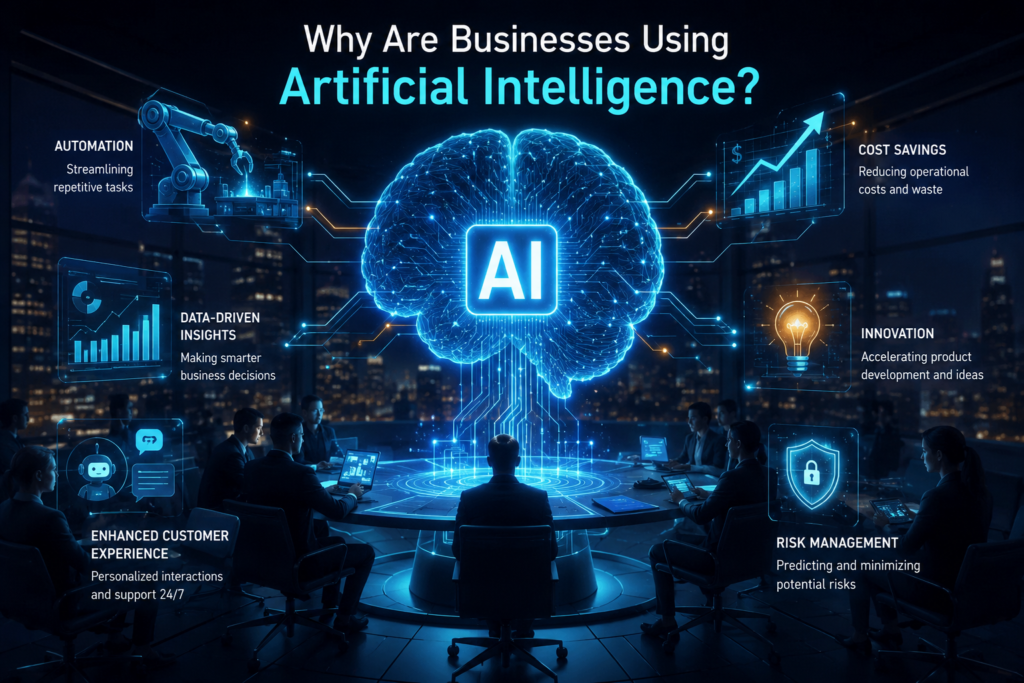
Companies are increasingly interested in AI because modern businesses generate large amounts of information and handle many repetitive processes.
AI systems can process information quickly and identify patterns that may be difficult to recognize manually. This can help teams make informed decisions and spend more time on activities that require creativity, communication, and strategic thinking.
For small businesses, AI can also provide access to tools that previously required larger teams or specialized resources.
Common Uses of AI in Business
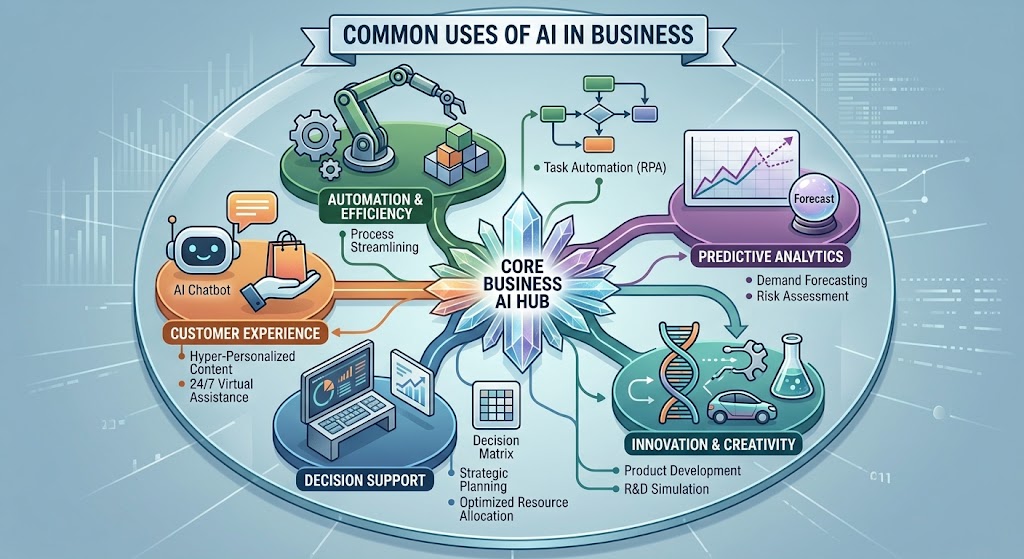
Artificial intelligence can be applied to many departments. Some of the most common applications are explained below.
Customer Service
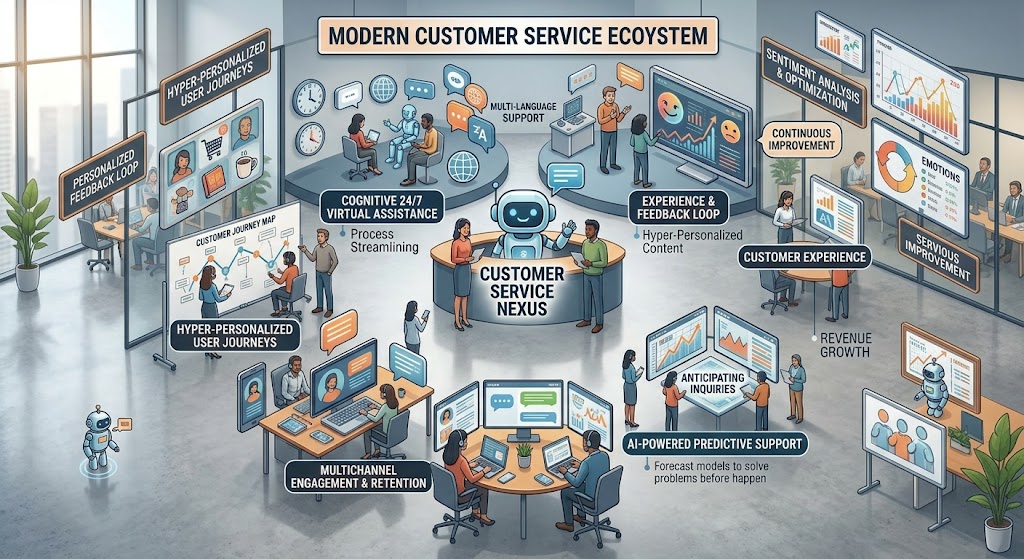
AI-powered chatbots and virtual assistants can answer common customer questions, provide basic information, and help users navigate services.
This can allow customer support teams to focus on complicated issues that require human judgment.
AI can also analyze customer conversations and identify frequently reported problems, helping businesses improve their products and services.
Marketing

Marketing teams can use AI to research audiences, generate content ideas, analyze campaigns, personalize communication, and identify patterns in customer behavior.
AI can help marketers process large datasets and discover useful trends. However, human creativity and strategic planning remain important for creating effective campaigns.
Data Analysis
Businesses collect information from websites, sales systems, customer interactions, and other sources.
AI tools can analyze large datasets and identify relationships or trends. These insights may help companies understand customer preferences, evaluate performance, and make more informed decisions.
Sales

AI can support sales teams by organizing customer information, identifying potential leads, predicting buying patterns, and automating certain administrative tasks.
Sales professionals can then spend more time communicating with prospects and building relationships.
Human Resources
AI can assist HR teams with tasks such as organizing employee information, creating job descriptions, analyzing applications, and answering routine employee questions.
Organizations should use appropriate safeguards when AI handles employment-related information because employee and applicant data can be sensitive.
Benefits of Artificial Intelligence in Business
Businesses can gain several advantages from responsible AI implementation.
Increased Productivity
AI can handle repetitive activities quickly, allowing employees to concentrate on more valuable work.
For example, an AI system might summarize documents, organize information, or prepare an initial draft that an employee can review and improve.
Faster Decision-Making
AI can process large amounts of information and present patterns that may help decision-makers evaluate different options.
The final decision should still involve appropriate human oversight, particularly when the decision could significantly affect customers, employees, or finances.
Better Customer Experiences
AI can help businesses respond to customers more quickly and provide personalized interactions.
When automated systems are combined with human support, customers can receive fast assistance for simple questions while complex situations can be transferred to employees.
Cost Efficiency
Automation can reduce the amount of time employees spend on repetitive processes. Over time, this may help businesses use their resources more efficiently.
However, AI implementation can also involve software, training, integration, and maintenance costs.
Challenges of Using AI in Business
Artificial intelligence offers opportunities, but businesses should also understand its limitations.
Data Privacy

AI systems may process large amounts of business or customer information. Companies should establish clear rules regarding what data can be entered into AI tools.
Sensitive information should be handled carefully, and organizations should understand how their chosen AI provider manages submitted data.
Accuracy Problems
AI can occasionally generate incorrect or misleading information. This is particularly important when AI is used for financial, legal, medical, or other high-impact business decisions.
Human review should be used when accuracy is critical.
Employee Training
Introducing AI without training employees can create confusion and reduce its potential benefits.
Workers should understand what the AI system does, how to use it properly, and when human review is required.
Integration Difficulties
Connecting an AI system with existing business software may require technical knowledge and careful planning.
Businesses should evaluate compatibility, security, scalability, and maintenance requirements before implementation.
How Small Businesses Can Start Using AI
Small businesses do not necessarily need a large technology budget to begin exploring AI.
Start with one specific problem. For example, a business could use AI to help draft customer emails, summarize documents, generate marketing ideas, or organize routine information.
After testing the tool, measure whether it actually saves time or improves results.
If the first implementation is successful, the company can gradually expand AI usage into other areas.
Artificial Intelligence and the Future of Business
AI is expected to play a growing role in routine business activities and workflows. . Companies may use intelligent systems for automation, analysis, personalization, forecasting, and workflow management.
The businesses that benefit most will likely be those that treat AI as a practical tool rather than simply following a trend.
Human abilities such as creativity, leadership, communication, critical thinking, and building relationships will continue to be essential alongside AI.
Best Practices for AI Adoption
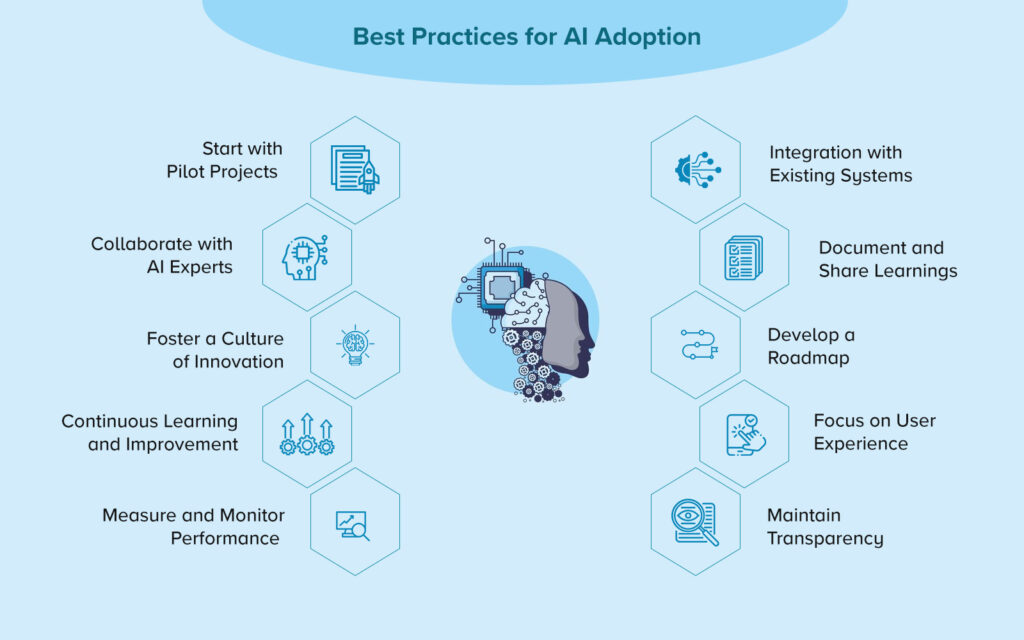
Before introducing AI, define a clear business objective. Determine what problem the technology should solve and how success will be measured.
Choose tools based on actual requirements rather than popularity. Review privacy and security policies before providing business information to an AI service.
Create guidelines for employees and establish a process for reviewing AI-generated outputs.
Most importantly, monitor the results after implementation. If a system does not provide meaningful benefits, reconsider how it is being used.
FAQs
What is Artificial Intelligence in Business?
Artificial Intelligence in Business means applying AI technologies to business activities such as automation, customer service, marketing, data analysis, sales, and decision support.
How can AI help a business?
AI can help automate repetitive tasks, analyze information, support customer service, improve productivity, and provide insights that assist business decisions.
Can small businesses use artificial intelligence?
Yes. Small businesses can start with affordable AI tools for tasks such as content creation, customer communication, research, scheduling, and administrative work.
Does AI replace human employees?
AI can automate certain tasks, but many business activities still require human judgment, creativity, communication, and decision-making. In many cases, AI works best as a support tool for employees.
What are the main risks of business AI?
Important concerns include inaccurate outputs, privacy issues, cybersecurity, implementation costs, lack of employee training, and inappropriate use of automated decisions.
How should a company start using AI?
Begin with a specific, manageable business problem. Test an appropriate AI solution, measure its results, train employees, and expand its use only when it provides clear value.
Conclusion
Artificial Intelligence in Business is changing how organizations approach productivity, customer service, marketing, data analysis, and automation. AI can help businesses handle repetitive work and process information more efficiently while giving employees more time for strategic activities.
Successful AI adoption requires more than simply purchasing an AI tool. Businesses should consider their objectives, data protection, employee training, accuracy, integration, and long-term costs.
When implemented responsibly and combined with human expertise, artificial intelligence can become a valuable part of modern business operations and support sustainable growth.