

Growing a small business online requires more than having an attractive website. Businesses must understand customer searches, publish helpful information, and make their pages easy for search engines to discover. Search engine optimization (SEO) plays an important role in achieving these goals, but managing every SEO activity manually can become challenging.
Artificial intelligence has made many SEO tasks easier to organize. AI-based tools support businesses in finding relevant keywords, studying competitors, organizing content strategies, checking website health, and tracking search results.
These capabilities allow small business owners to spend less time on repetitive research and more time improving their products, services, and customer experience.
cc Some platforms focus on finding profitable keyword opportunities, while others help writers improve articles or identify technical website problems. There are also free solutions that provide valuable search performance information.
Choosing suitable software does not mean purchasing every available subscription. Small businesses should identify their biggest SEO challenges and select tools that address those needs.
This guide explores eight useful AI SEO platforms, their main features, advantages, limitations, and practical applications. It also explains how businesses can approach traditional SEO, Answer Engine Optimization (AEO), and Generative Engine Optimization (GEO).
What Are AI SEO Tools and Why Do Small Businesses Need Them?

AI SEO tools are software applications that use artificial intelligence, machine learning, and data analysis to support search engine optimization activities.
Wowonder Nulled Risks, Legal Alternatives & Safer Choices
s, discover relevant keywords, examine competing websites, and improve website content. Some tools also provide automated recommendations that make complicated SEO tasks easier for beginners.
For example, a business selling handmade products might use an AI keyword research platform to discover what potential customers search for. A content optimization tool could then help organize an article around those topics.
Small businesses can benefit from these solutions for several reasons:
- Improve keyword research: Discover related search terms and understand user intent.
- Optimize content: Identify missing topics and improve article organization.
- Understand competitors: Examine competing websites and their content strategies.
- Monitor performance: Track website visibility and identify areas that need attention.
- Save time: Automated research and analysis can reduce repetitive work.
- Manage marketing budgets: Free and entry-level options can help businesses begin SEO without purchasing several expensive subscriptions.
However, AI-generated recommendations should always be reviewed. These tools cannot independently understand every customer requirement or guarantee that a website will rank higher.
The strongest approach combines useful AI assistance with human knowledge, original information, and consistent website improvements.
Top 8 Best AI SEO Tools for Small Businesses
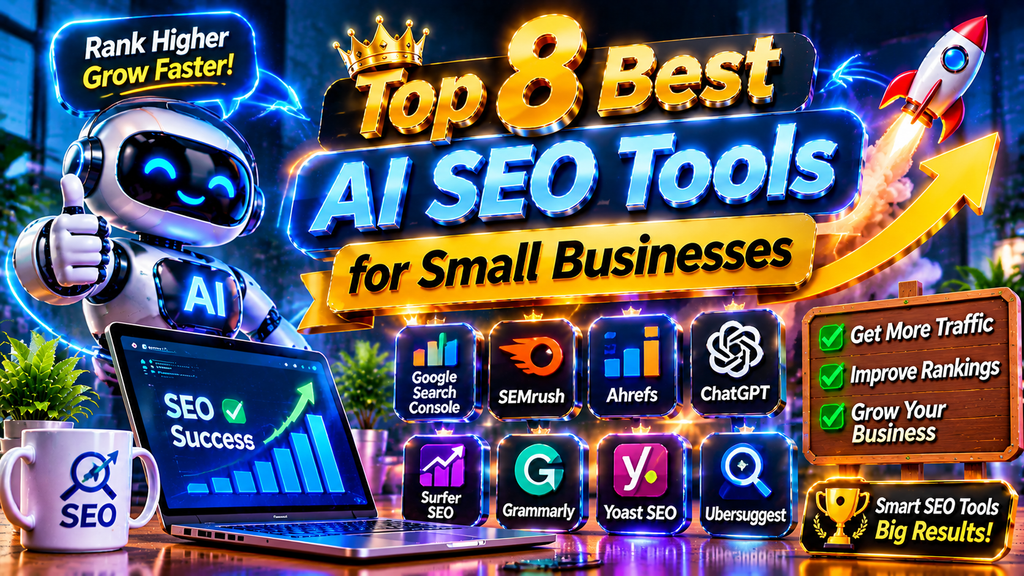
Selecting the right SEO platform depends on the tasks a business needs to complete. The following tools cover different areas, including keyword research, content optimization, competitor analysis, and website performance.
1. Semrush
Semrush offers a range of marketing features that allow users to discover search terms, evaluate competing websites, and track changes in their site’s SEO performance.
Is this conversation helpful so far?
Its keyword research capabilities allow users to discover related search terms and examine important metrics. Businesses can also investigate competing domains to understand which pages attract organic search traffic.
The platform includes website auditing and content-related features that support different stages of an SEO campaign.
Main Features:
- Keyword research and analysis.
- Competitor domain research.
- Technical website audits.
- Backlink analysis.
- Keyword position tracking.
- AI search visibility features.
Advantages:
- Offers several SEO functions in one platform.
- Provides detailed competitor research.
- Supports content planning and website monitoring.
Limitations:
Some advanced features require paid subscriptions, and beginners may need time to understand the available reports.
2. Ahrefs
Ahrefs provides SEO research features that help users explore search terms, examine website links, study rival websites, and identify technical issues affecting site performance.
Businesses can use its tools to investigate which pages receive organic traffic and identify websites linking to competitors. This information can help marketers discover content opportunities and develop more informed link-building strategies.
Its AI-related content features also support research and content improvement.
Main Features:
- Keywords Explorer.
- Site Explorer.
- Backlink research.
- Website auditing.
- Rank tracking.
- AI-assisted content features.
Advantages:
- Useful for competitive research.
- Provides extensive backlink information.
- Helps identify keyword opportunities.
Limitations:
Its extensive feature set can feel complicated to beginners, and some research capabilities require paid access.
Ideal For: Companies looking to explore competitors, discover valuable search terms, and keep track of website backlinks.
3. Surfer SEO
Surfer SEO helps content creators refine their articles by examining top-ranking pages and suggesting relevant topics, keywords, and improvements.
It examines pages competing for a target search term and provides suggestions about relevant topics and content structure. Writers can use its editor to review their drafts while preparing articles.
For small businesses that regularly publish blog content, this can make content planning more organized.
Main Features:
- Content editor.
- Keyword and topic suggestions.
- Search result analysis.
- Content optimization scores.
- Content planning support.
- AI-assisted writing features.
Advantages:
- Helps organize article structure.
- Provides useful content recommendations.
- Supports writers during the editing process.
Limitations:
Optimization scores should not be treated as ranking guarantees. Writers still need to provide original information and answer readers’ questions.
Best For: Small businesses and bloggers that publish SEO-focused articles.
4. SE Ranking
SE Ranking provides SEO research and website monitoring features for businesses, marketers, and agencies.
Its platform helps users track keyword positions, examine competitors, monitor backlinks, and identify website problems. These features can help small teams organize their SEO activities in one place.
The platform also offers capabilities related to AI search visibility and generative search optimization.
Main Features:
- Keyword position tracking.
- Website auditing.
- Competitor research.
- Backlink monitoring.
- Keyword discovery.
- AI visibility monitoring.
Advantages:
- Combines several SEO activities.
- Provides useful reporting features.
- Supports ongoing website monitoring.
Limitations:
Available tracking limits and advanced features depend on the selected subscription.
5. Frase
Frase is an AI-powered content research and optimization platform designed to support article creation.
It helps writers investigate search results, prepare content outlines, and organize information before writing. Businesses can use it to develop more structured articles around topics that interest their audiences.
Frase is particularly useful when a website publishes educational content, tutorials, or informational blog posts.
Main Features:
- AI content generation.
- SEO content briefs.
- Search result research.
- Topic suggestions.
- Content optimization.
- AI visibility features.
Advantages:
- Simplifies content research.
- Helps prepare organized article outlines.
- Supports content development workflows.
Limitations:
Generated information requires fact-checking and editing. Businesses should add original knowledge rather than publishing unreviewed AI drafts.
Best For: Small businesses that depend on regular blog publishing.
6. Rank Math
Rank Math is a WordPress SEO plugin that helps website owners manage on-page optimization directly from their WordPress dashboard.
It provides options for editing SEO titles, meta descriptions, and structured data. Its content analysis features also help users review important optimization elements before publishing.
The Content AI feature offers additional assistance with keyword suggestions and content planning.
Main Features:
- SEO title and description management.
- Schema markup support.
- On-page SEO analysis.
- XML sitemap functionality.
- Redirection management.
- AI-assisted content recommendations.
Advantages:
- Integrates with WordPress.
- Provides useful on-page SEO settings.
- Offers a free version.
- Helps manage important website optimization tasks.
Limitations:
Some advanced features require a paid plan, and incorrect settings can create website optimization problems.
Best For: Small businesses using WordPress websites.
7. Yoast SEO
Yoast SEO is a popular WordPress plugin that helps website owners improve their pages and articles.
It provides feedback about content readability, keyword usage, metadata, and other on-page optimization elements. Its interface makes it easier for beginners to review their content before publishing.
The plugin also provides tools for managing technical SEO elements and structured information.
Main Features:
- SEO title editing.
- Meta description management.
- Readability analysis.
- XML sitemap functionality.
- Schema support.
- Content optimization recommendations.
Advantages:
- Beginner-friendly interface.
- Useful content readability feedback.
- Helps manage on-page SEO.
- Offers a free plugin version.
Limitations:
It does not replace comprehensive keyword research, competitor analysis, or a complete technical SEO audit.
Best For: WordPress beginners and small business owners who want straightforward optimization assistance.
8. Google Search Console
Google Search Console is a free Google service that helps website owners understand how their pages perform in Google Search.
Although it is not a dedicated AI content generation platform, it provides important first-party search performance information that businesses can combine with AI SEO tools.
Users can examine search queries, clicks, impressions, indexing information, and certain website issues.
Main Features:
- Search performance reports.
- Click and impression tracking.
- Search query analysis.
- URL inspection.
- Indexing reports.
- Website issue notifications.
Advantages:
- Free to use.
- Provides Google Search performance information.
- Helps identify indexing problems.
- Useful for evaluating content performance.
Limitations:
It does not provide complete competitor research or automated article optimization.
Best For: Every small business that wants to monitor its Google Search visibility.
4. Benefits of Using AI SEO Tools for Small Businesses
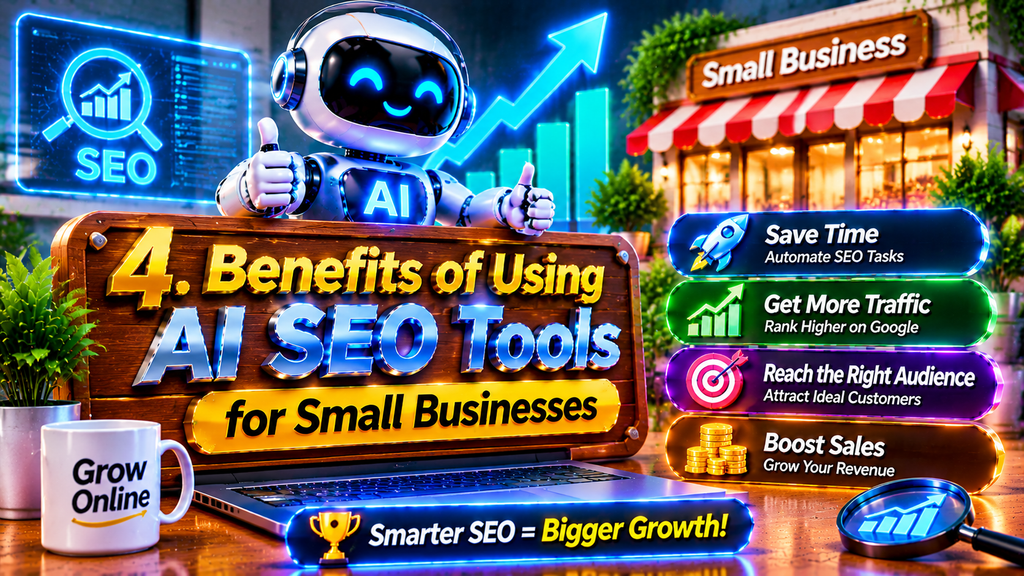
AI-powered SEO software can help small businesses manage their marketing activities more efficiently. The biggest advantage is that it simplifies several tasks that would otherwise require separate research and manual analysis.
Faster Keyword Research

Keyword research helps businesses understand what their potential customers are searching for. AI-assisted platforms can suggest related keywords, identify topic opportunities, and organize search terms according to their intent.
This helps businesses plan content that addresses relevant customer questions.
Improved Content Quality
Content optimization platforms can identify missing topics, suggest relevant headings, and help writers organize their articles.
However, quality should always come before optimization scores. Articles should provide accurate information and meaningful value to readers.
Better Competitor Analysis

Understanding competitors can reveal useful content opportunities. SEO platforms help businesses investigate competing websites, identify their popular pages, and examine backlink profiles.
This information can support more effective content planning.
Easier Website Monitoring
Technical SEO tools can identify issues involving broken links, indexing, metadata, and website structure.
Regular monitoring helps website owners discover problems and prioritize improvements.
More Efficient Marketing Workflows

AI can assist with repetitive research and content preparation. Small teams can use the saved time for customer communication, product development, and business planning.
Improved Search Performance Tracking
Search monitoring platforms help businesses evaluate clicks, impressions, keyword positions, and website visibility.
These insights make it easier to understand which pages need improvement.
5. How to Choose the Right AI SEO Tool for Your Business
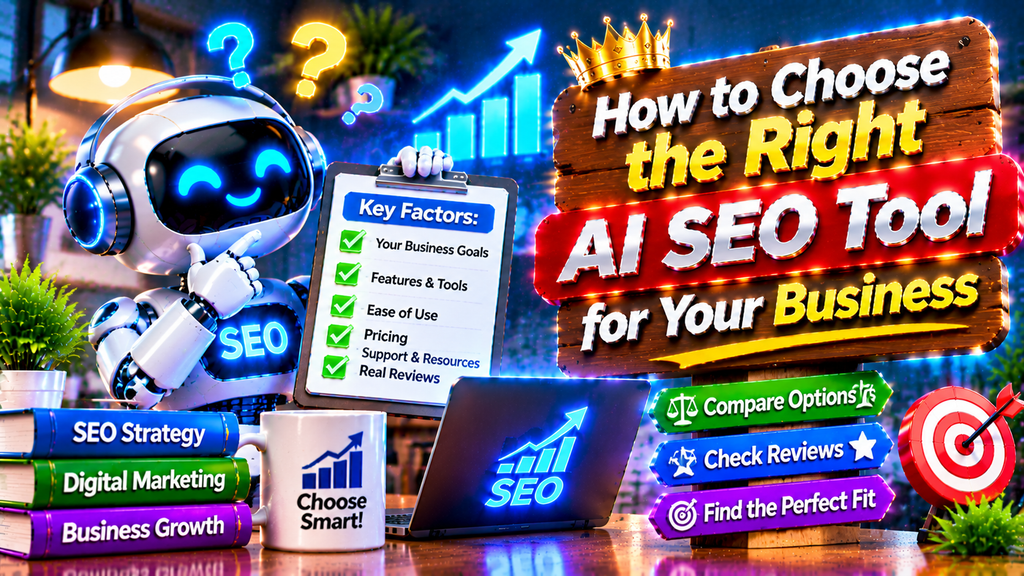
Choosing an SEO platform should begin with a clear understanding of your website’s requirements. An expensive subscription is not necessarily the best option for every small business.
Consider the following factors before selecting a tool.
Understand Your Main Requirements
Identify the SEO activity that needs the most attention. Businesses struggling with keyword research may prefer Semrush or Ahrefs, while regular article publishers may find Surfer SEO or Frase more suitable.
Compare Free and Paid Features
Explore free versions and trial options before purchasing a subscription. Check which features are available and whether usage limits affect your workflow.
Consider Ease of Use
Beginners should choose software with understandable reports and clear recommendations. A complicated platform can make simple SEO activities unnecessarily difficult.
Check Website Compatibility
WordPress users may benefit from plugins such as Rank Math and Yoast SEO. Before installing any plugin, review its compatibility with the website’s existing setup.
Review Reporting Capabilities
Useful reporting features help businesses evaluate keyword performance, organic traffic, website health, and content progress.
Consider Long-Term Costs
Review subscription terms, available features, usage limits, and renewal prices. Select a solution that provides practical value without creating unnecessary expenses.
6. How to Optimize Your Website for SEO, AEO, and GEO Using AI

Search behavior is changing as people use traditional search engines and AI-powered systems to discover information.
Businesses should understand three related optimization approaches: Search Engine Optimization, Answer Engine Optimization, and Generative Engine Optimization.
Search Engine Optimization (SEO)
SEO focuses on improving a website’s visibility in traditional search results.
Businesses can use AI SEO platforms to:
- Research relevant keywords.
- Improve page titles and meta descriptions.
- Organize website headings.
- Identify technical problems.
- Develop useful internal links.
- Monitor organic search performance.
The main objective is to create helpful pages that satisfy the needs behind users’ searches.
Answer Engine Optimization (AEO)
AEO focuses on presenting information in a clear format that directly answers user questions.
Businesses can improve their content by:
- Using descriptive question-based headings.
- Providing direct answers within relevant sections.
- Explaining complicated topics in simple language.
- Including useful FAQ sections.
- Maintaining accurate business information.
- Supporting important statements with reliable sources.
For example, a small web design company could publish an article answering common questions about website development costs and project timelines.
Generative Engine Optimization (GEO)
GEO focuses on making brand information understandable and discoverable in generative AI search experiences.
Businesses can support this approach by:
- Publishing original and informative content.
- Maintaining consistent business details.
- Including clear company and author information.
- Providing trustworthy references.
- Organizing information with descriptive headings.
- Updating outdated website information.
No SEO or AI tool can guarantee that a particular business will appear in an AI-generated answer. The objective is to make information accurate, accessible, and useful across different search experiences.
7. Best AI SEO Tools Comparison and Practical Recommendations
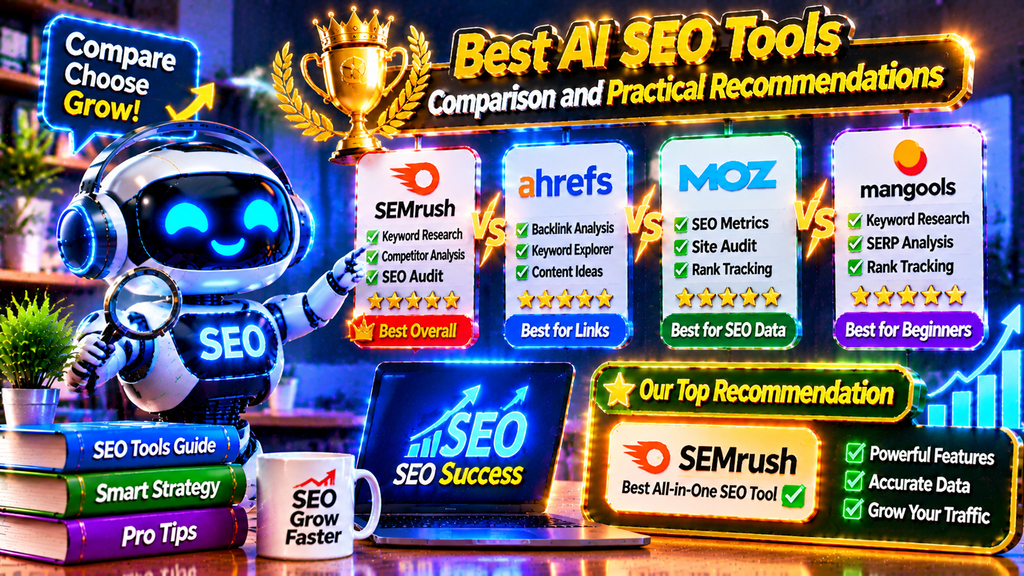
Different businesses require different SEO solutions. An online store may prioritize product keyword research, while a local service provider may focus on location-specific content and website visibility.
The following comparison summarizes the primary purposes of the eight platforms.
| Tool | Main Purpose | Best For |
| Semrush | Complete SEO research | Growing businesses |
| Ahrefs | Backlink and competitor research | Competitive analysis |
| Surfer SEO | Content optimization | Bloggers |
| SE Ranking | SEO monitoring | Marketing teams |
| Frase | Content research | Article writers |
| Rank Math | WordPress optimization | WordPress users |
| Yoast SEO | On-page SEO | Beginners |
| Google Search Console | Search performance | All website owners |
Which Tool Should You Choose?
- Choose Semrush for a broad collection of SEO research features.
- Consider Ahrefs for backlink and competitor analysis.
- Explore Surfer SEO for content optimization.
- Use Frase for article research and content briefs.
- Consider SE Ranking for keyword monitoring and reporting.
- Compare Rank Math and Yoast SEO for WordPress optimization.
- Start with Google Search Console for free search performance information.
Small businesses do not need all eight platforms. A simple combination of Google Search Console, one WordPress SEO plugin, and one dedicated research tool can provide a useful starting point.
For example, a business publishing several blog articles each month could use Google Search Console to monitor search performance, Rank Math to manage on-page settings, and Frase to organize article research.
This approach helps keep marketing activities organized without creating unnecessary software expenses.
8. Frequently Asked Questions About AI SEO Tools for Small Businesses
1. What are the best AI SEO tools for small businesses?
Some useful options include Semrush, Ahrefs, Surfer SEO, SE Ranking, Frase, Rank Math, Yoast SEO, and Google Search Console. The best choice depends on whether a business needs keyword research, content optimization, website monitoring, or technical SEO assistance.
2. Are AI SEO tools suitable for beginners?
Yes. Many platforms provide beginner-friendly dashboards, automated reports, and optimization recommendations. These features help new website owners understand important SEO activities without needing advanced technical knowledge.
3. Can AI SEO tools improve Google rankings?
AI SEO tools can support activities that contribute to better search performance, including keyword research, content improvement, and website auditing. However, they cannot guarantee rankings because search engines consider many different factors.
4. Which AI SEO tool is best for keyword research?
Semrush and Ahrefs are useful options for keyword research and competitor analysis. SE Ranking also provides keyword discovery and tracking capabilities. Businesses should compare available features and subscription limits before choosing.
5. Are there free AI SEO tools for small businesses?
Yes. Google Search Console provides free search performance information, while Rank Math and Yoast SEO offer free WordPress plugin versions. Some other SEO platforms also provide limited free accounts or trial periods.
6. Can AI SEO tools write complete blog articles?
Some platforms can generate article drafts, outlines, and content suggestions. However, business owners should verify information, improve the writing, add original insights, and review the finished article before publishing.
7. What is the difference between SEO, AEO, and GEO?
SEO focuses on visibility in traditional search results. AEO focuses on providing direct and useful answers to user questions, while GEO focuses on making brand information understandable and discoverable in generative AI search experiences.
8. How much do AI SEO tools cost?
Pricing varies depending on the provider, subscription plan, and available features. Some services offer free versions, while advanced research and content platforms require monthly or annual payments. Always check current prices before subscribing.
9. Do small businesses need multiple SEO tools?
No. Most small businesses can begin with a few essential solutions. One tool for search performance, another for on-page optimization, and a dedicated keyword research platform can provide a practical starting workflow.
10. Can AI SEO tools help with local SEO?
Yes. AI-assisted keyword research and content planning can help businesses discover location-specific search opportunities. Businesses should also maintain accurate contact details, service information, opening hours, and an updated Google Business Profile.
Conclusion
Finding the best AI SEO tools for small businesses can make keyword research, content optimization, competitor analysis, and website monitoring easier to manage. Platforms such as Semrush, Ahrefs, Surfer SEO, SE Ranking, and Frase support different research and content activities, while Rank Math, Yoast SEO, and Google Search Console provide useful website optimization and monitoring capabilities.
The right approach is to select software according to actual business requirements rather than purchasing every available subscription. Start with essential SEO activities, publish original and helpful information, and regularly review website performance.
AI should support your SEO strategy rather than replace human expertise, accurate research, or customer-focused content. With the right tools and a consistent approach,