
Introduction

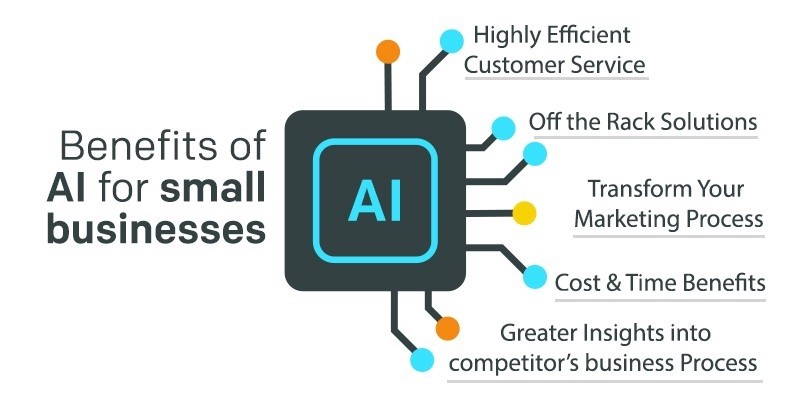
Artificial intelligence is no longer limited to large technology companies.Small companies can take advantage of AI to streamline daily tasks, respond to customers more effectively, minimize repetitive duties, and support smarter business decisions.
Many AI tools are now easier to use and more affordable than traditional business software.
For a small business owner, handling marketing, customer questions, sales, content, administration, and daily operations can become overwhelming. AI can assist with many of these tasks and allow business owners and employees to focus on work that requires human judgment and creativity.
This article explains how AI for small business can be used effectively, what benefits it provides, and what businesses should consider before adopting AI tools.
What Is AI for Small Business?
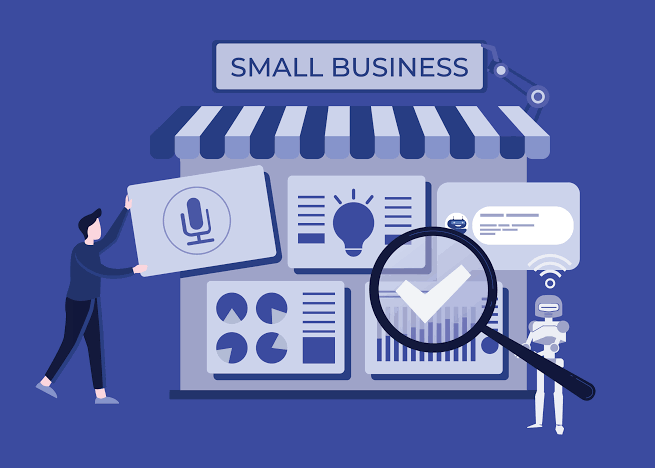
Artificial intelligence for small businesses involves applying smart digital solutions to simplify and improve routine business operations.
These technologies can analyze information, generate content, answer customer questions, automate repetitive tasks, and provide useful insights.
AI does not necessarily replace employees. Rather, it serves as a virtual helper that enables users to handle specific tasks more efficiently.
For example, a small online store can use AI to create product descriptions, respond to common customer questions, analyze sales information, and generate marketing ideas.
Why Are Small Businesses Using AI?
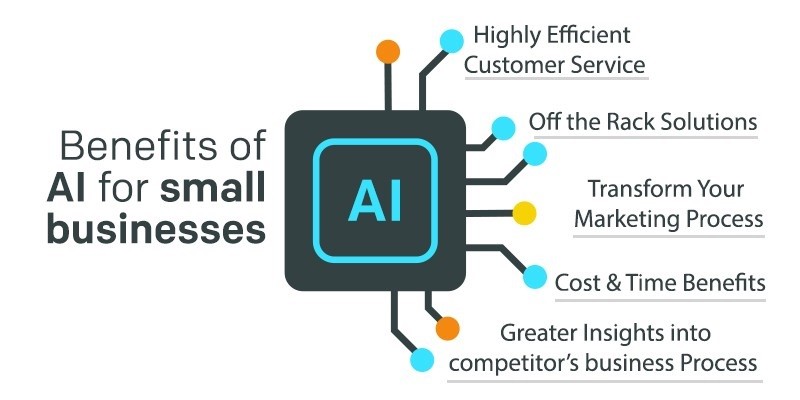
Small businesses often operate with limited budgets and smaller teams. Employees may need to handle several responsibilities at the same time.
By handling repetitive tasks automatically, AI can lessen employees’ routine workload and allow them to dedicate more time to customers, planning, creative work, and overall business development.
Another important advantage is speed.AI solutions can quickly analyze extensive information, allowing businesses to handle time-consuming tasks in a much shorter period.
1. AI Can Improve Customer Service
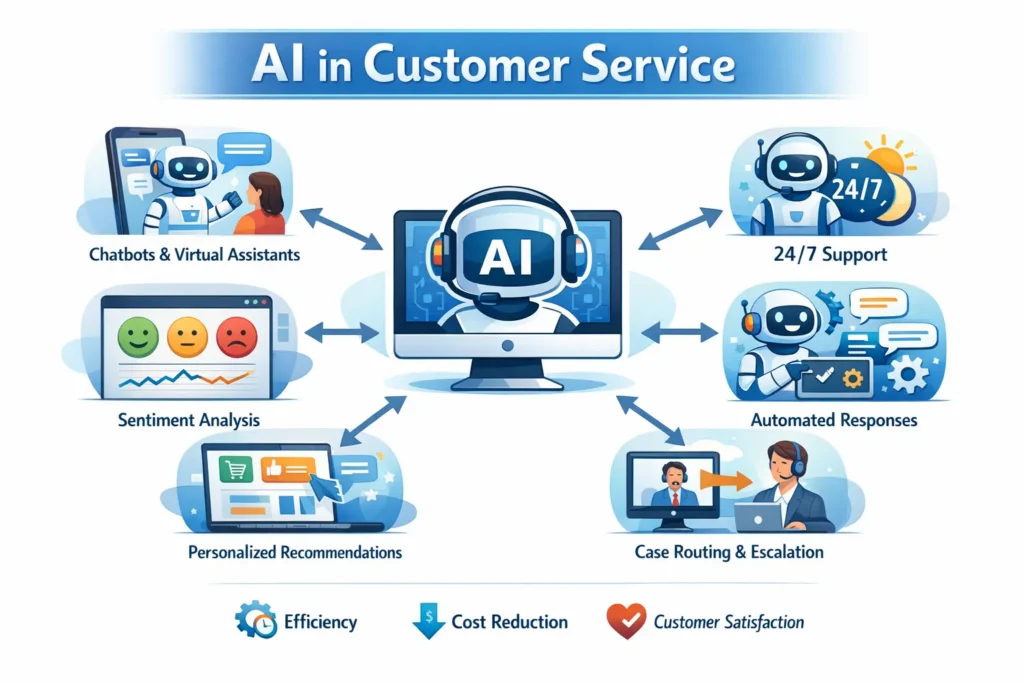
Providing excellent support to customers is a key element of running a successful business.
AI-powered chatbots and virtual assistants can answer frequently asked questions and provide basic information to customers.
For example, an AI assistant can help visitors learn about business hours, products, services, prices, delivery information, or appointment procedures.
Not every customer interaction needs to be handled through automation.
Complex complaints and sensitive situations may still require a human representative. AI works best when it handles simple questions and allows employees to focus on more difficult customer needs.
2. AI Helps With Marketing
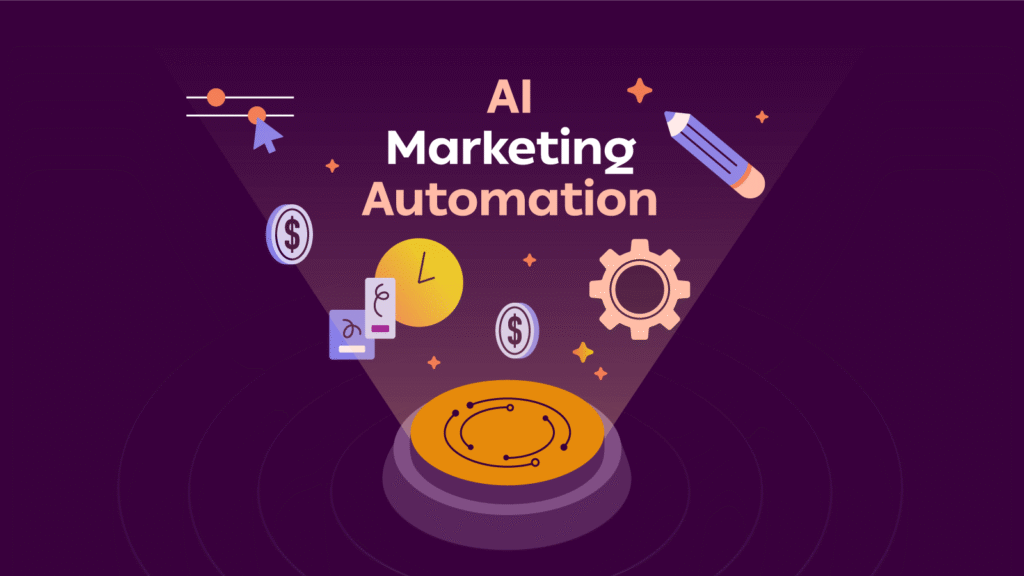
Marketing can require significant time and creativity. Small businesses can use AI to generate content ideas, draft social media posts, create email campaigns, and develop advertising concepts.
AI can help businesses arrange their marketing data while revealing useful trends in how customers interact with their products or services.
However, businesses should review AI-generated content before publishing it. Human editing is important because automated content may sometimes contain incorrect information or fail to match a company’s brand voice.
3. AI Can Support Content Creation
Creating content regularly can be challenging for small teams. AI tools can assist with blog outlines, product descriptions, social media captions, email drafts, and other written materials.
For example, a local service business could use AI to brainstorm blog topics based on common customer questions.
The best approach is to use AI as a starting point rather than publishing everything exactly as generated. Adding real business experience, original information, examples, and expert knowledge can make content more useful and authentic.
4. AI Can Automate Repetitive Tasks
Repetitive administrative work can consume valuable time. AI and automation tools can help businesses manage tasks such as data organization, email categorization, appointment reminders, document processing, and basic reporting.
Automation can reduce unnecessary manual work and lower the possibility of human errors.
Before automating a task, businesses should understand the process clearly. Important activities should also have human oversight so that mistakes can be identified quickly.
5. AI Helps With Business Decisions
Making business decisions often requires analyzing sales, customer behavior, expenses, and other information.
AI can analyze business information to uncover valuable trends and generate clear, easy-to-read summaries.
This can help owners discover which products perform well, which marketing activities receive attention, or where operational problems may exist.
AI is best used as a tool to guide business decisions while keeping final control in human hands.
Business owners should consider context and verify important information before making major decisions.
6. AI Can Help Small Businesses Save Money
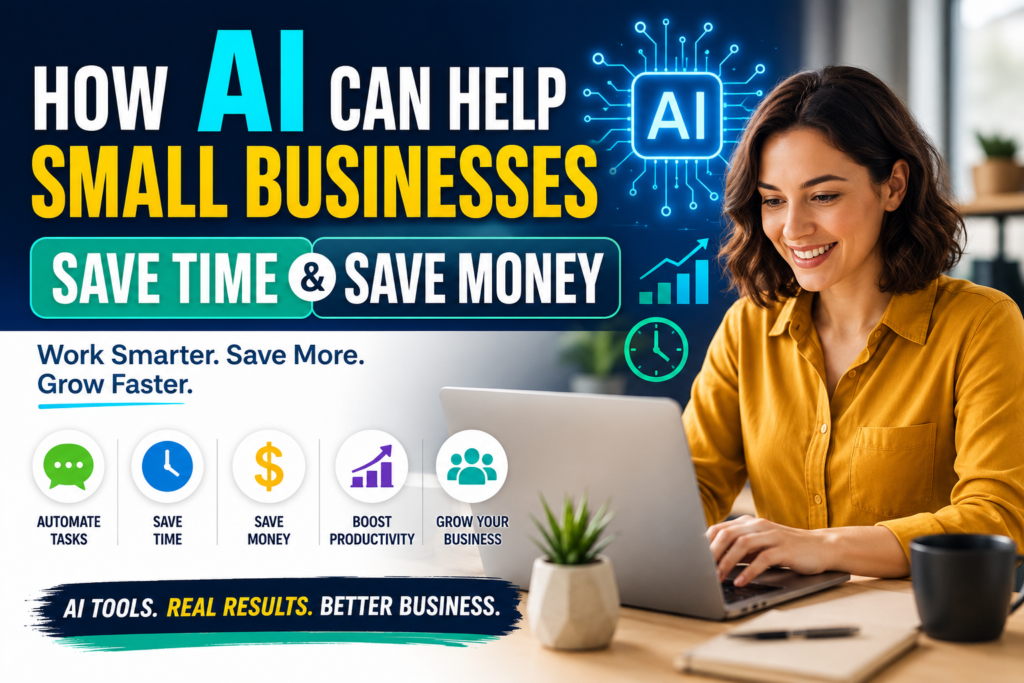
Small companies may not have enough resources to hire specialists for every task. AI can provide assistance with activities that would otherwise require additional time or external services.
For example, a business owner may use AI to brainstorm marketing campaigns, organize information, draft documents, or create basic customer-support responses.
The actual savings depend on the tool and how effectively it is implemented.Businesses should evaluate whether an AI tool is worth its price by considering the time, effort, and resources it can actually save.
7. AI Supports Sales and Lead Generation
AI can assist companies in organizing and tracking their prospective customers more effectively.
It can organize leads, summarize customer interactions, and help sales teams identify prospects that may need follow-up.
AI can use available customer details to help businesses prepare more relevant and personalized messages.
Businesses should still avoid sending excessive automated messages. Customers generally respond better when communication feels useful and relevant rather than completely automated.
How to Start Using AI in a Small Business
Small businesses do not need to introduce AI everywhere at onceA more effective strategy is to begin by automating a single task that requires considerable time or repeated effort.
First, identify a process that takes considerable time. Next, assess whether an AI solution can handle that particular process safely and effectively.
Start with a simple use case, measure the results, and improve the workflow gradually.
Businesses should also create clear rules for AI usage. Employees should understand which information can be entered into AI tools and which confidential information must remain protected.
Challenges of Using AI
Although AI offers many benefits, it also has limitations.
AI-generated information can sometimes be inaccurate. Some systems may produce outdated or misleading responses. Privacy is another concern when sensitive business or customer information is involved.
There can also be a learning curve when employees begin using new AI systems.
For these reasons, businesses should maintain human oversight, verify important information, protect confidential data, and train employees properly.
Future of AI for Small Business
AI adoption among small businesses is likely to continue growing as tools become easier to use. More businesses will use AI for marketing, customer support, data analysis, automation, sales, and content creation.
The businesses that benefit most will not necessarily be those using the largest number of AI tools. Instead, successful companies will likely focus on using the right tools for specific problems.
AI can become a practical business assistant when it is combined with human experience, creativity, and responsible decision-making.
Conclusion
AI for small business can provide practical support in many areas, including customer service, marketing, content creation, automation, sales, and business analysis.
Small businesses do not need a large technology budget to begin. Starting with a simple task and gradually expanding AI usage can be a more effective strategy.
The key is to treat AI as a tool that supports people rather than blindly depending on it. With proper planning, human review, and responsible data handling, AI can help small businesses become more efficient and competitive.
FAQs
1. How can AI help a small business?
AI can help with customer service, marketing, content creation, data analysis, sales, administrative tasks, and repetitive workflows.
2. Is AI expensive for small businesses?
Many AI tools offer free or relatively affordable plans. Costs vary depending on the features, number of users, and amount of usage.
3. Can AI replace small business employees?
AI can automate certain repetitive tasks, but it does not replace the judgment, creativity, communication, and expertise that employees provide. It is generally more useful as a productivity tool.
4. What is the easiest way to start using AI?
Start with one repetitive task that consumes time, such as drafting content, answering common questions, or organizing information. Test the results before expanding AI to other areas.
5. Is AI-generated content safe to publish?
AI-generated content should be reviewed before publication. Businesses should check facts, improve accuracy, add original information, and make sure the content reflects their brand.
6. What are the risks of using AI in business?
Common risks include inaccurate information, privacy concerns, security problems, excessive automation, and dependence on incorrect AI-generated recommendations.
7. Can AI help a small business grow?
Yes. AI can improve efficiency, support marketing, assist customers, and help businesses analyze information. These benefits can create more opportunities for growth when AI is used properly.