

Flowers bring life, color, and natural beauty to the world around us. They can transform ordinary gardens into attractive landscapes, brighten indoor spaces, and add elegance to special occasions. Beyond their visual appeal, flowers also contribute to the environment by providing nectar and pollen for bees, butterflies, and other important pollinators. Every flower has its own appearance, fragrance, growing pattern, and environmental needs, making the world of flowers incredibly diverse.
People use flowers for many purposes, including home decoration, wedding arrangements, celebrations, gardening, and thoughtful gifts. Different varieties also carry symbolic meanings. For example, roses are often connected with love, sunflowers represent positivity, and lilies may express purity or elegance. Learning about different types of flowers can help individuals choose suitable plants for their gardens, homes, or personal occasions.
This article explores popular flower varieties, their seasonal growth patterns, decorative uses, symbolic meanings, and practical gardening techniques. Whether you are a beginner or an experienced gardening enthusiast, understanding these details can help you enjoy flowers more effectively.
1. Understanding Different Types of Flowers

Flower varieties can be organized into several groups based on their lifespan, physical appearance, blooming period, and growing conditions. These classifications help gardeners understand how plants develop and which varieties may be appropriate for a particular environment.
One important way to categorize flowers is through their life cycle. Annual flowers grow, bloom, produce seeds, and complete their entire life cycle within a single growing season. Biennial plants usually require two seasons to finish their development. Perennial flowers, on the other hand, can survive for several years and produce new growth during suitable seasons.
Flowers can also be distinguished by their structure. Single flowers generally have a simple arrangement of petals, whereas double flowers contain numerous petals that create a dense and decorative appearance. Some varieties are valued for their impressive height, while others are appreciated for their compact shape or pleasant scent.
Environmental requirements are another useful classification factor. Certain flowers need direct sunlight for several hours, while shade-loving varieties grow better in less exposed areas. Soil drainage, temperature, humidity, and watering frequency can also influence their development.
Understanding these differences allows gardeners to make informed decisions and create flower arrangements or gardens that remain attractive and healthy.
2.Common Flower Varieties and Their Names
Numerous flower varieties are admired around the world for their distinctive colors, attractive shapes, and cultural importance. Some are commonly planted outdoors, while others are frequently selected for bouquets and indoor decoration.
Roses
Roses are widely recognized for their beautiful petals, pleasant fragrance, and variety of colors. They can be found in red, pink, yellow, white, orange, and other shades. Different colors often communicate different emotions. Red roses are commonly connected with romantic affection, whereas yellow varieties may represent happiness and friendship.
These plants usually perform well in sunny areas with fertile soil and proper drainage. Regular watering, occasional pruning, and suitable plant nutrition can help roses maintain healthy growth. Their timeless appearance makes them suitable for gardens, anniversaries, weddings, and floral gifts.
Tulips
Tulips are popular spring-blooming flowers with smooth stems and distinctive cup-like blossoms. Their colors include purple, yellow, red, pink, and white. Many people associate tulips with fresh beginnings, spring, and affection.
Tulips generally develop from bulbs, which are often planted in autumn in climates that provide appropriate winter conditions. They prefer locations with sufficient sunlight and soil that does not retain excessive water. These flowers work beautifully in garden borders, flower beds, and decorative containers.
Sunflowers
Sunflowers are easily recognized by their large flower heads and bright yellow petals. Their cheerful appearance makes them a popular choice for gardens and outdoor landscapes. They are often associated with optimism, warmth, and admiration.
Sunflower seeds are also useful for feeding birds and can be harvested from certain varieties. Most sunflowers require plenty of direct sunlight and well-draining soil. Tall plants may need additional support when exposed to strong winds.
Lilies
Lilies are elegant flowering plants known for their attractive petals and, in many varieties, their noticeable fragrance. Their blossoms may appear in white, yellow, pink, red, or orange. These flowers are frequently associated with sophistication, purity, and remembrance.
Many lilies grow from bulbs and benefit from nutrient-rich soil with good drainage. Their preferred sunlight conditions depend on the specific variety. These flowers often appear in ceremonial designs, garden features, and ornamental bouquets.
Daisies
Daisies are charming flowers that typically feature a central disk surrounded by delicate petals. Traditional daisies often have white petals and yellow centers, although other varieties display different colors.
These flowers are frequently linked with innocence, joy, and simplicity. Many types of daisies grow successfully in sunny locations with moderately fertile soil. They are excellent additions to cottage gardens, flower borders, and natural-looking landscapes.
Orchids
Orchids are admired for their unusual flower shapes, elegant appearance, and wide range of colors and patterns. Their distinctive blooms make them popular decorative plants and thoughtful gifts.
Many indoor orchid varieties, especially Phalaenopsis orchids, prefer bright but indirect sunlight. Their roots benefit from good airflow, and their growing medium should provide proper drainage. Careful watering is important because excessive moisture can damage their roots.
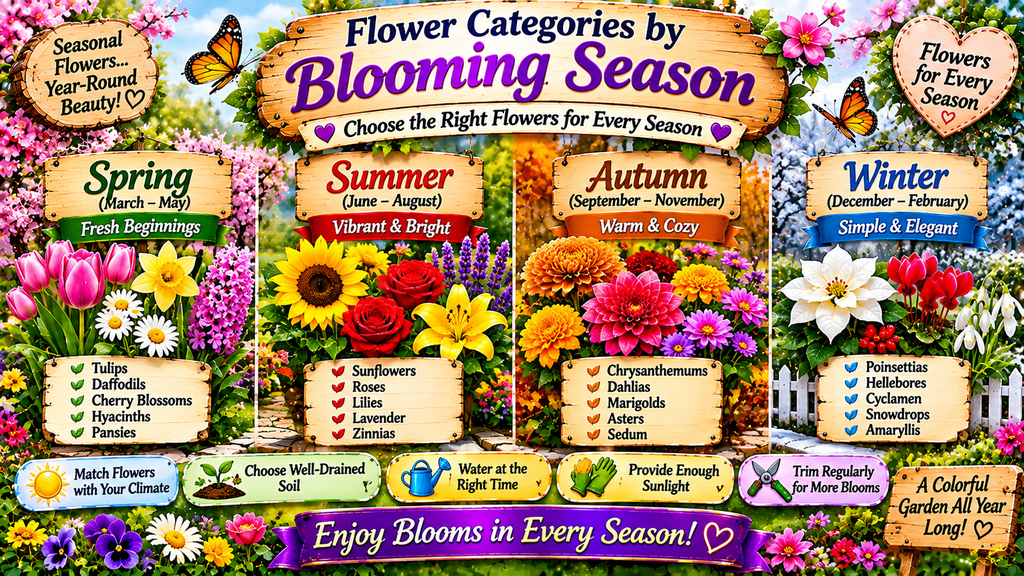
3. Flower Categories by Blooming Season
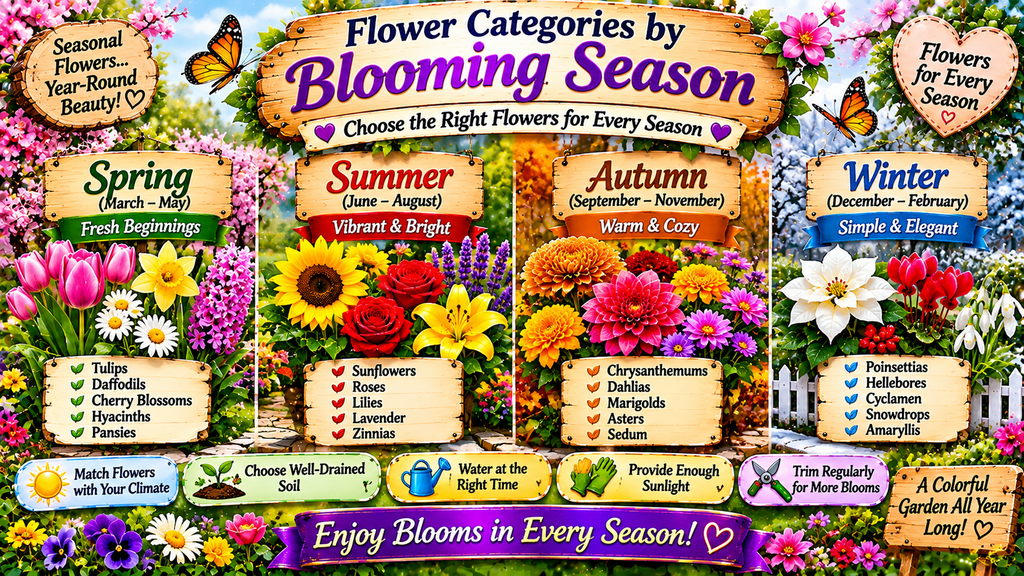
Flowering seasons vary by plant species. Seasonal gardening allows people to enjoy changing colors and maintain attractive outdoor spaces throughout the year.
Spring Flowers
Spring is a popular blooming period when many plants begin producing fresh flowers as temperatures rise. Tulips, daffodils, hyacinths, crocuses, and pansies are common spring varieties.
These flowers create colorful displays after colder weather. Some bulb-based plants require a period of cool temperatures before flowering. Gardeners living in warmer regions should select varieties that can adapt to their local climate.
Summer Flowers
Many summer-blooming plants thrive in warm weather and add vivid color to the garden. Popular examples include marigolds, zinnias, petunias, sunflowers, and hibiscus.
Many summer flowers need consistent watering and plenty of sun. During periods of intense heat, certain plants may benefit from shade during the hottest part of the afternoon. Consistent care can help maintain healthy blooms throughout the season.
Autumn Flowers
Autumn plants provide color when many summer flowers begin losing their blossoms. Chrysanthemums, asters, and selected dahlia varieties are frequently grown during this season.
These flowers are useful for seasonal garden displays and container arrangements. Their growth depends on temperature, soil conditions, and the possibility of frost in the surrounding environment.
Winter Flowers
Winter-flowering varieties offer natural beauty during cooler months. Hellebores, winter jasmine, and some cyclamen varieties are examples of plants that can provide flowers in winter.
In places with mild winters, certain varieties can remain outdoors. In colder regions, growing them in sheltered areas or indoors may provide better protection against low temperatures.
4. Beautiful Types of Flowers for Home and Garden Decoration

Flowers can improve the appearance of living rooms, balconies, offices, patios, and outdoor gardens. Choosing the right variety depends on available space, lighting, local weather, and the desired decorative style.
Indoor Flowers
Indoor flowering plants introduce natural color into homes and workplaces. Orchids, peace lilies, African violets, and flowering begonias are commonly selected for indoor decoration.
These plants require suitable lighting, careful watering, and appropriate containers. Avoid placing them near locations with extreme temperatures or strong drafts.
Peace lilies are appreciated for their green leaves and white spathes, which resemble flowers. African violets are popular because of their small size and attractive blossoms, making them suitable for compact indoor spaces.
Outdoor Garden Flowers
Outdoor flowering plants can create beautiful landscapes while supporting local pollinators. Common choices include roses, lavender, marigolds, sunflowers, and zinnias.
A well-planned flower garden can combine plants of different heights, colors, and blooming periods. Taller varieties generally look attractive toward the rear of a flower bed, while shorter plants can be placed near the front. This arrangement creates a balanced and visually appealing garden.
Flowers for Pots and Containers
Container gardening is a practical solution for people who have limited outdoor space. Petunias, pansies, geraniums, begonias, and miniature roses can be grown in pots when their needs are properly met.
Selecting an appropriate container is important. Pots should include drainage openings so that excess water can escape. The container size should also accommodate the plant’s roots, and a suitable potting mixture should be used to support healthy development.
5. Flower Names, Colors, and Their Meanings

Flowers have long been used to express feelings, celebrate relationships, and communicate symbolic messages. Their meanings may differ according to culture, tradition, and individual interpretation.
Red roses are commonly associated with deep affection and romantic love. White roses may communicate peace, innocence, or remembrance, while yellow roses are often chosen to express friendship and cheerful emotions.
Sunflowers are frequently connected with optimism, admiration, and warmth. Their bright appearance makes them suitable for joyful celebrations and uplifting floral arrangements.
Lilies are often considered symbols of grace, purity, and renewal. White lilies are frequently included in formal ceremonies, while colorful varieties add beauty to decorative bouquets.
Tulips represent springtime and affection in many traditions. Pink tulips may suggest care and tenderness, whereas yellow tulips are often connected with happiness and positive feelings.
Lavender is commonly associated with peacefulness and relaxation. Its pleasant fragrance makes it a popular garden plant and an ingredient in various fragrance-related products.
Daisies often represent innocence, simplicity, and happiness. Their natural appearance makes them suitable for casual flower arrangements and garden decoration.
Selecting flowers according to their symbolic meanings can make a gift more thoughtful. However, floral symbolism is not the same everywhere, so the intended message may depend on cultural background and personal preferences.
6. How to Choose the Best Types of Flowers for Your Garden

Selecting appropriate flowers is one of the most important steps in creating a successful garden. Before planting seeds or purchasing flowers, consider the following environmental and practical factors.
Climate and Temperature
Every flower variety has a preferred temperature range. Tropical plants usually grow best in warm conditions, while some temperate varieties need cooler weather for proper development.
Choose plants that can tolerate the climate in your area. Consider seasonal temperature changes, hot summers, cold winters, and rainfall patterns before deciding which varieties to grow.
Sunlight Requirements
Light plays a major role in flower development. Certain plants need direct sunlight, while others prefer partial shade or indirect light.
Observe how sunlight reaches your garden during the day. Plants placed in unsuitable lighting conditions may develop weak stems, produce fewer flowers, or experience poor growth.
Soil Quality
Healthy soil provides the nutrients and support required for strong roots and attractive blooms. Many flowering plants prefer soil that drains well and contains organic material.
Compost can improve soil texture and support nutrient availability. However, adding excessive fertilizer may encourage leaf development rather than flower production.
Watering Needs
Different flower varieties have different moisture requirements. Some plants need regularly moist soil, while others grow better when the soil becomes slightly dry between watering sessions.
Watering frequency should be adjusted according to weather, plant type, soil composition, and container size. Avoid allowing water to accumulate around the roots because this may cause root damage.
Space and Plant Height
Consider the final size of a flower before planting it. Tall varieties may block sunlight from smaller plants, while spreading flowers can occupy more space than expected.
Providing sufficient distance between plants encourages better airflow and reduces competition for nutrients, water, and sunlight.
7. Essential Tips for Growing and Caring for Flowers

Maintaining a flower garden does not have to be difficult. With suitable preparation and regular attention, gardeners can encourage healthy plants and attractive flowering.
Prepare the planting area: Remove unwanted weeds, loosen the soil, and mix in suitable organic matter when necessary. Proper preparation helps roots develop more effectively.
Follow an appropriate watering routine: Give each flower the amount of water it requires. Watering close to the soil rather than directly over the leaves may help reduce certain fungal issues.
Match plants with suitable sunlight: Place flowers in areas that meet their light requirements. Monitor their appearance to identify possible problems caused by too much or too little sunlight.
Apply fertilizer responsibly: Use a balanced fertilizer when appropriate and follow the manufacturer’s directions. Excessive fertilizer may harm plants or reduce flowering performance.
Remove old blossoms: The process of deadheading involves removing flowers that have finished blooming. In many varieties, this can encourage additional blossoms. However, leave some flowers in place when seed production is desired.
Monitor pests and plant health: Examine leaves, stems, and flowers regularly for insects, unusual spots, or damaged growth. Appropriate gardening practices and targeted pest control can help protect plants.
Prune when required: Removing damaged branches or unwanted growth can improve plant appearance and support healthy development. The ideal pruning period varies between flower varieties.
Protect flowers from harsh weather: Excessive heat, frost, heavy rain, and strong winds can affect flowering plants. Using sheltered locations or temporary protection may help reduce weather-related damage.
Regular observation and simple maintenance practices can make flower gardening enjoyable and rewarding. Learning how individual varieties respond to their environment is an important part of developing gardening skills.
Conclusion
The wide variety of flowers offers countless opportunities to enjoy nature’s beauty. Roses, tulips, sunflowers, lilies, orchids, and daisies each have distinctive features, colors, and growing requirements. They can enhance outdoor landscapes, brighten indoor environments, support pollinating insects, and communicate meaningful emotions through their symbolic associations.
Choosing the right flowers involves understanding their seasonal preferences, climate suitability, sunlight needs, soil conditions, and watering requirements. Proper planning combined with consistent care can help create an appealing garden or maintain beautiful flowering plants inside the home.
Whether you are exploring flower varieties for gardening, selecting decorations for a special occasion, or searching for a meaningful gift, learning about different types of flowers can make your choices more informed. With the right approach, anyone can appreciate and cultivate the natural charm of flowering plants.
8. Frequently Asked Questions About Types of Flowers
1. What are the most popular types of flowers?
Roses, tulips, lilies, sunflowers, orchids, daisies, marigolds, and carnations are widely popular. Their attractive colors, unique shapes, fragrances, and decorative uses make them common choices for gardens and floral arrangements.
2. How many types of flowers exist worldwide?
The world contains a very large number of flowering plant species, with hundreds of thousands recognized. The exact total may change as scientists discover new species and update botanical classifications. Flowering plants are scientifically known as angiosperms.
3. Which flowers are suitable for beginner gardeners?
Marigolds, sunflowers, zinnias, and some petunia varieties are often suitable for beginners. These plants can grow successfully when they receive the appropriate sunlight, watering, and soil conditions.
4. Which flowers are best for decorating a home?
Orchids, African violets, peace lilies, begonias, and geraniums are popular indoor decorative flowers. The best selection depends on available light, room temperature, space, and the amount of care a person can provide.
5. Are there flowers that bloom throughout the year?
Some flowering plants can produce blossoms for extended periods in suitable environments. Certain begonias, hibiscus, and tropical plants may flower repeatedly. However, continuous blooming depends on the variety, climate, and growing conditions.
6. Which flowers are commonly given as gifts?
Roses, tulips, carnations, lilies, orchids, and daisies are frequently presented as gifts. People usually select flowers according to the occasion, the recipient’s preferences, and the emotions they wish to express.
7. What is the difference between annual and perennial flowers?
Annual flowers complete their entire life cycle within one growing season. Perennial flowers can survive for multiple years and may produce new growth during suitable seasons. Marigolds and zinnias are examples of annuals, while lavender and many daisy varieties are perennials.
8. Which flowers attract bees and butterflies?
Sunflowers, lavender, cosmos, zinnias, and many daisy varieties can attract bees and butterflies. Flowering plants that provide accessible nectar and pollen are particularly beneficial for pollinating insects.
9. How can I encourage flowers to bloom more frequently?
Providing suitable sunlight, healthy soil, proper watering, and appropriate nutrients can support flowering. Removing faded blossoms may encourage repeated blooms in certain varieties. Avoid excessive nitrogen fertilizer because it can promote leaf growth instead of flowers.
10. How should I select flowers for my garden?
Consider your local weather, soil quality, sunlight exposure, garden dimensions, and maintenance requirements. Selecting plants that naturally suit your environment can make gardening easier and help produce healthier, more attractive flowers.
[…] Open the Google Maps application. […]
[…] Create unique passwords for important accounts. […]