
Preparing for a job interview is an important step toward building a successful career. Whether you are applying for your first job, seeking a new position, or aiming to advance professionally, understanding the questions in an interview can help you feel more confident and prepared. An interview gives employers an opportunity to evaluate your skills, experience, communication abilities, personality, and suitability for a particular role.
Many candidates feel nervous when they enter an interview room. They may worry about answering difficult questions, explaining their experience, or making a positive impression. However, proper preparation can reduce this stress and help candidates communicate their qualifications more effectively.
Interview questions usually focus on your background, strengths, weaknesses, career goals, work experience, and problem-solving abilities. Employers may also ask situational questions to understand how you would handle challenges in the workplace.
The best way to prepare is to research the company, understand the job description, and practice answering common questions using real examples. Candidates should avoid memorizing answers word for word because natural and honest communication is more effective.
This guide explains common interview questions, provides sample answers, and shares practical strategies to help candidates perform better during job interviews.
2. Most Common Questions in an Interview

Employers frequently ask several standard questions to understand a candidate’s professional background and personality Thinking through responses to these questions ahead of time can help you feel more prepared for the interview.
Tell Me About Yourself
This is one of the most common opening questions. The interviewer wants a brief introduction that highlights your education, relevant experience, skills, and career interests.
Sample Answer:
“I have a strong interest in developing my professional skills and contributing to a successful team. I have completed my education in my relevant field and have gained knowledge of the skills required for this position. I’m dependable and driven, and I enjoy taking on opportunities to learn and grow. I am looking for an opportunity where I can apply my abilities and continue growing professionally.”
Keep your answer focused on professional information rather than sharing your entire personal history.
Why Do You Want This Job?
Employers want to know whether you understand the role and have a genuine interest in working for their organization.
Sample Answer:
“I am interested in this position because it matches my skills, interests, and career goals. I believe this opportunity will allow me to contribute to the organization while improving my professional abilities. I am also interested in learning from experienced team members and becoming a valuable part of the company.”
What Are Your Strengths?
This question helps the interviewer understand your positive qualities.
Sample Answer:
“My strengths include communication, time management, problem-solving, and adaptability. I can work independently as well as collaboratively with a team. I also take responsibility for my tasks and try to complete my work accurately and on time.”
Choose strengths that are relevant to the job instead of listing unrelated qualities.
What Is Your Weakness?
Interviewers may ask this question to evaluate your self-awareness and willingness to improve.
Sample Answer:
“Sometimes I spend extra time checking my work because I want to make sure it is accurate. I am improving my time management by setting priorities and following deadlines more carefully.”
A good answer should identify a genuine area for improvement and explain how you are working on it.
3. Questions About Skills, Experience, and Education

Questions about education and experience help employers determine whether you have the qualifications required for the position. These questions are especially important for professional, technical, administrative, and entry-level jobs.
What Is Your Educational Background?
The interviewer wants to understand how your education relates to the job.
Sample Answer:
“I have completed my education in a field that has helped me develop relevant knowledge and skills. During my studies, I learned the importance of discipline, teamwork, communication, and completing tasks responsibly. I am interested in applying this knowledge in a professional environment.”
If you have specific certifications, projects, or academic achievements, mention those details briefly.
Do You Have Any Previous Work Experience?
Candidates with experience should explain their previous responsibilities and achievements. Fresh candidates can discuss internships, academic projects, volunteer work, or practical learning.
Sample Answer for Fresh Candidates:
“I am a fresh candidate, so I do not have formal professional experience yet. However, I have developed relevant skills through my education, personal projects, and learning activities. I am eager to learn, accept responsibilities, and gain practical experience in this role.”
What Skills Make You Suitable for This Position?
Employers want to see a connection between your abilities and the job requirements.
Sample Answer:
“I believe my communication skills, willingness to learn, attention to detail, and ability to manage tasks make me suitable for this position. I have reviewed the job requirements and understand the responsibilities. I am confident that I can learn quickly and contribute positively to the team.”
Always mention skills that you can honestly demonstrate.
4. Behavioral and Situational Interview Questions

Behavioral interview questions give employers insight into how you’ve dealt with situations you’ve actually faced. Situational questions ask how you would respond to a possible workplace challenge.
One structured way to answer behavioral interview questions is to organize your response around the situation, task, action, and result:
- Situation: Explain the background of the situation.
- Task: Describe your responsibility.
- Action: Explain what you did.
- Result: Share the outcome.
How Do You Handle Pressure?
Sample Answer:
“When things get stressful, I stay composed, organize my workload, and tackle the most important tasks first.” . When I have multiple tasks, I divide them into smaller steps and complete the most important work first. I also communicate with team members when clarification is needed. This approach helps me remain productive during busy periods.”
Describe a Challenge You Have Faced
Sample Answer:
“During an academic or work project, I faced a challenge that required careful planning. I identified the main problem, discussed possible solutions, and divided the work into manageable steps. By staying focused and communicating effectively, I was able to complete the task successfully.”
Use a real example whenever possible. Avoid inventing achievements that you cannot explain if the interviewer asks follow-up questions.
How Do You Handle Teamwork?
Sample Answer:
“I believe teamwork requires communication, respect, cooperation, and responsibility. I listen to other team members, share ideas when appropriate, and support the team in achieving common goals. If a disagreement occurs, I try to understand different perspectives and work toward a practical solution.”
5. Questions About Career Goals and Motivation

Employers often ask about your future plans to understand your motivation and whether the position aligns with your professional goals.
Where Do You See Yourself in Five Years?
Sample Answer:
“In five years, I hope to have developed strong professional expertise and gained valuable experience in my field. I would like to take on greater responsibilities and contribute more effectively to the organization. My goal is to continue learning and building a stable, successful career.”
Your answer should demonstrate ambition while remaining realistic.
Why Should We Hire You?
This question gives you an opportunity to summarize your strengths and explain your value.
Sample Answer:
“You should consider hiring me because I am responsible, motivated, and willing to learn. I understand the importance of meeting deadlines, working professionally, and supporting team goals. I believe my skills and positive attitude will help me contribute to the organization, and I am ready to improve through practical experience.”
What Motivates You?
Sample Answer:
“I am motivated by learning new skills, solving problems, achieving goals, and seeing progress in my work. I enjoy being part of a productive environment where I can contribute to meaningful tasks and continue developing professionally.”
6. How to Prepare for Questions in an Interview
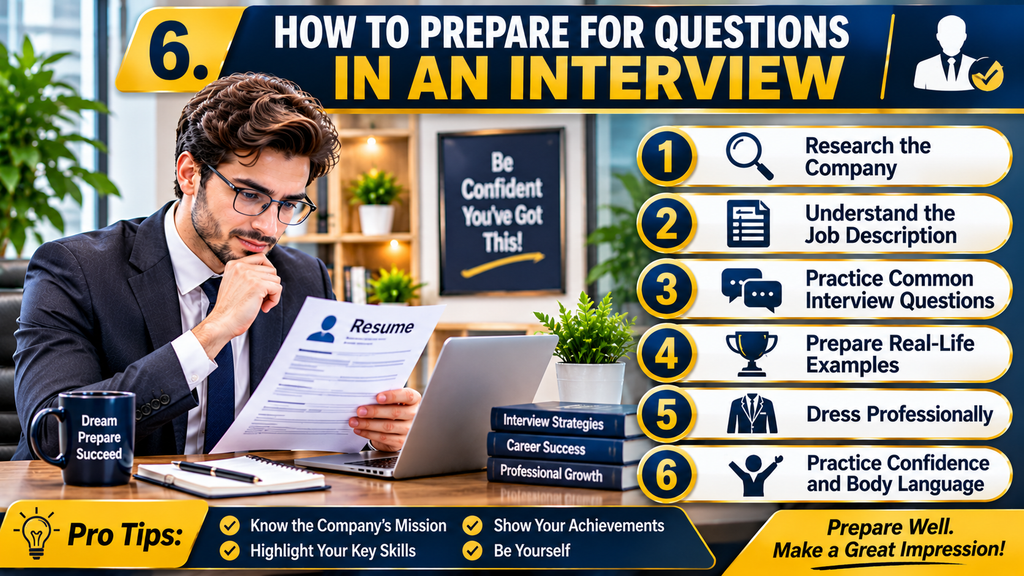
Proper preparation can significantly improve your interview performance. Candidates who research the employer and practice their answers often communicate more confidently.
Research the Company
Visit the company’s official website and learn about its services, products, values, and work culture. Understand the role you are applying for and identify how your skills match the job requirements.
Review the Job Description
Read the job advertisement carefully. Identify required skills, responsibilities, qualifications, and experience. Prepare examples that demonstrate your suitability for the role.
Practice Your Answers
Practice answering common interview questions aloud. You can rehearse in front of a mirror or ask a friend to conduct a mock interview. Focus on clear, concise, and natural communication.
Prepare Your Documents
Keep your resume, educational certificates, identification documents, portfolio, and other required materials organized. Bring copies if the employer requests them.
Plan Your Appearance and Arrival
Choose professional clothing suitable for the workplace. If the interview is in person, plan your route and aim to arrive early. For online interviews, test your internet connection, microphone, camera, and meeting link.
Prepare Questions for the Interviewer
At the end of an interview, employers may ask whether you have any questions. Useful questions include:
- What are the main responsibilities of this position?
- What does success look like in this role?
- Will training be provided?
- How does the team collaborate?
- What are the next steps in the hiring process?
Asking relevant questions shows interest and helps you understand the job more clearly.
7. Best Tips for Answering Interview Questions Successfully

Knowing the questions in an interview is useful, but answering them effectively is equally important. Follow these practical tips to make a positive impression.
Be Honest: Always provide truthful information about your education, skills, experience, and achievements. Employers may verify your details.
Keep Answers Clear: Avoid unnecessarily long explanations. Answer the question directly and include relevant examples.
Use Positive Language: Focus on what you have learned and how you can contribute. Avoid speaking negatively about previous employers, colleagues, or institutions.
Show Confidence: Maintain appropriate eye contact, use a calm voice, and sit comfortably. Confidence does not mean pretending to know everything.
Listen Carefully: Allow the interviewer to finish the question before responding. If you do not understand something, politely ask for clarification.
Avoid Memorized Responses: Practice your answers, but speak naturally. Memorized answers may sound robotic and can make it difficult to respond to follow-up questions.
Demonstrate Interest: Show enthusiasm for the role and the organization. Explain why the opportunity is relevant to your career goals.
Follow Up Professionally: If appropriate, send a short thank-you message after the interview. Express appreciation for the opportunity and reiterate your interest in the position.
These techniques can help fresh candidates and experienced professionals improve their interview communication and increase their readiness for different hiring situations.
Conclusion
Understanding the common questions in an interview is an essential part of successful job preparation. Candidates who prepare thoughtful answers, research employers, and practice professional communication can approach interviews with greater confidence.
From introducing yourself and discussing your strengths to explaining your career goals and handling challenging situations, every answer should demonstrate honesty, relevant skills, and a positive attitude.
Fresh candidates should focus on education, transferable skills, and willingness to learn, while experienced professionals should highlight achievements and practical expertise. Using the STAR technique for behavioral questions and preparing meaningful questions for the interviewer can further improve performance.
A successful interview is not only about giving perfect answers. It is about communicating clearly, demonstrating your suitability, and showing that you are ready to contribute. With consistent practice and preparation, you can improve your interview skills and take a confident step toward your next career opportunity
8. Frequently Asked Questions (FAQs) About Questions in an Interview
1. What are the most common questions in an interview?
The most common questions include “Tell me about yourself,” “Why do you want this job?”, “What are your strengths and weaknesses?”, and “Why should we hire you?” Employers also ask about education, experience, teamwork, and career goals.
2. How should I answer “Tell me about yourself”?
Provide a brief professional introduction covering your education, relevant skills, experience, and career interests. Keep the answer focused on the position you are applying for.
3. How can I prepare for a job interview?
Research the company, review the job description, practice common questions, organize your documents, and prepare questions for the interviewer. Practicing aloud can also improve confidence.
4. What should a fresh candidate say in an interview?
A fresh candidate should highlight education, relevant skills, academic projects, certifications, willingness to learn, and motivation. Lack of formal experience can be addressed honestly and positively.
5. How do I answer “What are your strengths?”
Choose two or three strengths relevant to the job, such as communication, teamwork, organization, or problem-solving. Support your answer with a short example if possible.
6. What is the best answer to “What is your weakness?”
Mention a genuine but manageable weakness and explain how you are improving it. Avoid claiming that you have no weaknesses or presenting a weakness without a solution.
7. Why do interviewers ask “Why should we hire you?”
Interviewers ask this question to understand what makes you suitable for the role. Explain how your skills, attitude, qualifications, and willingness to contribute match the job requirements.
8. How can I reduce nervousness during an interview?
Prepare in advance, practice answering questions, take slow breaths, arrive early, and listen carefully. Remember that an interview is also an opportunity for you to learn about the employer.
9. What questions should I ask at the end of an interview?
You can ask about job responsibilities, team structure, training opportunities, performance expectations, or the next steps in the hiring process. Choose questions that demonstrate genuine interest.
10. How long should interview answers be?
Most answers should be around 30 seconds to two minutes, depending on the question. Keep your response focused, provide relevant details, and avoid unnecessary information.
.