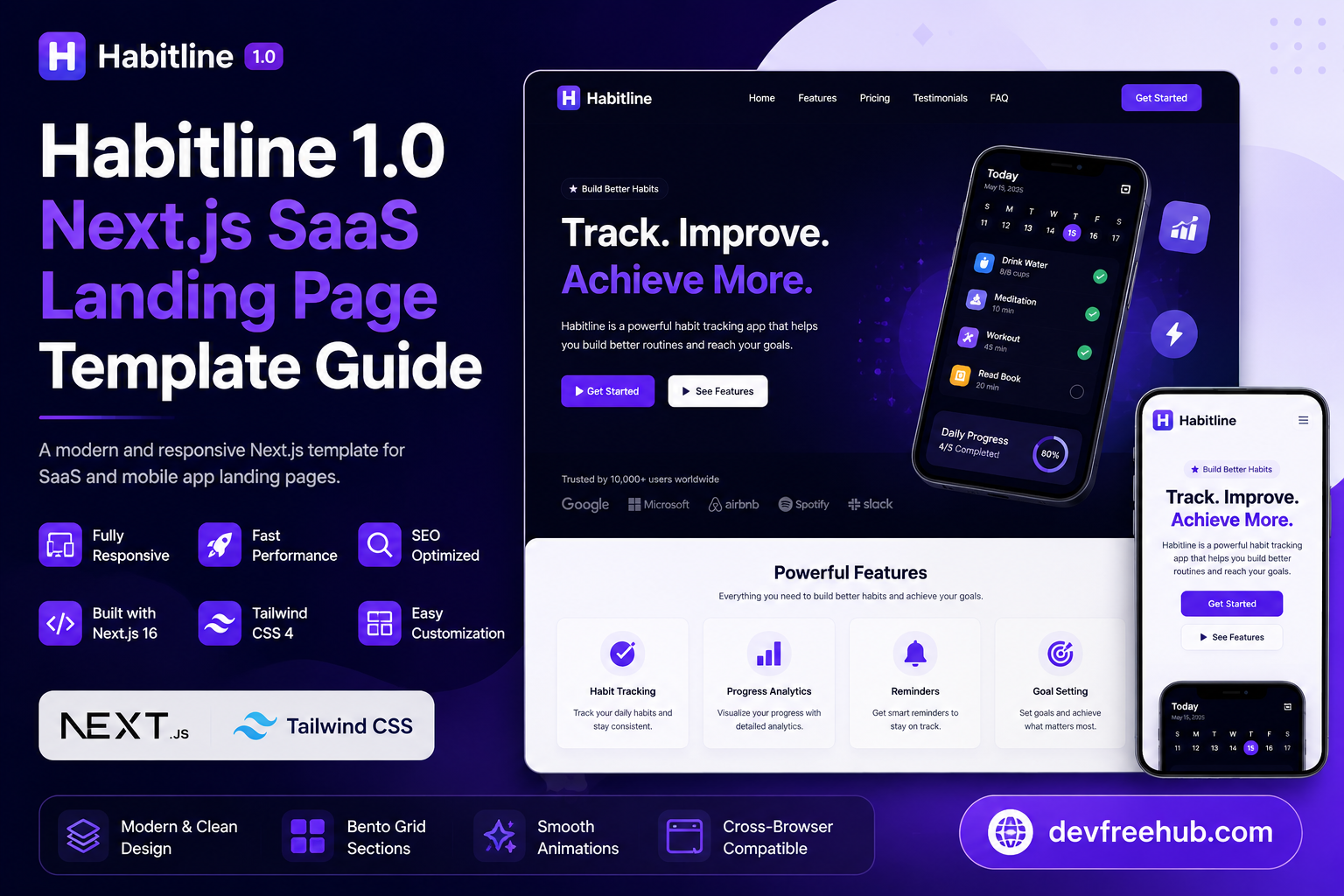

Creating a professional website for a mobile application or SaaS product can take considerable time. Before a product can attract users, developers and marketers often need to build landing pages that explain the product, communicate its benefits, and encourage visitors to take action.
Starting from an empty project means designing layouts, creating reusable components, choosing typography, building responsive sections, and handling many other front-end tasks.
Habitline 1.0 provides a ready-made starting point for this type of project. It is designed around mobile applications and SaaS products and uses modern front-end technologies to create a structured landing page experience.
This guide explains what Habitline 1.0 offers, how its technology stack works, and why a structured template can be useful for product websites.
What Is Habitline 1.0?
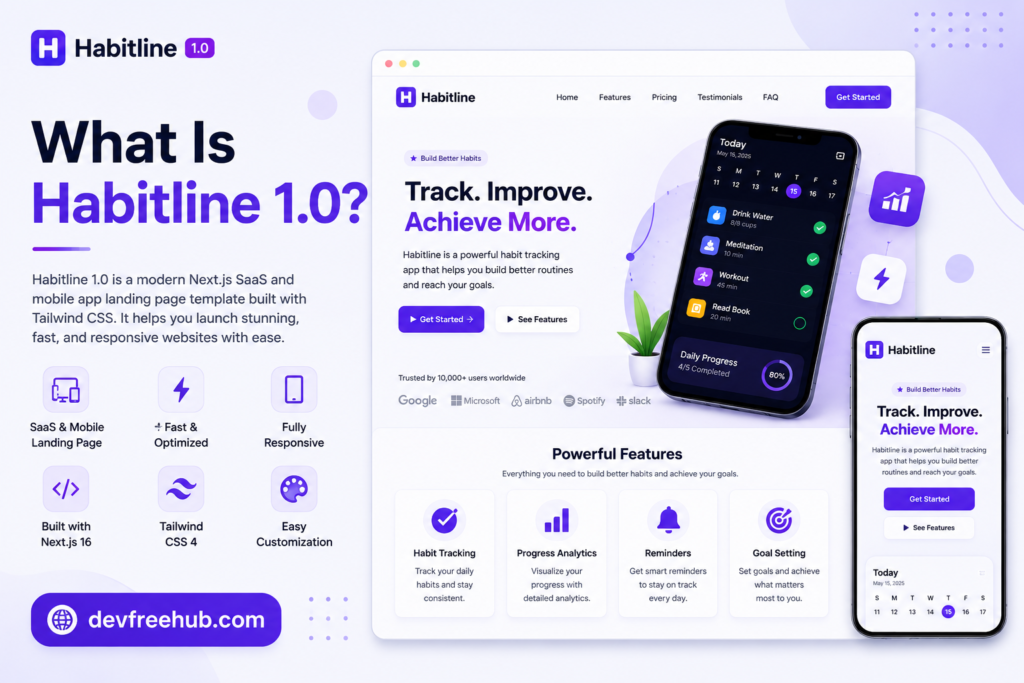
Habitline 1.0 is a front-end website template intended for mobile applications, SaaS products, and similar digital services.
The template provides a pre-designed structure that developers can customize for their own product. Instead of building every section from the beginning, developers can modify existing layouts, replace content, adjust colors, and connect the interface to their preferred backend or application.
This approach can reduce the amount of initial design and front-end development required for a landing page.
Built With Next.js
Habitline 1.0 is built using Next.js, a popular React-based framework for developing modern web applications.
Next.js provides developers with features that can help organize applications, manage pages, optimize certain resources, and build modern web experiences.
Using a framework-based template can also make the project easier to extend when new pages or features are required.
For developers already familiar with React and Next.js, a ready-made template can provide a useful foundation for building a customized product website.
Tailwind CSS Styling
The template also uses Tailwind CSS for styling.
Tailwind follows a utility-based approach that allows developers to apply styling directly through predefined utility classes. This can make it easier to modify spacing, typography, sizing, positioning, and responsive behavior.
For a developer, this means many visual changes can be made without creating a large collection of custom CSS rules.
Tailwind can also help maintain consistency across different sections when the design system is structured properly.
Designed for SaaS Products
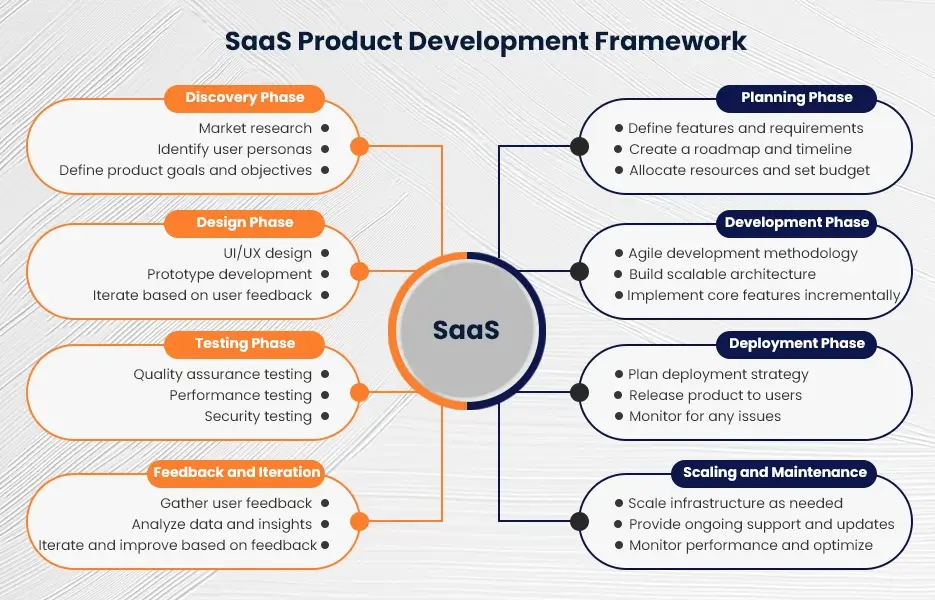
SaaS websites have a specific purpose. They need to explain what a product does, demonstrate its value, answer common questions, and encourage visitors to register, subscribe, or request more information.
Habitline 1.0 is structured around this type of product presentation.
A typical SaaS landing page may contain sections for product benefits, features, pricing, testimonials, calls to action, and other information that helps potential customers understand the service.
Developers can adapt these sections according to their own product and marketing strategy.
Mobile App Landing Pages
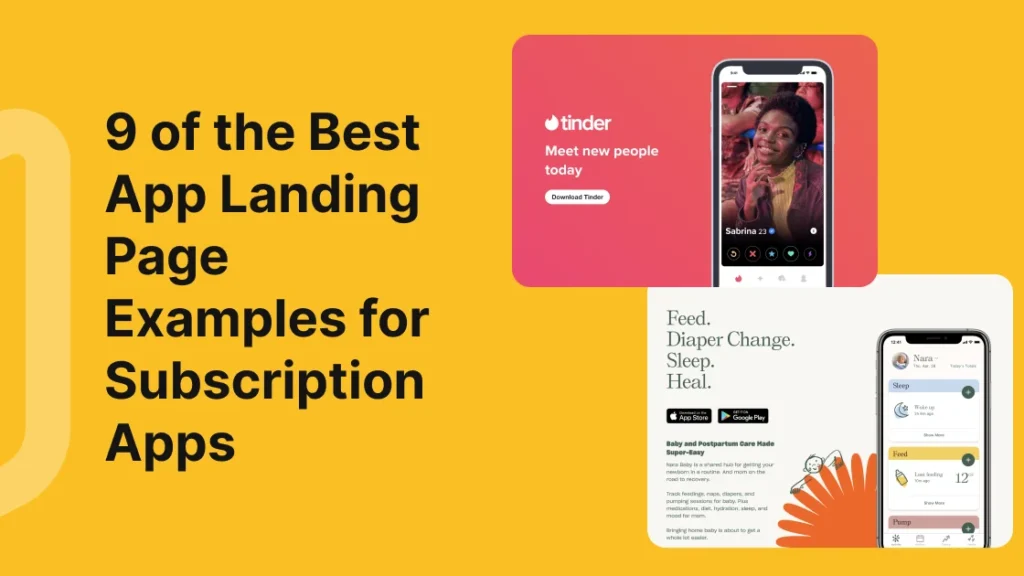
Mobile applications also need websites that clearly communicate their purpose.
A good app landing page should quickly explain what the application does and why someone should install or use it.
Habitline can serve as a starting point for this type of website. Developers can replace the sample content with app screenshots, feature descriptions, download links, pricing information, and other relevant details.
The layout can then be adjusted to match the application’s branding.
Responsive Design
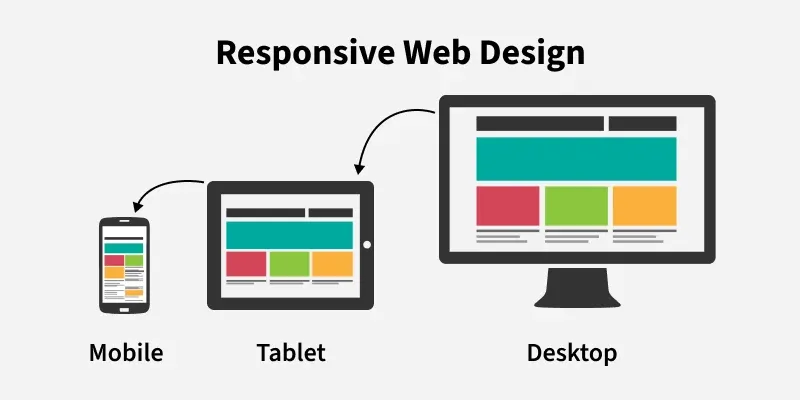
Visitors may access a SaaS or app website from desktops, laptops, tablets, and smartphones.
A fixed desktop-only layout can create usability problems on smaller screens. Responsive design allows website sections to adapt according to the available screen space.
Habitline 1.0 is designed with responsive layouts so that developers can create pages that work across different device sizes.
However, customization can affect responsiveness. After modifying the template, developers should test the website on multiple screen sizes.
Modern Visual Structure
The visual presentation of a SaaS website can influence how users perceive the product.
Habitline uses a modern layout approach with structured content sections that can help organize information without making the page feel unnecessarily complicated.
A clean interface can make it easier for visitors to scan headings, benefits, calls to action, and product information.
Developers can further customize the visual style to match their product’s identity.
Bento-Style Content Sections
Modern web interfaces increasingly use grid-based layouts to present multiple pieces of information in an organized way.
A bento-style section can divide content into different cards or blocks while maintaining a consistent visual structure.
This type of layout can be useful for displaying product features, statistics, screenshots, benefits, integrations, or other related information.
The approach also gives designers flexibility when arranging content with different sizes and priorities.
Conversion-Focused Layout
A successful landing page needs more than an appealing design; it should direct visitors toward a clear and relevant next step.
Depending on the product, that action might be:
- Starting a free trial
- Downloading an application
- Creating an account
- Booking a demonstration
- Viewing pricing
- Contacting the company
Habitline’s structure can be adapted around these conversion goals.
When customizing the template, developers should make important calls to action easy to identify without overwhelming visitors with too many competing buttons.
SEO-Friendly Website Structure
A visually attractive website still needs a sensible structure for search engines and users.
A good front-end structure can help developers organize headings, content sections, links, metadata, and other page elements.
However, using an SEO-friendly template does not automatically make a website rank well.
After implementing Habitline, developers should still optimize:
- Page titles
- Meta descriptions
- Headings
- URLs
- Internal links
- Image information
- Structured data where appropriate
- Page speed
- Content quality
SEO should be treated as an ongoing process rather than a one-time template feature.
Loading Performance
Website performance is particularly important for landing pages because visitors may leave if the page takes too long to become usable.
A template built with modern front-end technologies can provide a useful foundation, but actual performance depends on implementation.
Large images, unnecessary scripts, third-party services, animations, and poorly optimized assets can increase loading time.
Developers should compress images, remove unnecessary resources, test page performance, and optimize assets before launching the website.
Smooth Animations and Interactions
Animations can make a website feel more interactive and modern.
Used correctly, subtle transitions can help guide attention and provide feedback when users interact with buttons, cards, menus, or other elements.
However, animation should support the user experience rather than distract from the content.
Developers should also consider performance and accessibility when adding or modifying animated elements.
Easy Customization
One of the main benefits of using a template is the ability to start with an existing structure.
With Habitline, developers can modify content, colors, typography, layouts, buttons, images, and other visual elements according to the requirements of the project.
This makes the template useful for projects that need a professional starting point without designing every component from scratch.
Organized Project Structure
A well-organized project is easier to maintain.
When components, assets, styles, and pages are logically arranged, developers can locate files more quickly and make future modifications with less confusion.
This becomes increasingly important when a landing page grows and additional sections or pages are introduced.
An organized codebase can also make collaboration easier when multiple developers are working on the same project.
Cross-Browser Compatibility
Website visitors do not all use the same browser.
A landing page should be tested across commonly used browsers to identify layout inconsistencies, JavaScript problems, or styling issues.
Habitline is designed to provide a cross-browser-friendly foundation, but developers should still perform their own testing after customization.
Third-party libraries and custom code can introduce browser-specific behavior even when the original template works correctly.
Who Can Use Habitline 1.0?
Habitline 1.0 can be useful for several types of digital products and businesses.
It may work as a starting point for:
- SaaS applications
- Mobile apps
- Productivity platforms
- Subscription services
- Startup websites
- Digital tools
- Technology products
- Online services
The template is most useful when the project’s requirements match its overall landing-page structure.
Benefits of Using a Ready-Made Template
Building a website from scratch provides complete control, but it also requires more time.
A ready-made template provides an initial design system, page structure, reusable components, and visual direction.
Developers can then spend more time on product-specific work instead of repeatedly creating common landing-page elements.
Templates are especially useful when a project needs to launch quickly or when a development team wants a consistent starting point.
Things to Check Before Launching
After customizing Habitline 1.0, the website should be tested carefully.
Check every navigation link, button, form, responsive layout, image, animation, and interactive component.
Also review the technical side of the website.
Make sure:
- Metadata is configured correctly
- Images are optimized
- Important pages are crawlable
- The website works on mobile devices
- Forms function correctly
- Calls to action lead to the right destinations
- No unnecessary demo content remains
- Performance has been tested
These final checks can prevent small issues from affecting the user experience after launch.
Final Thoughts
Habitline 1.0 provides a modern starting point for developers building websites for SaaS products and mobile applications. Its Next.js and Tailwind CSS foundation gives developers a structured environment that can be customized for different digital products.
The responsive layout approach makes it suitable for users on different devices, while organized sections can help businesses explain their products and guide visitors toward important actions.
The biggest advantage of using a template is the development time it can save. Instead of beginning with a completely empty project, developers can start with an existing structure and focus their effort on branding, content, functionality, and product-specific requirements.
However, a template should always be customized before launch. Good content, fast performance, accessible design, proper SEO, and clear calls to action are still essential for creating an effective product website.
When used as a foundation rather than a finished solution, Habitline 1.0 can help developers move from an initial idea to a polished SaaS or mobile app landing page more efficiently.
FAQs
1. What is Habitline 1.0?
Habitline 1.0 is a front-end website template designed for SaaS products, mobile applications, startups, and other digital services. It provides a customizable landing-page structure.
2. Which technologies are used in Habitline 1.0?
Habitline 1.0 is built with Next.js and Tailwind CSS, giving developers a modern React-based foundation and utility-based styling system for customization.
3. Is Habitline 1.0 suitable for mobile app websites?
Yes. Its landing-page structure can be customized for mobile applications by adding app screenshots, features, download links, pricing, and other product information.
4. Can developers customize Habitline 1.0?
Yes. Developers can adapt the template’s layouts, content, colors, typography, components, images, and other elements to match the requirements and branding of their project.
5. Is Habitline 1.0 automatically SEO optimized?
The template can provide a useful technical foundation, but SEO still requires proper content, metadata, headings, URLs, internal linking, performance optimization, and other ongoing optimization work.