
Search engines have changed significantly over time. Earlier SEO strategies often focused heavily on exact keyword usage and repetitive optimization methods. As user behavior became more complex, search engines needed better systems that could understand the meaning behind search queries.
Google introduced RankBrain to improve search result quality and better understand user intent. Instead of simply matching exact words, RankBrain helps Google analyze patterns and understand relationships between searches and content.
Today, RankBrain remains an important part of modern SEO because it focuses on delivering more relevant results to users.
What Is Google RankBrain?
Google RankBrain is a machine-learning-based component of Google’s search system that helps interpret search queries and improve result relevance.
RankBrain helps Google understand:
- Search intent
- User behavior patterns
- Relationships between words
- Context of search terms
- Meaning behind unfamiliar queries
Traditional systems often relied heavily on keyword matching. RankBrain introduced a more intelligent approach.
Rather than focusing only on words, it attempts to understand what users are actually looking for.
Why Google Created RankBrain
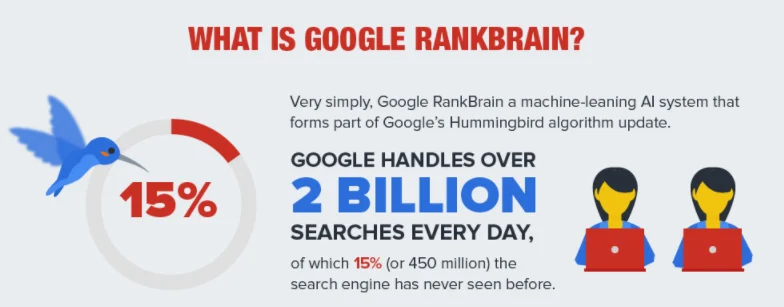
Search engines process billions of searches every day.
Many of these searches are unique or rarely seen before.
Google needed a system that could:
- Understand unfamiliar search phrases
- Interpret natural language
- Improve search accuracy
- Deliver more useful content
RankBrain helped solve these challenges through machine learning techniques.
How Google RankBrain Works
RankBrain analyzes search queries and attempts to understand their meaning.
The process generally includes:
Understanding Search Intent
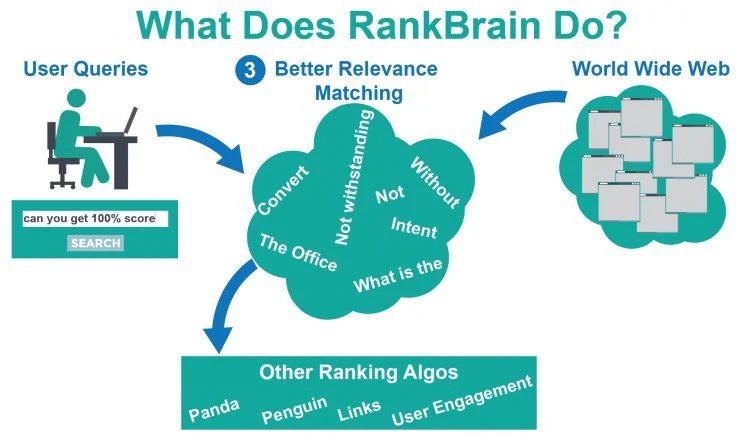
The system tries to determine what users actually want.
For example:
A user searches:
“Best laptop for remote work”
Google may recognize possible intent such as:
- Performance requirements
- Budget considerations
- Battery life
- Portability needs
Rather than matching only the words “best laptop,” Google focuses on broader meaning.
Connecting Related Concepts
RankBrain identifies relationships between words and topics.
For example:
Searches involving:
- smartphones
- mobile devices
- phone technology
may be understood as related concepts.
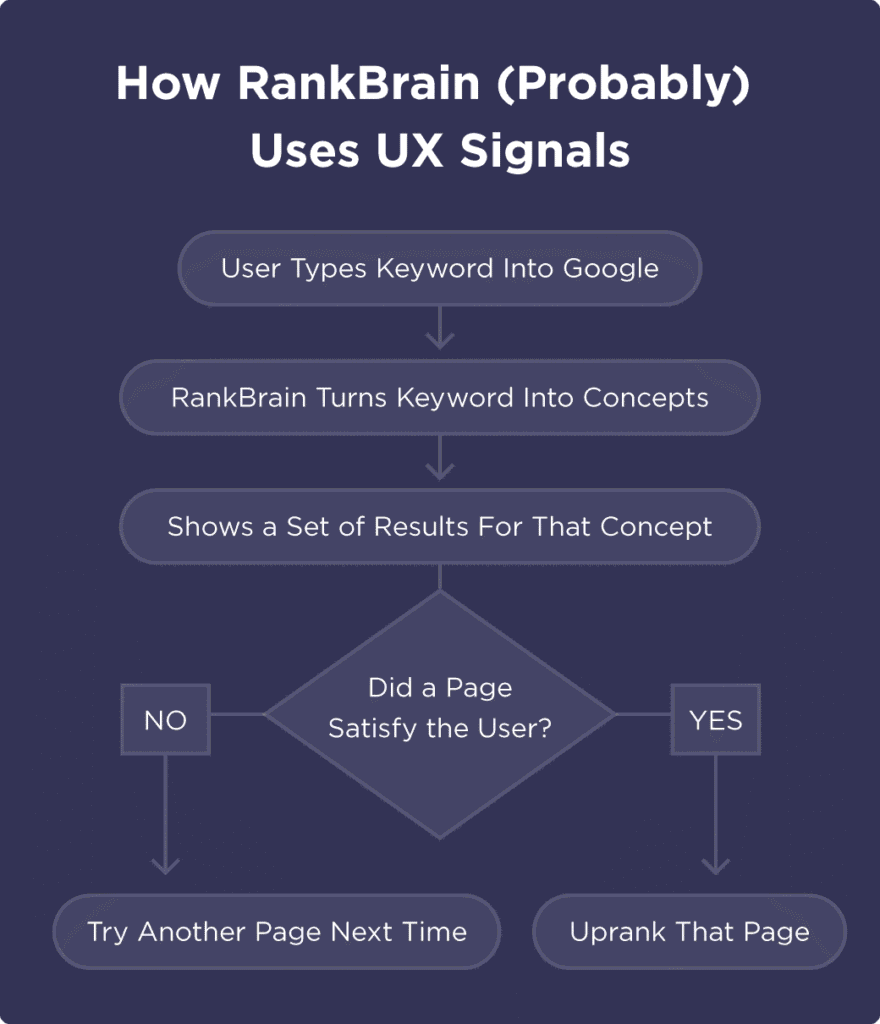
Learning from User Behavior
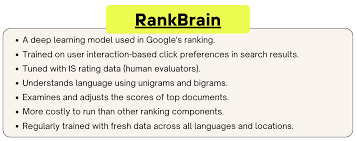
The system can analyze how users interact with search results.
Examples include:
- Click patterns
- Time spent on pages
- Search refinements
- User engagement signals
These interactions help improve future search results.
How RankBrain Changed SEO
RankBrain shifted SEO away from outdated tactics.
Older SEO methods often relied on:
- Excessive keyword repetition
- Exact-match keyword targeting
- Content written primarily for search engines
Modern SEO increasingly focuses on:
- User intent
- Content quality
- Topic relevance
- User experience
This changed how content creators approach optimization.
Important Factors Influenced by RankBrain
Several areas may indirectly affect how content performs.
Content Relevance
Content should answer user questions clearly.
User Experience
Fast-loading and easy-to-navigate websites improve visitor satisfaction.
Engagement Signals
Users who spend more time interacting with content often indicate value.
Search Intent Matching
Content should align with user expectations.
SEO Strategies for RankBrain Optimization
Website owners can improve performance by focusing on user needs.
Create Helpful Content
Content should solve problems and answer questions.
Useful content types include:
- Tutorials
- Guides
- Reviews
- Educational articles
Write Naturally
Avoid repeating keywords unnaturally.
Search engines increasingly understand context.
Focus on Topics Instead of Single Keywords
Instead of targeting only one phrase repeatedly, create broader topic coverage.
For example:
A topic about SEO may include:
- Technical optimization
- Content strategy
- Search visibility
- Website performance
Improve Readability
Easy-to-read content helps users stay engaged.
Suggestions include:
- Short paragraphs
- Clear headings
- Organized structure
Improve Website Speed
Slow websites can negatively affect user experience.
Optimize:
- Images
- Caching systems
- Hosting performance
Common Mistakes to Avoid
Some outdated practices can reduce content effectiveness.
Keyword Stuffing
Repeating keywords excessively reduces readability.
Ignoring User Intent
Content should answer what users actually want.
Thin Content
Very short pages with limited value often struggle.
Poor Mobile Experience
Many users browse from mobile devices.
Responsive design remains important.
Why RankBrain Matters Today
Although Google has introduced many additional technologies over time, RankBrain continues influencing modern search behavior.
It supports:
- Better query interpretation
- Improved search accuracy
- Personalized search experiences
- More relevant content discovery
Understanding RankBrain helps website owners build stronger content strategies.
Final Thoughts
Google RankBrain changed SEO by helping search engines understand meaning and intent instead of relying entirely on exact keywords.
Modern optimization focuses more on providing useful information and creating positive user experiences.
Websites that create valuable content, understand audience needs, and improve usability are more likely to achieve long-term SEO success.
FAQs
1. What is Google RankBrain?
Google RankBrain is a machine-learning system used to help understand search queries and improve search results.
2. Does RankBrain use artificial intelligence?
Yes. RankBrain uses machine learning techniques to process search behavior and understand query meaning.
3. How does RankBrain affect SEO?
It encourages content creators to focus on user intent, quality content, and better user experience.
4. Is keyword stuffing effective for RankBrain?
No. Modern SEO favors natural content rather than excessive keyword repetition.
5. Does RankBrain still matter today?
Yes. Its concepts continue supporting how Google interprets search intent and relevance.