
The way people find information through Google is evolving as artificial intelligence plays a growing role in online search and content discovery.
One of the most important developments is Google AI Mode, an AI-powered search experience designed to handle detailed questions, comparisons, follow-up queries, and more complex searches.
Instead of requiring users to perform several separate searches, AI Mode can understand a longer question, explore different subtopics, and bring information together into a conversational response. Google says AI Mode uses a technique called “query fan-out,” where a question is divided into related searches that are performed across multiple sources.
For website owners and SEO professionals, understanding this change is important because search behavior is becoming more conversational and research-oriented.
What Is Google AI Mode?
Google AI Mode is an advanced search experience that provides AI-generated responses along with links to web sources. It is designed for questions that may require deeper research, multiple searches, comparisons, or follow-up questions.
Users can ask questions using natural language rather than relying only on short keywords. They can also continue the conversation by asking additional questions about the same topic.
Google’s current help documentation says AI Mode can accept text, voice, images, and files. Users can also paste a webpage URL and ask questions about its content.
This approach sets AI Mode apart from the conventional search experience.
Instead of searching for one phrase, opening several pages, and comparing the information manually, users can ask a more complete question and continue exploring the subject through follow-up queries.
How Does Google AI Mode Work?
AI Mode combines Google’s search systems with artificial intelligence to understand complicated queries.
When a user asks a detailed question, the system can break the request into smaller topics. These related searches can then be performed simultaneously. The information is combined into a response intended to help the user understand the subject more efficiently.
For example, a user might ask:
What steps can you take to improve the speed and performance of a new WordPress website?
Instead of treating this as one simple keyword, AI Mode may need to explore different areas such as hosting, images, caching, plugins, code, and technical optimization.
The user can then ask another question such as:
“Which of these methods can I use without paid plugins?”
This conversational approach allows the search process to continue without starting from the beginning.
Key Features of Google AI Mode
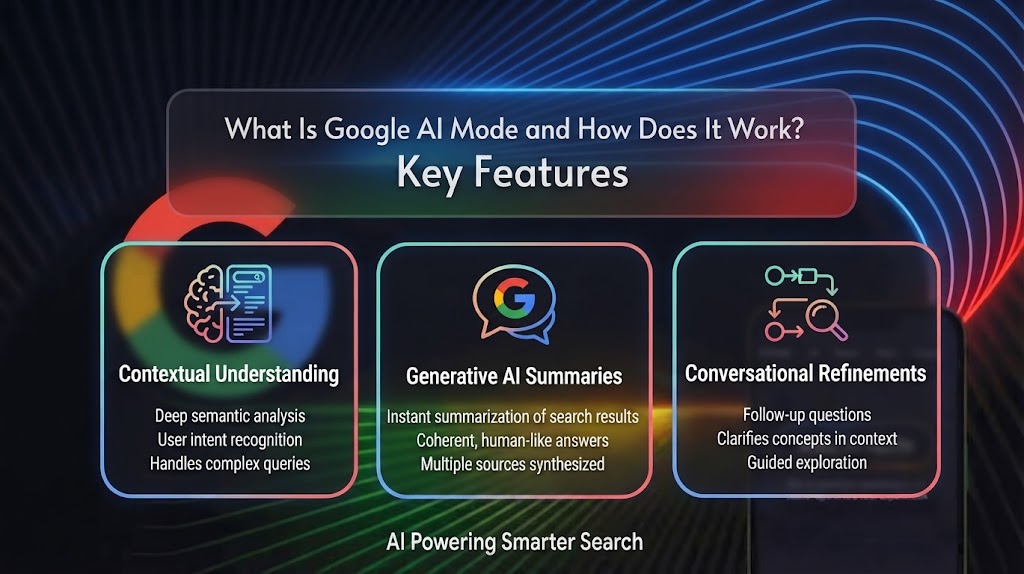
Google AI Mode includes several features that make search more interactive.
1. Conversational Follow-Up Questions
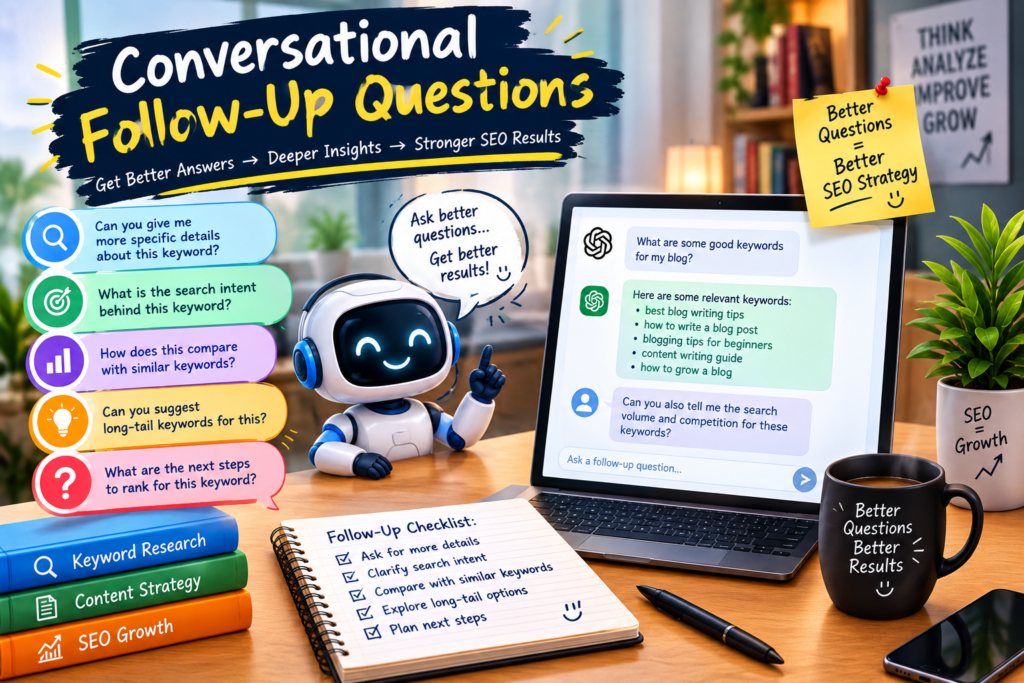
People can keep asking follow-up questions about the same topic.
. This is useful when the first answer creates additional questions or when someone wants to explore a topic in greater detail.
2. Multimodal Search

AI Mode supports more than traditional text searches. Google documents support for text, voice, images, and files, depending on availability and platform.
This means users can provide an image or document and ask questions about it instead of describing everything manually.
3. Deeper Web Exploration

AI Mode is designed to explore multiple aspects of a question and provide links that allow users to investigate the original sources further. Google has also introduced features aimed at helping users discover original content and preferred sources within its AI search experiences.
4. Complex Queries
Traditional searches often work well for simple questions. AI Mode is particularly useful when a query includes several requirements or requires comparison and reasoning.
For example, a person researching a laptop might ask about performance, price, battery life, and suitability for a particular type of work in one question.
Google AI Mode and SEO
The growth of AI-powered search does not mean SEO is disappearing. Instead, it changes how website content may need to serve users.
Google’s AI search systems still rely on information from the web, and AI Mode can provide links to websites and other sources.
As a result, creating useful, reliable, and well-structured content has become increasingly important.
Website owners should focus on answering real questions clearly instead of creating pages only around repetitive keywords.
For example, rather than publishing a short page targeting “WordPress speed,” a website could create a comprehensive guide covering page speed testing, image optimization, hosting, caching, mobile performance, Core Web Vitals, and common problems.
The main objective is to offer real and helpful value to people who are searching for that particular topic.
How to Optimize Content for AI-Powered Search

There is no guaranteed formula that makes a page appear in an AI-generated response. However, several general SEO practices can help make content more useful and understandable.
Create Helpful Content
Write for people first. Explain the topic clearly and provide practical information that answers the user’s actual question.
Cover Related Questions

Think about the questions users may ask before, during, and after reading your article. Adding relevant subtopics can make the content more comprehensive.
Use Clear Structure
Organize your content with clear headings, brief paragraphs, bullet points, relevant examples, and well-structured sections.
. A clear structure helps readers navigate long content.
Provide Accurate Information

AI systems can make mistakes, and Google itself advises users to verify important information using sources and additional Search results.
For publishers, this reinforces the importance of maintaining accurate and updated content.
Build Topic Authority
Instead of creating many unrelated pages, develop useful content around topics that are relevant to your website. Use internal links to connect related articles, making it easier for readers to find more useful information.
Is Google AI Mode Replacing Traditional Search?
AI Mode is changing the search experience, but traditional Search results remain an important part of Google’s ecosystem.
Google’s current AI Mode documentation explains that AI responses can include links to web sources, and users can move between AI Mode and regular Search experiences.
This means website owners should not abandon traditional SEO practices.
Technical SEO, useful content, internal linking, page experience, crawlability, structured information, and authoritative sources can still contribute to a website’s overall search presence.
Instead, SEO strategies increasingly need to consider both traditional search results and AI-powered discovery.
Why Google AI Mode Matters for Website Owners
AI-driven search is transforming how people find and explore information online. A user may begin with a broad question and receive an AI-generated response containing links to several sources.
For publishers, this creates an opportunity to become one of the sources users discover while researching a topic.
However, visibility should not be the only objective. A page should provide enough value that users have a reason to visit, explore other pages, or return to the website.
Original research, practical examples, first-hand information, clear explanations, and regularly updated content can make a website more useful to its audience.
Final Thoughts

Google AI Mode represents a major development in the evolution of search. It allows users to ask detailed questions, explore topics through follow-ups, and interact with Search using different types of information.
For SEO professionals and website owners, the key lesson is to focus on useful and well-structured content rather than simply repeating keywords.
AI-powered search is continuing to develop, so specific features and visibility patterns may change over time. Google itself notes that AI Mode can sometimes make mistakes, meaning important information should still be checked against reliable sources.
A strong SEO strategy for the AI-search era therefore starts with the same fundamental principle: create accurate, helpful, original content that genuinely satisfies the user’s search intent.
FAQs
What is Google AI Mode?
Google AI Mode is an AI-powered search experience that provides conversational answers, web links, and follow-up interactions for more complex searches.
How is AI Mode different from normal Google Search?
AI Mode is designed to handle longer and more complex questions. It can break a query into related subtopics and search for information across multiple sources.
Can Google AI Mode understand images?
Yes. Google’s documentation says AI Mode can accept images as part of a search, although available features can vary by platform and region.
Does Google AI Mode affect SEO?
AI-powered search changes how users may discover information, but traditional SEO remains relevant. Websites should continue focusing on useful content, technical accessibility, clear structure, and satisfying search intent.
Can AI Mode make mistakes?
Yes. Google explicitly warns that AI responses may contain mistakes and recommends checking important information against additional sources.
Should I optimize my website specifically for Google AI Mode?
Rather than trying to optimize for a guaranteed AI placement, focus on creating accurate, original, helpful, and well-structured content that clearly answers users’ questions.