
Healthy skin has always started with understanding your skin type and choosing products that match your needs. Instead of relying on guesswork, AI skincare technology helps people make informed decisions using data, image analysis, and personalized recommendations.
From mobile apps that scan your face to smart beauty devices that monitor skin conditions, AI is becoming an important part of modern skincare. These tools make it easier to understand concerns such as dryness, acne, uneven tone, fine lines, and dark spots without spending hours comparing products.
In this guide, you will learn what AI skincare technology is, how it works, its benefits, its limitations, and how you can use it to build a smarter skincare routine in 2026.
What Is AI Skincare Technology?
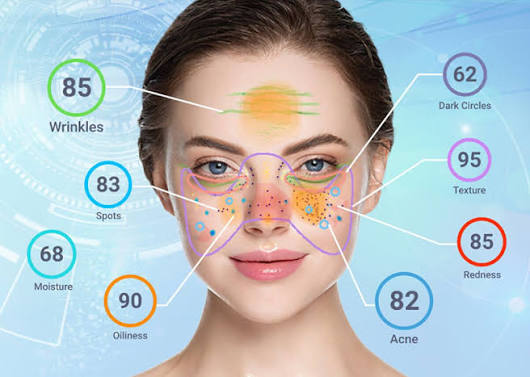
AI skincare technology combines artificial intelligence with skincare science to evaluate skin conditions and recommend suitable products or routines.
Most AI-powered skincare systems use facial images, questionnaires, and machine learning models to understand skin characteristics. They compare your skin with thousands of examples to identify visible concerns and suggest products that match your goals.
Rather than replacing skincare professionals, these tools are designed to help users make better everyday skincare decisions.
How AI Skincare Technology Works
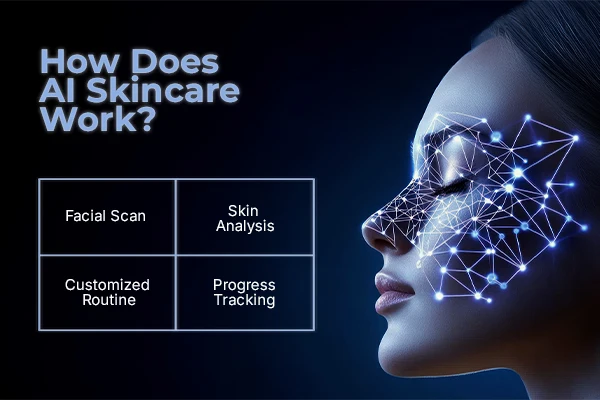
The process is simple for most users.
First, you upload a clear selfie or use your phone’s camera. The technology examines several visible skin characteristics, such as overall texture, pore appearance, moisture balance, fine lines, uneven skin tone, and other common skin concerns to create a personalized assessment.
After the analysis, the platform generates a personalized report. It may recommend ingredients such as hyaluronic acid for hydration, niacinamide for oil control, or vitamin C for improving skin brightness.
Many AI platforms continue learning over time, allowing users to track progress and adjust their routines as their skin changes.
Benefits of AI Skincare Technology
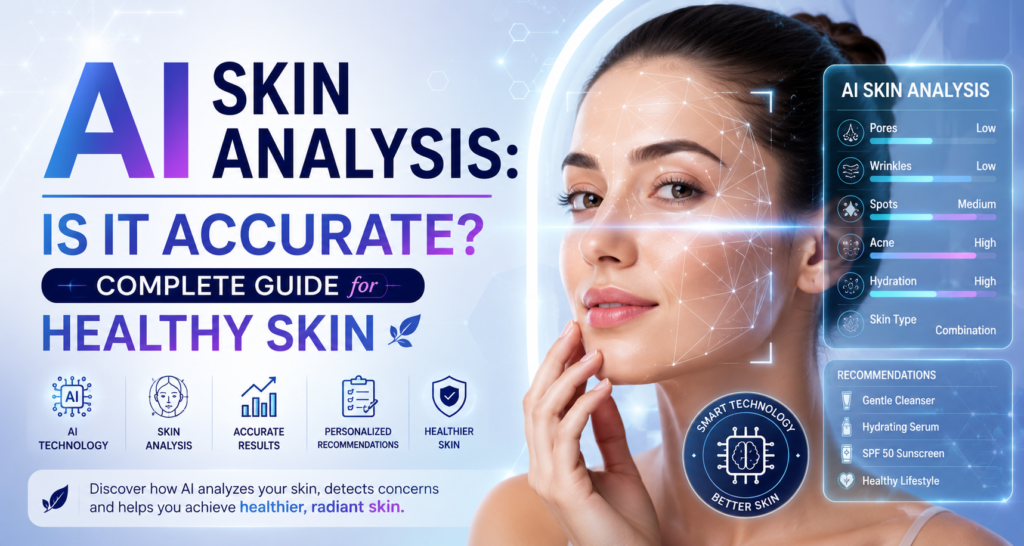
Personalized Recommendations
Every person’s skin is different. AI helps create routines based on individual skin conditions instead of generic advice.
Faster Skin Analysis
A detailed skin assessment can be completed in minutes, helping users understand visible concerns more quickly.
Progress Tracking
Many AI skincare apps save previous scans, making it easier to compare improvements over time.
Better Product Selection
AI recommendations can reduce the time spent choosing products by matching ingredients to specific skin concerns.
Convenient Access
Many tools are available on smartphones, allowing users to review their skin anytime without visiting a clinic for basic guidance.
AI Skin Analysis vs Traditional Skin Evaluation
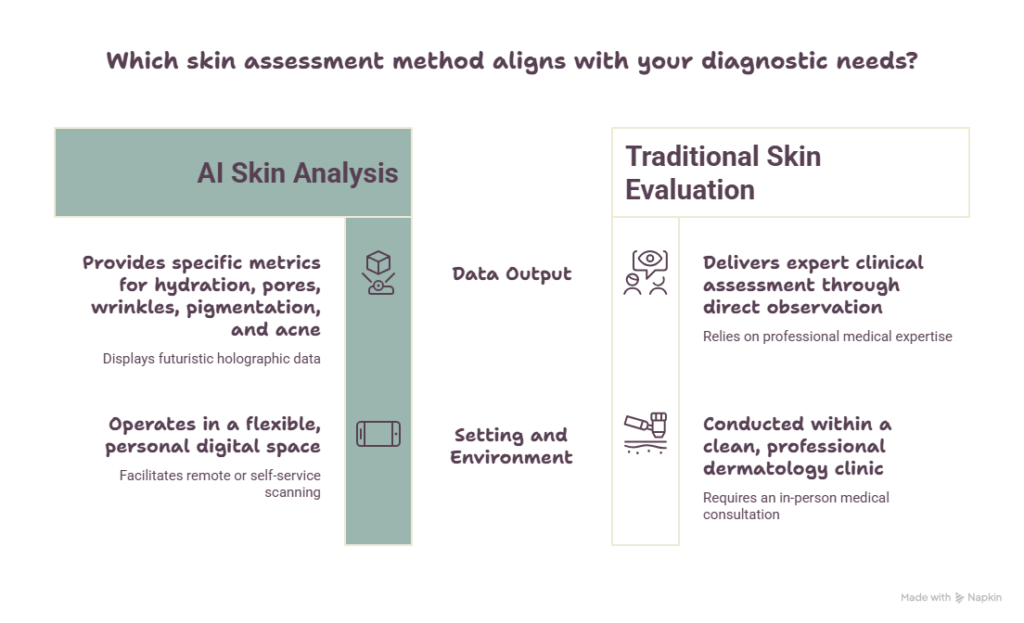
Traditional skincare consultations provide professional expertise, while AI offers speed and convenience.
AI can identify visible patterns and provide helpful suggestions, but it cannot diagnose medical skin conditions. Persistent or serious concerns should always be evaluated by a qualified dermatologist.
The best approach is to use AI as a supportive tool alongside professional skincare advice when needed.
Popular Uses of AI in Skincare
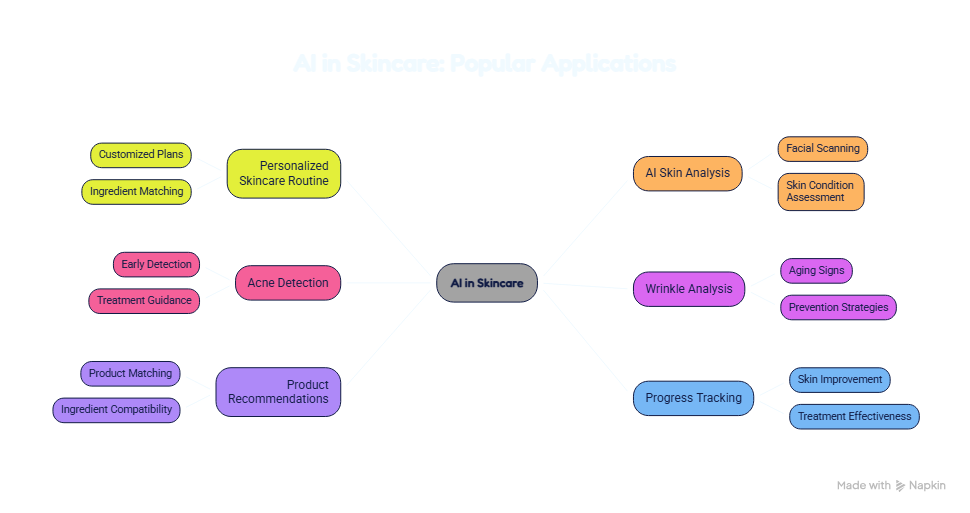
AI technology is now used in many areas of the beauty industry.
- Personalized skincare routines
- Product recommendations
- Skin hydration monitoring
- Acne tracking
- Wrinkle analysis
- UV exposure reminders
- Virtual product testing
- Progress reports
Tips for Getting Better Results
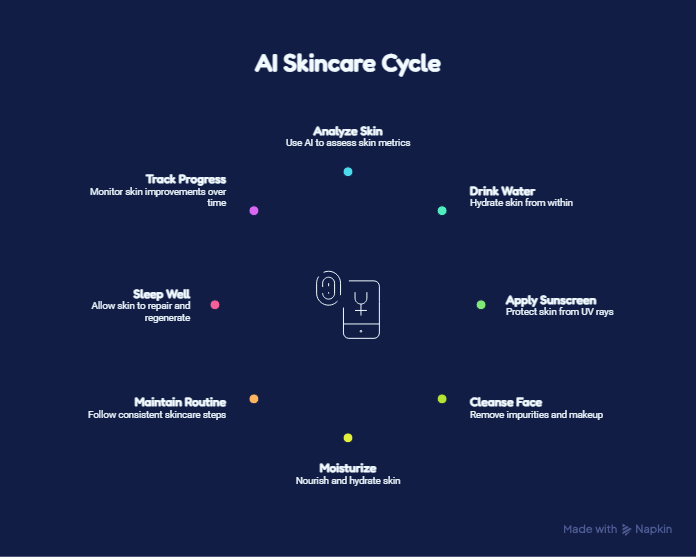
To improve the accuracy of AI skin analysis:
- Use natural lighting when taking photos.
- Remove makeup before scanning your face.
- Take pictures from the same angle each time.
- Follow a consistent skincare routine.
- Monitor your progress every few weeks.
- Stay hydrated and protect your skin from excessive sun exposure.
AI performs best when combined with healthy skincare habits.
Challenges and Limitations
Although AI skincare technology continues to improve, it still has limitations.
Lighting, camera quality, and image angles can influence results. AI also cannot fully understand medical history, allergies, or internal health conditions that affect the skin.
For severe acne, unusual rashes, infections, or rapidly changing skin concerns, professional medical advice remains essential.
The Future of AI Skincare
The future of AI skincare technology looks promising.
As AI models continue to improve, users can expect more personalized experiences that support healthy skincare habits while working alongside skincare professionals.
Conclusion
AI skincare technology is making skincare more personalized, convenient, and data-driven. By analyzing visible skin characteristics and suggesting tailored routines, AI helps users make informed decisions about daily skin care.
While AI is not a replacement for professional medical advice, it is a practical tool for tracking progress, discovering suitable products, and building consistent skincare habits. Used responsibly, it can become a valuable part of a modern skincare routine.
Frequently Asked Questions
1. What is AI skincare technology?
AI skincare technology uses artificial intelligence to analyze visible skin conditions and recommend personalized skincare routines and products.
2. Is AI skin analysis accurate?
AI can provide useful insights for common skin concerns, but results depend on image quality and should not replace professional medical diagnosis.
3. Can AI recommend skincare products?
Yes. Many AI platforms suggest products based on skin type, visible concerns, and personal goals.
4. Does AI skincare replace dermatologists?
No. AI supports everyday skincare decisions, while dermatologists diagnose and treat medical skin conditions.
5. Is AI skincare suitable for all skin types?
Most AI skincare platforms are designed to work with different skin types, although recommendations should always be reviewed carefully and adjusted if needed.