
Starting an online business has become an attractive opportunity for people who want to earn money, develop entrepreneurial skills, and build a business without investing in a traditional retail store. However, many beginners struggle to choose the right business model because they have limited budgets, little experience, or no storage space for products. This is where dropshipping for beginners becomes an interesting option.
Dropshipping is an e-commerce business model that allows entrepreneurs to sell products online without purchasing inventory in advance or handling product storage themselves. Instead, when a customer places an order, the store owner forwards the order details to a supplier, who prepares and ships the product directly to the customer.
This approach can reduce the initial investment and simplify inventory management. However, it does not eliminate business expenses, customer service responsibilities, marketing challenges, or financial risks.
In this comprehensive guide, you will learn how dropshipping works, how to select profitable products, where to find reliable suppliers, how to create an online store, and how to attract your first customers. Whether you are a student, aspiring entrepreneur, freelancer, or complete beginner, this article will help you understand the essential steps to starting a dropshipping business.
1. What Is Dropshipping and How Does It Work?

Dropshipping is an online retail business model in which a seller markets and sells products without physically keeping them in stock. The supplier or manufacturer manages inventory, packaging, and shipping, while the store owner focuses on attracting customers and managing the shopping experience.
For example, imagine that you create an online store selling home accessories. A customer visits your website and purchases a decorative lamp for $35. You then purchase that product from your supplier for $18, who ships it directly to the customer.
Your potential gross profit is $17 before advertising, transaction fees, platform costs, refunds, taxes, and other business expenses.
The Basic Dropshipping Process

The dropshipping process generally involves five steps:
- Choose a product: Select an item that customers are interested in purchasing.
- Find a supplier: Partner with a supplier who can provide the product at a suitable price.
- List the product: Add product descriptions, images, prices, and shipping information to your online store.
- Receive an order: A customer purchases the product through your website.
- Supplier fulfills the order: You send the order information to your supplier, who packages and ships the product directly to the customer.
The most important thing to understand is that you remain responsible for the customer experience. Even though the supplier handles shipping, customers generally contact your business when they have questions, delivery problems, or refund requests.
This makes dropshipping a convenient business model for beginners who want to explore e-commerce without managing a warehouse.
2. Benefits and Challenges of Starting a Dropshipping Business

Before starting, it is important to understand both the advantages and disadvantages of dropshipping. Although this business model offers flexibility, success requires research, patience, and consistent effort.
Benefits of Dropshipping
Low Initial Investment: Traditional retail businesses often require money for inventory, storage, and transportation. Dropshipping can reduce these upfront expenses because products are purchased from suppliers after customers place orders.
No Inventory Storage: You do not need to rent a warehouse or maintain a large inventory. Suppliers handle product storage and fulfillment.
Flexible Business Location: Since your store operates online, you can manage many business activities from different locations, provided you have reliable internet access.
Wide Product Selection: You can test different product categories without purchasing large quantities of inventory in advance.
Business Scalability: Once you identify products that sell consistently, you can expand your catalog, improve marketing, and work with additional suppliers.
Challenges of Dropshipping
Despite its benefits, dropshipping has several challenges that beginners should consider.
- High competition: Popular products often attract many sellers, making it difficult to stand out.
- Lower profit margins: Product costs, advertising expenses, payment fees, and refunds can reduce profitability.
- Limited product control: You depend on suppliers for product quality, packaging, and shipping.
- Shipping delays: International suppliers may take longer to deliver products.
- Customer service responsibilities: You must handle complaints, returns, and customer questions even when suppliers make fulfillment mistakes.
Understanding these challenges helps beginners create realistic expectations instead of believing that dropshipping is an effortless way to earn money.
3. How to Choose Profitable Dropshipping Products
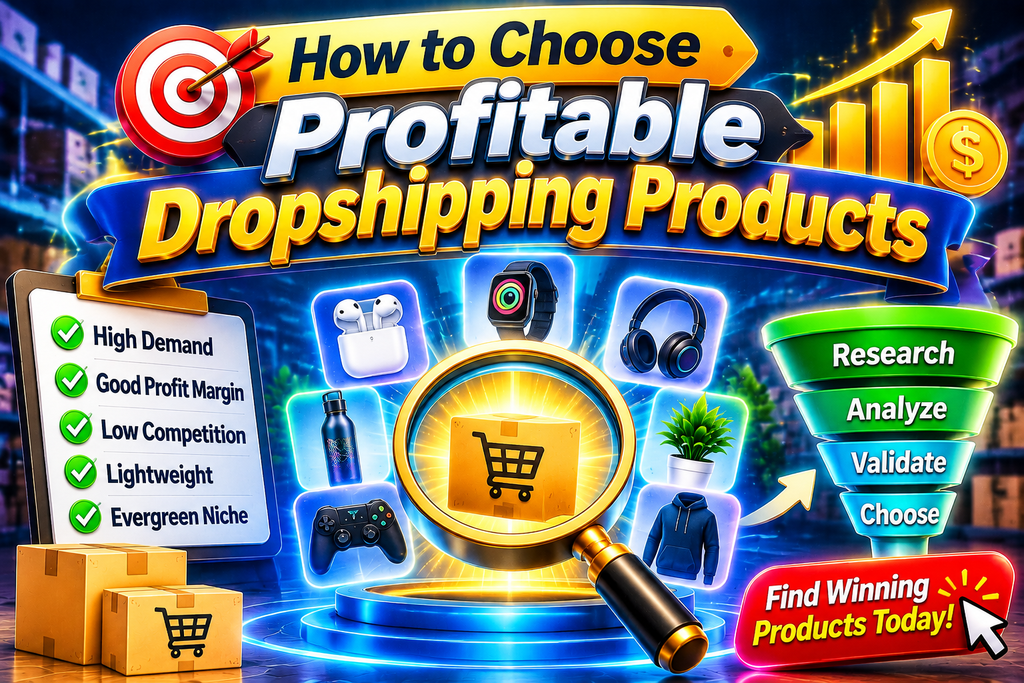
Product selection is one of the most important decisions when building a successful dropshipping business. A professional website cannot guarantee sales if the products do not solve customer problems or attract sufficient interest.
Instead of choosing products randomly, focus on customer demand, product quality, competition, pricing, and potential profit margins.
Characteristics of Good Dropshipping Products
Look for products that have the following characteristics:
- Solve a common problem or provide practical value.
- Have clear demand among a specific audience.
- Are easy to demonstrate through videos and images.
- Offer enough potential margin after all business expenses.
- Are lightweight and relatively simple to ship.
- Have reliable suppliers and consistent product quality.
- Are not easily available at significantly lower prices everywhere.
Popular Product Categories for Beginners
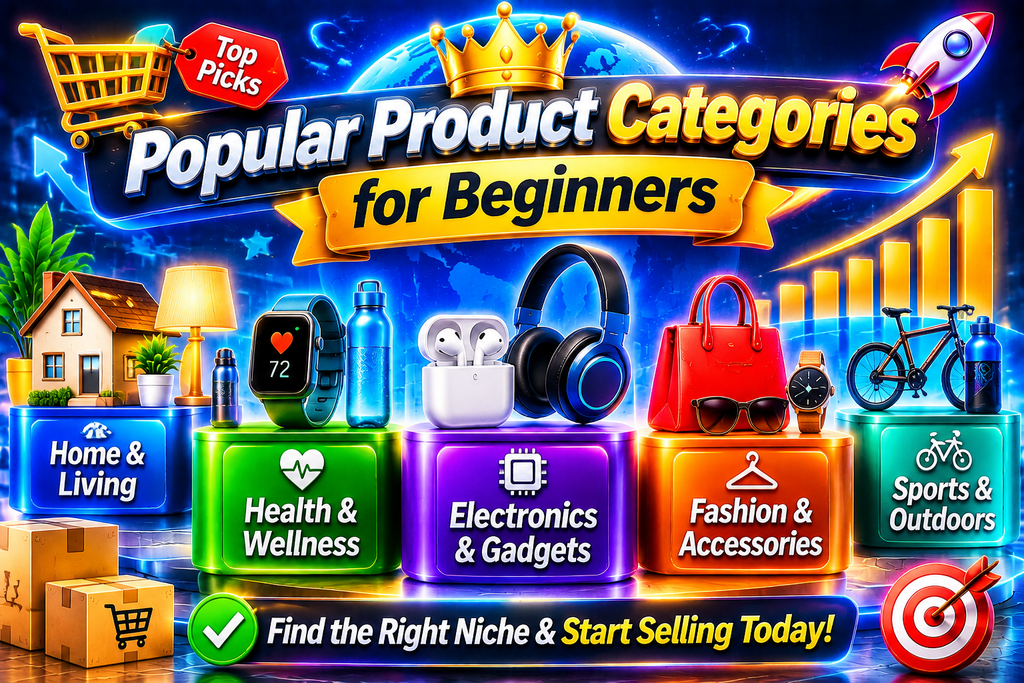
Some product categories that beginners can research include:
Home and Kitchen Accessories: Storage organizers, kitchen tools, decorative items, and practical household accessories.
Beauty and Personal Care Accessories: Makeup organizers, skincare tools, and non-regulated personal care accessories.
Pet Accessories: Pet grooming brushes, feeding accessories, toys, and travel products.
Fitness Accessories: Resistance bands, workout accessories, yoga equipment, and water bottles.
Technology Accessories: Desk organizers, cable management products, laptop stands, and phone accessories.
These categories are research starting points rather than guaranteed profitable opportunities. Their suitability depends on demand, competition, quality, and customer preferences.
How to Validate a Product Idea
Before adding a product to your store, research its popularity using Google Trends, social media platforms, competitor websites, and customer reviews.
Pay attention to recurring customer complaints. If buyers frequently mention poor quality, inaccurate descriptions, or delivery problems, those issues may indicate that you need a better supplier or a different product.
You should also calculate your estimated profit before launching advertisements. A product that generates sales is not necessarily profitable if its total operating costs are too high.
4. How to Find Reliable Dropshipping Suppliers

A reliable supplier plays a major role in the long-term success of your dropshipping business. Even excellent marketing cannot compensate for damaged products, incorrect orders, poor communication, or consistently delayed deliveries.
Your supplier should provide accurate product information, reasonable pricing, dependable shipping, and clear communication.
Popular Dropshipping Supplier Platforms
Here are some platforms beginners can explore:
AliExpress: A widely used marketplace where sellers can research products and connect with different suppliers. Shipping times, quality, and seller reliability vary, so evaluate each supplier carefully.
CJdropshipping: A platform offering product sourcing and fulfillment services that can help online sellers manage their product operations.
Spocket: A supplier marketplace that provides access to various suppliers, including businesses in the United States and Europe.
Zendrop: An e-commerce fulfillment platform that provides product sourcing and order fulfillment features.
DSers: A tool commonly used to manage product imports and order processing, particularly for AliExpress-based dropshipping operations.
How to Evaluate a Supplier
Before working with a supplier, consider these important factors:
- Check customer reviews and supplier ratings.
- Ask about average processing and delivery times.
- Confirm product availability and inventory consistency.
- Review return, refund, and replacement policies.
- Request product samples whenever possible.
- Test communication by asking specific questions.
- Confirm whether tracking information is available.
Ordering a sample is particularly valuable because it allows you to inspect product quality, packaging, and actual delivery performance before selling the item to customers.
Never choose a supplier based only on the lowest price. A slightly more expensive supplier may provide better quality and fewer customer complaints, which can improve your overall business performance.
5. How to Build Your First Dropshipping Online Store
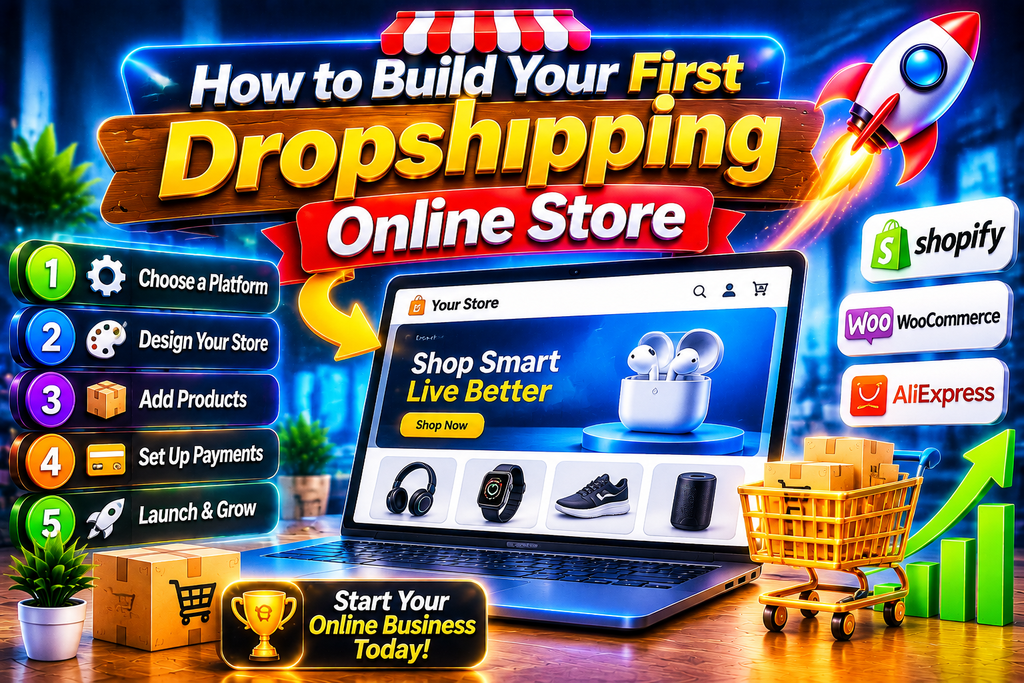
After selecting products and identifying suppliers, the next step is creating an online store. Your website should look professional, provide clear information, and make purchasing simple.
A confusing website can discourage customers even when your products are useful and reasonably priced.
Choose an E-Commerce Platform
Several platforms allow beginners to build online stores without advanced programming knowledge.
- Shopify: Provides store-building, product management, payment integration, and e-commerce features.
- WooCommerce: A WordPress-based e-commerce solution that offers flexibility and customization options.
- Wix: Provides website-building tools and e-commerce features for businesses that prefer a visual editing experience.
Choose a platform based on your budget, technical experience, preferred features, and business requirements.
Essential Pages for Your Store
A professional dropshipping website should include:
- Homepage: Introduce your brand and highlight important products.
- Shop Page: Display available products in organized categories.
- About Us: Explain your business and what makes your store valuable.
- Contact Us: Provide clear ways for customers to reach your business.
- Shipping Policy: Explain processing times, delivery estimates, and shipping conditions.
- Return and Refund Policy: Clearly communicate how returns, refunds, and replacements are handled.
- Privacy Policy: Explain how customer information is collected and used.
- Terms and Conditions: Describe the rules governing purchases and website usage.
Create Effective Product Pages
Each product page should contain a descriptive title, high-quality images, accurate specifications, pricing, and useful product information.
Avoid copying supplier descriptions without reviewing them. Write original content that explains how the product works, who can benefit from it, and what customers should know before purchasing.
Also, make sure your website works properly on mobile devices because many shoppers browse and purchase products using smartphones.
6. How to Market Your Dropshipping Business and Get Customers
Building a store is only the beginning. Your business needs a marketing strategy to attract relevant visitors and convert them into paying customers.
Without consistent marketing, even a well-designed store may struggle to generate sales.
Social Media Marketing
Social media platforms such as Facebook, Instagram, TikTok, and Pinterest can help you introduce products to potential customers.
Create short product demonstrations, informative videos, tutorials, and engaging posts that show how your products solve everyday problems.
Instead of publishing only promotional content, provide useful information that helps your target audience understand the product’s value.
Search Engine Optimization (SEO)
SEO helps your website appear in relevant search engine results.
To improve your store’s organic visibility:
- Research relevant keywords before creating product pages.
- Write unique product titles and descriptions.
- Use descriptive image alt text.
- Create helpful blog articles related to your products.
- Improve website loading speed.
- Organize pages using clear headings and internal links.
- Make your website mobile-friendly.
For example, if you sell kitchen organizers, you could create informative articles about kitchen storage ideas, small kitchen organization, and practical home improvement tips.
This approach helps attract visitors who are already interested in your product category.
Paid Advertising

Paid advertising can help businesses reach specific audiences through platforms such as Google Ads, Facebook Ads, and TikTok Ads.
However, beginners should start with a controlled advertising budget and test different creatives before increasing spending.
Track important metrics such as:
- Click-through rate (CTR)
- Cost per click (CPC)
- Conversion rate
- Customer acquisition cost (CAC)
- Average order value (AOV)
- Return on advertising spend (ROAS)
Do not judge an advertising campaign only by the number of clicks or views. The real objective is to generate profitable sales while maintaining a positive customer experience.
Email Marketing
Email marketing helps you communicate with interested customers and encourage repeat purchases.
You can send welcome emails, product recommendations, order updates, and useful promotional messages to customers who have given appropriate permission.
A well-planned email strategy can help build long-term customer relationships without depending entirely on paid advertising.
7. How Much Does It Cost to Start Dropshipping and Make a Profit?
One of the most common questions about dropshipping is how much money beginners need to start. The answer depends on your platform, products, marketing strategy, supplier arrangements, and business location.
Although dropshipping generally requires less initial inventory investment than traditional retail, it is not a completely free business.
Common Dropshipping Startup Expenses
Your initial budget may include:
- Website platform subscription or hosting.
- Domain registration.
- Product samples and testing.
- Store design and branding.
- Marketing and advertising.
- Payment processing fees.
- Business registration and applicable taxes.
- Customer service and operational expenses.
You should also maintain an emergency budget for refunds, unexpected supplier issues, and other business expenses.
Understanding Dropshipping Profit Margins
Calculating profit correctly is essential before launching your store.
Consider this example:
| Business Item | Amount |
| Customer purchase price | $40 |
| Supplier product cost | $18 |
| Shipping cost | $5 |
| Advertising cost per order | $8 |
| Payment processing and other variable costs | $2 |
| Estimated profit | $7 |
In this example, the business earns $7 before any additional fixed expenses, applicable taxes, and other costs not included in the calculation.
The formula is:
Net Profit = Revenue − Total Business Expenses
A beginner should focus on understanding real profitability rather than simply increasing the number of orders.
Practical Tips for Managing Your Budget
Start with a small, manageable product selection. Test product quality before investing heavily in advertising, and track every business expense.
Avoid spending your entire budget on paid promotions. Keep enough money available to manage customer orders, refunds, and unexpected operating costs.
Most importantly, remember that dropshipping does not guarantee income. Results depend on product demand, marketing effectiveness, supplier performance, and your ability to manage the business.
8. Common Dropshipping Mistakes, Best Practices, and FAQs
Many beginners make avoidable mistakes because they focus too much on launching quickly instead of building a reliable business.
Understanding these mistakes can help you protect your budget and make better decisions.
Common Mistakes to Avoid
Choosing Products Without Research: Selling random products without understanding customer demand can result in poor sales.
Working With Unverified Suppliers: Unreliable suppliers may create shipping delays, quality issues, and refund requests.
Ignoring Customer Service: Slow responses and unresolved complaints can damage customer trust.
Copying Competitors: Reproducing another store’s content and branding makes it difficult to develop a unique identity.
Spending Too Much on Advertising: Increasing advertising expenses before validating product demand can create unnecessary financial pressure.
Making Unrealistic Promises: Never advertise guaranteed delivery dates, product results, or features that you cannot verify.
Best Practices for Long-Term Success
Build your store around a clear target audience rather than trying to sell everything to everyone. Test products carefully, maintain good supplier relationships, and provide accurate information.
Monitor customer feedback and use it to improve your products, website, and marketing strategy.
You should also understand the business registration, consumer protection, privacy, and tax requirements that apply to your operating location and target markets.
Frequently Asked Questions (FAQs)
1. What Is Dropshipping for Beginners?
Dropshipping for beginners is an e-commerce business model in which new entrepreneurs sell products online without purchasing or storing inventory in advance. When a customer places an order, the supplier ships the product directly to the customer. The store owner manages marketing, pricing, customer communication, and business operations.
2. How Much Money Do I Need to Start Dropshipping?
The amount depends on your business requirements and chosen platform. You may need money for a domain, website subscription, product samples, marketing, and payment processing. Although dropshipping reduces inventory expenses, beginners should maintain a realistic budget for unexpected costs and customer refunds.
3. Is Dropshipping Good for Beginners?
Yes, dropshipping can be a suitable starting point for people who want to learn e-commerce without managing physical inventory. It allows beginners to test product ideas and understand online selling. However, success requires product research, supplier evaluation, effective marketing, financial planning, and reliable customer service.
4. Can I Start Dropshipping Without a Website?
Yes, some businesses begin by selling through online marketplaces or social media platforms. However, having your own e-commerce website provides greater control over branding, product presentation, customer experience, and store management. Always review the selling platform’s policies before listing products.
5. Which Products Are Best for Dropshipping?
Products that solve specific problems, have consistent customer demand, and offer reasonable profit potential can be good choices. Home accessories, pet products, fitness accessories, and technology accessories are popular research categories. Always evaluate competition, shipping requirements, product quality, and supplier reliability before choosing a product.
6. How Do I Find Reliable Dropshipping Suppliers?
You can research suppliers through platforms such as AliExpress, CJdropshipping, Spocket, and Zendrop. Review their ratings, customer feedback, shipping estimates, product quality, and return policies. Ordering samples and communicating directly with suppliers can help you evaluate their reliability before accepting customer orders.
7. Do I Need to Buy Products Before Selling Them?
No, purchasing inventory in advance is generally not necessary in the dropshipping model. You purchase products from your supplier after receiving customer orders. However, ordering product samples before launching is recommended because it allows you to check quality, packaging, and delivery performance.
8. How Long Does It Take to Make Money With Dropshipping?
There is no fixed timeline for making money with dropshipping. Some stores may generate initial sales relatively quickly, while others require months of research, testing, and marketing improvements. Profitability depends on product demand, competition, supplier performance, advertising expenses, and customer conversion rates.
9. Can I Run a Dropshipping Business From Pakistan?
Yes, entrepreneurs in Pakistan can explore dropshipping by researching suitable suppliers, e-commerce platforms, payment providers, and target markets. However, payment availability, international shipping, business registration, taxation, and foreign currency requirements should be checked carefully before launching.
10. Is Dropshipping Still Worth Starting in 2026?
Dropshipping can still be worth exploring in 2026 for entrepreneurs who focus on customer needs, product quality, branding, and efficient marketing. However, competition is significant, and simply importing trending products is not a reliable business strategy. A sustainable approach requires research, differentiation, supplier relationships, and strong customer service.
Conclusion
Dropshipping for beginners offers an accessible way to explore online entrepreneurship without the traditional responsibilities of purchasing and storing large amounts of inventory. It provides flexibility, a wide product selection, and opportunities to test different markets with a relatively lower upfront inventory commitment.
However, building a successful dropshipping business requires more than creating a website and listing products. You need to research customer demand, select reliable suppliers, develop an effective marketing strategy, manage expenses, and provide excellent customer support.
Start small, test your ideas, learn from customer feedback, and improve your store over time. Instead of chasing quick profits, concentrate on creating a trustworthy shopping experience and delivering genuine value to customers.
With consistent effort, careful planning, and informed decisions, dropshipping can become a valuable opportunity to develop e-commerce skills and build a sustainable online business.