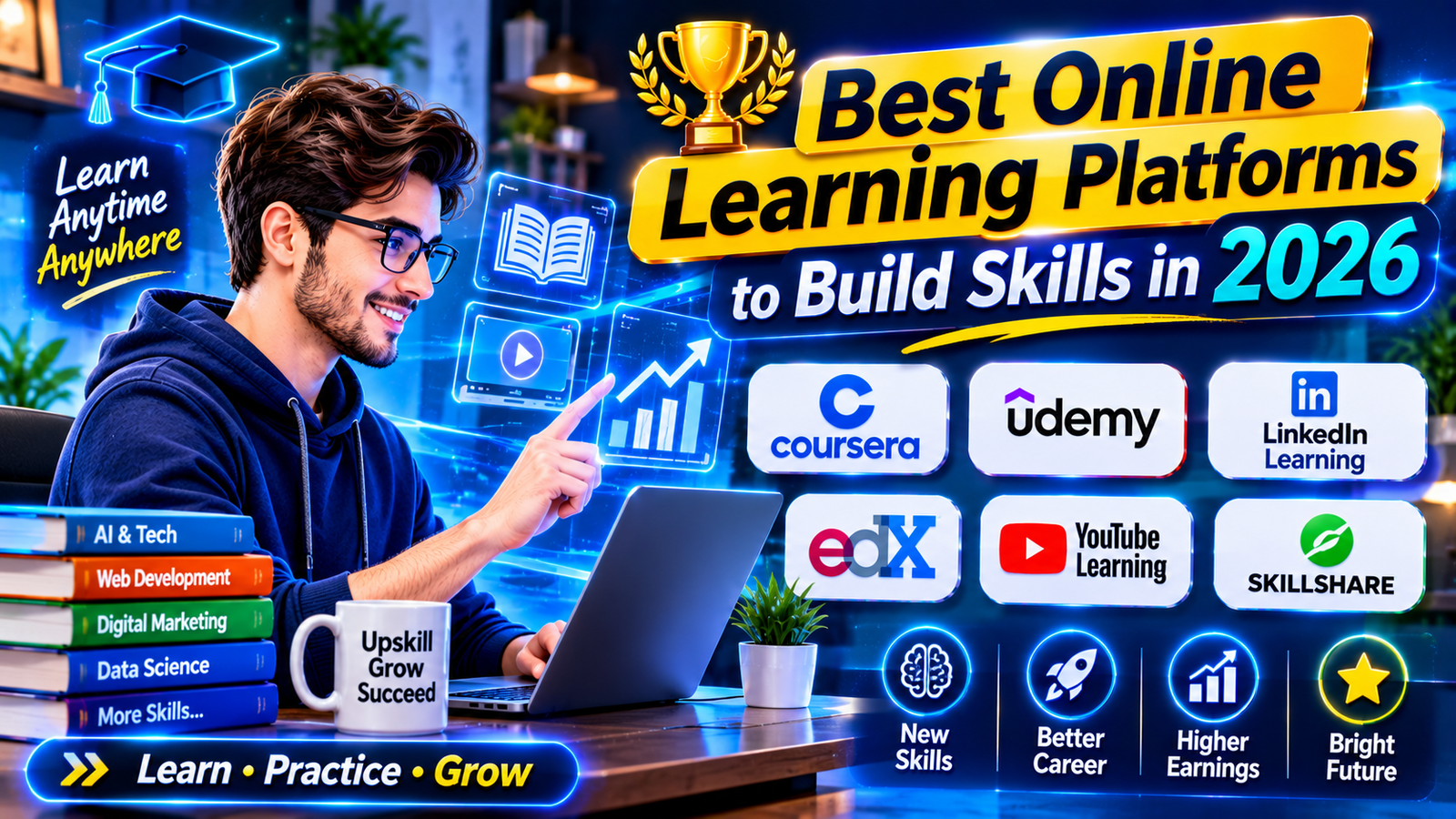

Online education has transformed the way people gain knowledge, develop professional skills, and prepare for new career opportunities. Students no longer need to depend entirely on traditional classrooms to access quality educational resources. With an internet connection and a suitable device, anyone can learn programming, digital marketing, graphic design, business management, science, languages, and hundreds of other subjects from almost anywhere.
The best online learning platforms make education more flexible, affordable, and accessible. Some provide free educational resources, while others offer professional certificates, university-level programs, interactive exercises, and instructor-led training. This variety allows learners to choose educational experiences that match their interests, budgets, and career objectives.
However, selecting the right platform can be challenging because every service offers different features, course structures, teaching methods, and pricing models. Some are designed for academic education, while others focus on practical skills and professional development.
In this guide, we explore the best online learning platforms in 2026, their important features, advantages, and limitations. You will also discover how to choose an appropriate learning website, find free courses, and make your online education experience more productive.
1. What Are Online Learning Platforms and How Do They Work?
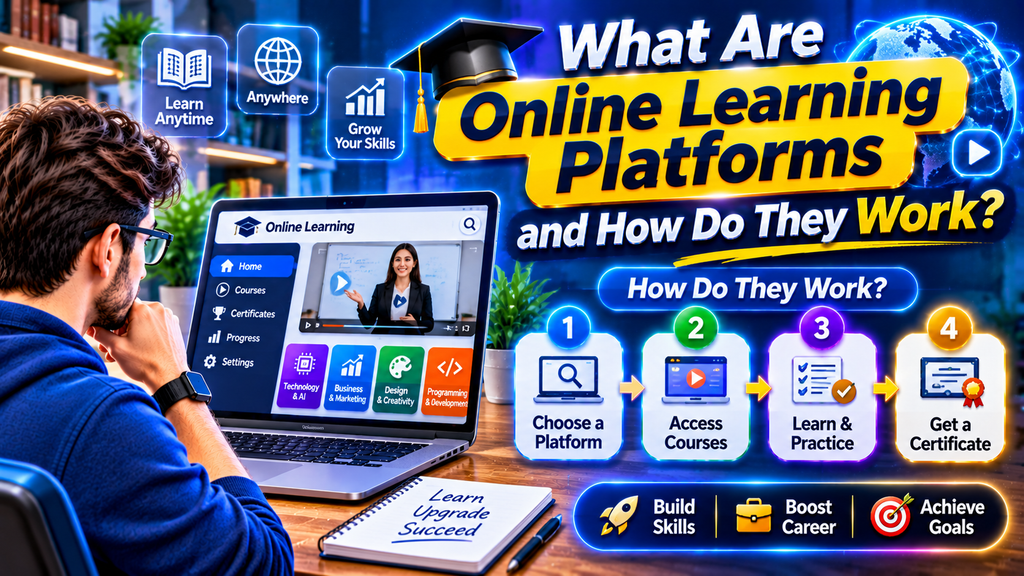
Online learning platforms are digital educational services that allow people to study through websites, mobile applications, recorded lessons, live classes, and interactive learning resources. They connect students with instructors, educational institutions, and professional training providers without requiring everyone to attend the same physical location.
These platforms support different learning methods. Some provide structured courses with weekly lessons, assignments, and examinations. Others offer independent video tutorials that students can complete whenever they have time.
Most online education websites include several common features:
- Video Lessons: Recorded lectures allow learners to study subjects at their preferred speed.
- Learning Materials: Students can access downloadable documents, presentations, exercises, and reading resources.
- Assessments: Quizzes and assignments help measure understanding and identify areas that require improvement.
- Certificates: Certain platforms provide completion certificates or professional credentials after meeting course requirements.
- Progress Tracking: Learning dashboards display completed lessons, assessment results, and course progress.
- Community Support: Discussion boards and learning communities allow students to exchange ideas and ask questions.
Online learning platforms generally operate through different business models. Some offer completely free educational resources, while others use subscriptions, individual course payments, or institutional licenses.
For example, Khan Academy provides free educational resources, whereas Coursera combines university-backed learning opportunities with paid certificates and subscription-based programs.
The main advantage is flexibility. A student can study mathematics in the morning, learn programming in the afternoon, and complete a professional development course in the evening.
2. Best Online Learning Platforms for Students and Professionals

Choosing the right educational website depends on what you want to achieve. Some platforms are particularly useful for school subjects, while others focus on career development, technology, creative skills, and professional certifications.
Here are some popular online learning platforms worth exploring in 2026.
1. Coursera
Coursera is a widely used digital learning platform that connects students with courses and educational programs from leading institutions.It provides courses, professional certificates, specializations, and degree programs from universities and companies around the world.
Learners can explore subjects such as computer science, business, artificial intelligence, data analytics, project management, and digital marketing.
Key Features:
- University and industry-created learning programs.
- Professional certificates from participating organizations.
- Flexible online learning schedules.
- Guided projects and specialized learning paths.
- Financial aid opportunities on eligible programs.
Coursera is particularly useful for students and professionals who want structured education and credentials that may support their career development.
Some courses offer free access to learning materials through available options, while certificates and other programs generally require payment.
Website: https://www.coursera.org/
2. Udemy
Udemy is a popular online course marketplace where independent instructors publish educational content across different industries.
Its course library covers programming, web development, graphic design, photography, business, communication, marketing, and personal development.
Key Features:
- Large collection of individual courses.
- Beginner-friendly video lessons.
- Practical tutorials and demonstrations.
- Individual course purchases.
- Lifetime access to eligible purchased courses under applicable terms.
Udemy is useful for people who want to develop a particular skill without enrolling in a long academic program.
For example, someone interested in WordPress can find courses about website development, theme customization, plugin management, and website optimization.
Course quality can vary because instructors create their own content. Before purchasing, check recent reviews, course previews, instructor experience, and the last update date.
Website: https://www.udemy.com/
3. edX
edX is an educational platform offering courses and programs from universities and other educational organizations.
It covers subjects such as engineering, mathematics, computer science, business, humanities, and data science.
Key Features:
- University-level educational content.
- Professional learning programs.
- Self-paced and scheduled learning options.
- Verified certificates for eligible programs.
- Academic and career-focused subjects.
edX is a useful choice for learners interested in academic subjects and structured university-style education.
Some courses provide free access to educational materials, while certificates and advanced programs may require payment.
Website: https://www.edx.org/
4. Khan Academy
Khan Academy is a nonprofit educational organization that provides free learning resources for students and teachers.
It is especially popular for mathematics, science, economics, computing, and foundational academic subjects.
Key Features:
- Free educational lessons.
- Interactive exercises and practice questions.
- Progress tracking.
- Educational resources for different grade levels.
- Student and teacher learning tools.
Khan Academy is particularly helpful for students who need additional explanations outside their classrooms.
For example, a student struggling with algebra can review lessons, complete exercises, and repeat difficult topics until they understand the concepts.
Website: https://www.khanacademy.org/
5. LinkedIn Learning
LinkedIn Learning focuses on professional development and workplace skills. Its courses cover business management, leadership, software applications, technology, communication, and creative subjects.
Key Features:
- Professional video courses.
- Business and technology training.
- Learning paths for career development.
- Certificates of completion for eligible courses.
- Integration with LinkedIn profiles.
This platform is particularly suitable for working professionals who want to improve their existing skills or prepare for new responsibilities.
For example, employees can study project management, Excel, communication, and leadership to improve their workplace capabilities.
Website: https://www.linkedin.com/learning/
6. Skillshare
Skillshare is an online education platform focused mainly on creative and practical skills.
It offers classes related to illustration, photography, graphic design, animation, writing, video editing, and entrepreneurship.
Key Features:
- Creative learning classes.
- Project-based activities.
- Practical demonstrations.
- Community interaction.
- Lessons for beginners and experienced creators.
Skillshare can be useful for people interested in creative careers, freelance projects, and personal development.
Its subscription model provides access to eligible classes, although availability and pricing can vary by region.
Website: https://www.skillshare.com/
7. Codecademy
Codecademy specializes in technology education and interactive programming lessons.
Students can explore programming languages and technical subjects such as Python, JavaScript, HTML, CSS, SQL, and web development.
Key Features:
- Interactive coding exercises.
- Beginner-friendly programming lessons.
- Technical learning paths.
- Practical coding challenges.
- Career-oriented educational programs.
Codecademy is a useful starting point for people interested in software development and programming.
Rather than only watching videos, learners can write code directly in supported interactive exercises.
Website: https://www.codecademy.com/
8. FutureLearn
FutureLearn provides online courses and educational programs from universities and other learning organizations.
Its subject areas include healthcare, education, business, technology, history, and professional development.
Key Features:
- University and organization-led courses.
- Online discussion opportunities.
- Structured educational content.
- Professional learning programs.
- Flexible learning options.
FutureLearn is suitable for people who enjoy learning through discussions, educational articles, videos, and structured lessons.
Website: https://www.futurelearn.com/
3. Best Free Online Learning Platforms for Beginners

Not everyone can afford paid educational subscriptions. Fortunately, several platforms provide valuable learning opportunities without requiring students to purchase expensive courses.
Free online learning platforms are particularly useful for beginners who want to explore different subjects before investing money in advanced training.
Here are some options worth considering.
Khan Academy: Provides free educational resources for mathematics, science, economics, and other academic subjects. It is particularly helpful for school students and independent learners.
freeCodeCamp: Offers free programming education through interactive lessons and practical projects. Learners can study web development, JavaScript, Python, and other technical subjects.
MIT OpenCourseWare: Provides access to educational materials from many MIT courses. Students can explore university-level subjects, including engineering, mathematics, science, and technology.
Google Skillshop: Offers training resources covering Google products and services, including Google Ads and Analytics-related topics.
HubSpot Academy: Provides free training in digital marketing, content marketing, sales, customer service, and related business subjects. Some courses offer certificates.
Microsoft Learn: Provides technical learning resources for Microsoft technologies, cloud computing, software development, and artificial intelligence.
DigiSkills.pk: A useful option for learners in Pakistan who want to explore freelancing, digital marketing, graphic design, and other practical digital skills through free training programs when enrollment is available.
Before choosing a free course, check its curriculum, teaching quality, available exercises, and certificate conditions. Free educational access does not always mean that the final certificate is also free.
Starting with free resources can help learners discover their interests and decide which subjects deserve more time and investment.
4. How to Choose the Right Online Learning Platform
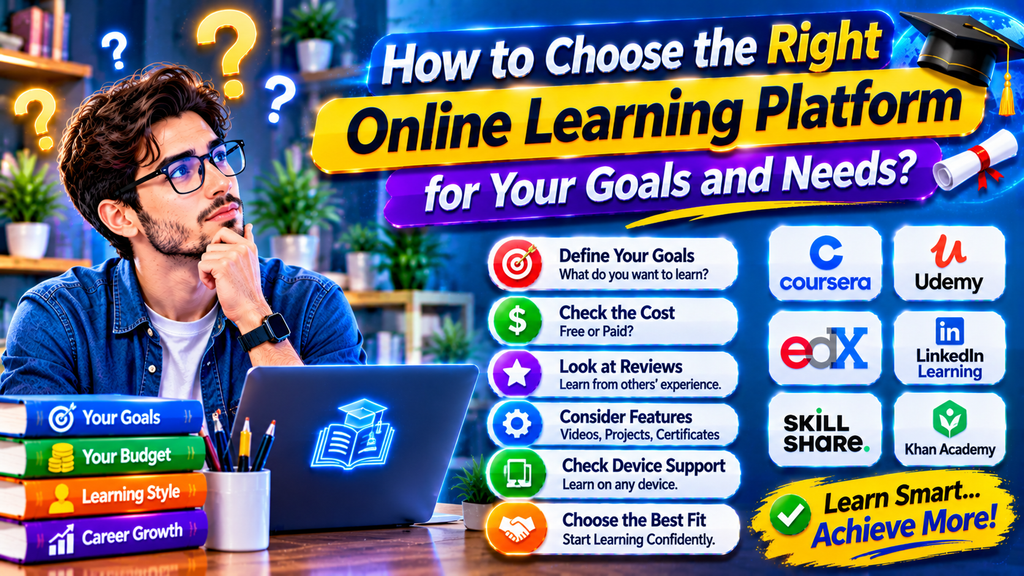
Selecting the right online education platform is an important decision because the learning experience can influence your motivation, progress, and results.
Instead of choosing a website simply because it is popular, compare its features with your personal requirements.
Identify Your Learning Goals
Start by deciding what you want to achieve.
Are you interested in academic education, professional certification, freelancing, programming, or personal development?
For example, students preparing for examinations may benefit from Khan Academy, while someone interested in web development may prefer Codecademy or freeCodeCamp.
Compare Course Quality
A platform may have thousands of courses, but quantity does not guarantee quality.
Review course descriptions, instructor qualifications, lesson previews, student feedback, and available learning materials.
A well-organized course should explain its objectives and provide a clear learning structure.
Check Pricing and Subscription Plans
Compare free access, individual course prices, subscriptions, and certificate fees.
Some websites offer introductory lessons without payment but charge for assessments or certificates.
Read the pricing details carefully before entering payment information.
Examine Certificate Value
Certificates can demonstrate course completion and knowledge development. However, not every certificate has the same professional recognition.
University credentials, industry certifications, and ordinary course-completion certificates serve different purposes.
If your goal is employment, research whether employers in your field value the specific qualification.
Consider Mobile Compatibility
A mobile-friendly platform makes learning more convenient for people who use smartphones.
Check whether lessons work smoothly on mobile devices and whether the service provides offline access where needed.
Review Support and Learning Community
Some learners prefer independent study, while others benefit from instructor feedback and discussion groups.
Look for platforms that offer suitable student support, community discussions, assignment feedback, or mentorship when these features matter to your learning goals.
5. Benefits of Using Online Education Platforms

Online education platforms offer several advantages that make them valuable for students, professionals, entrepreneurs, and independent learners.
Flexible Learning Schedules
Traditional education often requires students to follow fixed class schedules.
Online learning allows many students to organize their study time around personal responsibilities, employment, and other commitments.
This flexibility is especially helpful for working professionals and people managing family responsibilities.
Access to Global Educational Resources
Students can explore educational materials from universities, experienced instructors, and international organizations without traveling to another country.
This makes specialized knowledge more accessible to learners who may not have suitable educational institutions nearby.
Affordable Learning Opportunities
Many online platforms provide free courses or comparatively affordable educational programs.
Learners can develop useful skills without paying for expensive classroom-based training.
However, advanced certificates, subscriptions, and professional programs may involve additional costs.
Opportunities for Career Development
Online courses can help individuals develop skills relevant to changing workplace requirements.
For example, someone working in marketing may learn search engine optimization, data analysis, or social media management.
Similarly, a beginner can explore programming before deciding whether to pursue a technology career.
Self-Paced Education
Many platforms allow learners to study at their own speed.
Students can repeat difficult lessons, pause videos, and spend additional time on subjects that require deeper understanding.
Development of Digital Skills
Using online education websites also helps learners become familiar with digital tools, communication systems, and internet-based learning environments.
These abilities can support academic activities and professional responsibilities.
6. Online Learning Platforms vs Traditional Classroom Education
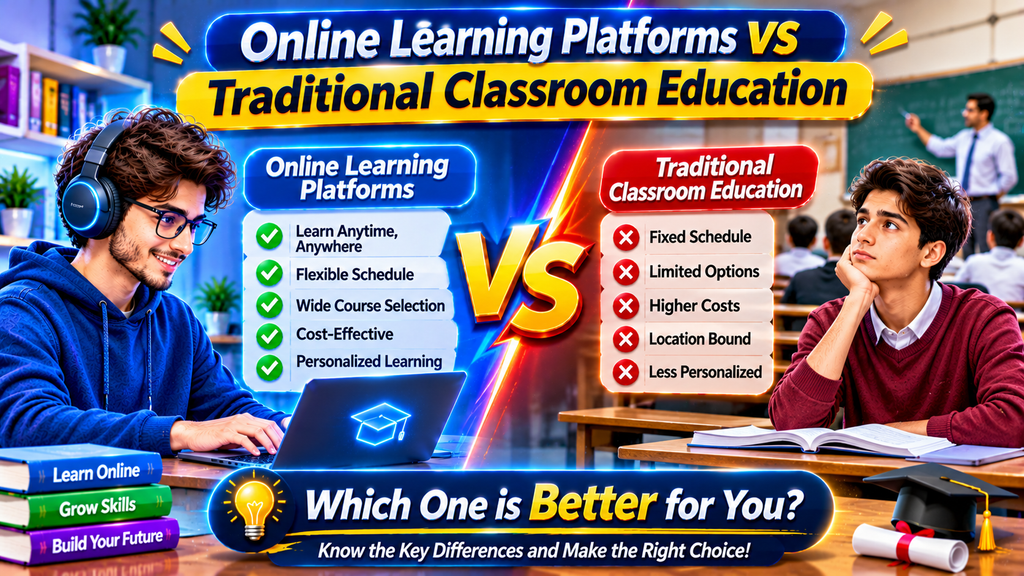
Both online education and traditional classroom learning offer valuable educational experiences. However, they differ in teaching methods, flexibility, accessibility, and student interaction.
| Feature | Online Learning | Traditional Learning |
| Location | Study from different locations | Usually requires physical attendance |
| Schedule | Often flexible | Generally fixed |
| Learning Materials | Digital resources | Books and classroom materials |
| Interaction | Online discussions and video sessions | Direct classroom interaction |
| Cost | Varies by platform and course | Includes tuition and related expenses |
| Progress | Often self-managed | Usually follows an academic timetable |
| Accessibility | Requires suitable internet and devices | Requires access to an educational institution |
Online learning is suitable for people who prefer flexibility and independent study. Traditional education may be more appropriate for students who need direct supervision, physical laboratory access, or regular classroom interaction.
Some educational institutions also combine both approaches through blended learning.
This method uses digital educational resources alongside classroom instruction, providing students with additional flexibility while maintaining direct interaction with teachers.
The right approach depends on the learner’s educational goals, available resources, preferred learning style, and the requirements of the subject.
7. Tips to Get Better Results from Online Learning
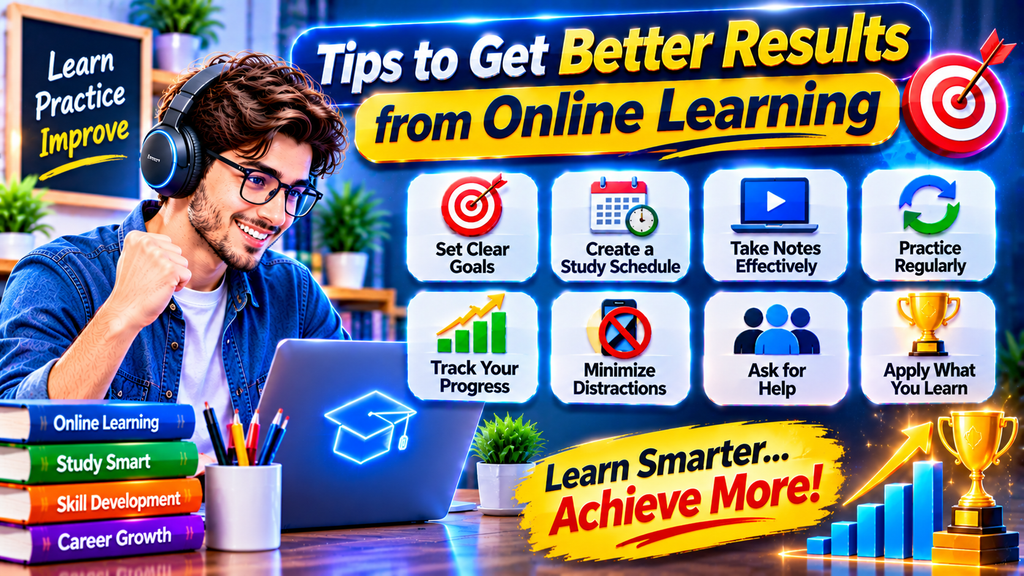
Enrolling in an online course is only the beginning. To gain real value, learners need a consistent study routine, clear objectives, and practical activities.
The following strategies can help improve your online learning experience.
Set Clear Learning Objectives
Before starting a course, decide what you want to learn and why.
Instead of setting a general goal such as learning technology, choose something specific, such as building a basic website or understanding Python fundamentals.
Clear objectives make it easier to measure progress.
Create a Realistic Study Schedule
Choose a study schedule that fits your daily responsibilities.
Even 30 to 60 minutes of focused learning can be productive when practiced consistently.
Avoid creating an unrealistic timetable that becomes difficult to maintain.
Practice What You Learn
Watching lessons is not enough to develop practical knowledge.
Complete exercises, work on small projects, and apply new concepts to real situations.
For example, students learning graphic design can create sample posters, while programming beginners can build simple applications.
Take Notes and Review Lessons
Writing important information helps organize knowledge and makes revision easier.
Keep notes about important concepts, useful resources, and mistakes you encounter during learning.
Reviewing previous lessons can improve understanding and retention.
Avoid Multitasking
Studying while constantly checking social media, messages, or unrelated websites can reduce concentration.
Create a distraction-free learning environment and focus on one educational activity at a time.
Track Your Progress
Use course dashboards, personal notes, or project lists to monitor your development.
Completing lessons and practical assignments provides a clearer picture of what you have learned.
Build a Portfolio
If you are learning professional or creative skills, save examples of your completed work.
A portfolio can demonstrate practical abilities to potential clients, employers, or collaborators.
For people interested in technology careers, developing practical skills can also support future opportunities. You can explore related career possibilities in our guide to AI Careers Expected to Thrive and Grow by 2030.
Continue Learning Regularly
Technology and professional requirements continue to change.
Keep exploring updated courses, new tools, and relevant educational resources to maintain your knowledge.
Frequently Asked Questions About the Best Online Learning Platforms
1. What are the best online learning platforms in 2026?
Some popular online learning platforms in 2026 include Coursera, Udemy, edX, Khan Academy, LinkedIn Learning, Skillshare, Codecademy, and FutureLearn. The best option depends on your educational goals, budget, and preferred learning style.
2. Which online learning platforms are completely free?
Khan Academy, freeCodeCamp, MIT OpenCourseWare, and Microsoft Learn provide substantial free educational resources. DigiSkills.pk also offers free training programs for eligible Pakistani learners when enrollment is open. Always check individual course and certificate conditions.
3. Can I earn a certificate from online learning platforms?
Yes. Many online education platforms offer certificates after learners complete eligible courses or programs. Certificate availability, fees, assessment requirements, and professional recognition differ between providers.
4. Are online learning platforms good for beginners?
Yes. Many platforms provide beginner-friendly courses with basic explanations, video tutorials, interactive exercises, and step-by-step learning paths. Khan Academy, Udemy, and freeCodeCamp are useful starting points for different subjects.
5. Which online learning platform is best for programming?
Codecademy and freeCodeCamp are useful options for learning programming. Coursera and Udemy also provide courses covering Python, JavaScript, web development, software engineering, and other technical subjects.
6. Can online courses help me get a job?
Online courses can help develop professional knowledge and practical skills that may support employment opportunities. However, completing a course does not guarantee a job. Employers may also consider experience, portfolios, qualifications, and interview performance.
7. Are online learning platforms better than traditional education?
Neither approach is universally better. Online education provides flexibility and access to digital resources, while traditional education offers direct classroom interaction and structured supervision. The best choice depends on individual learning requirements.
8. Can I learn professional skills using free online courses?
Yes. Many free educational resources cover digital marketing, programming, graphic design, business, communication, and other professional subjects. Practical exercises and personal projects can help turn this knowledge into useful skills.
9. Do online learning platforms work on mobile phones?
Most major online education services provide mobile-friendly websites, and several offer dedicated applications. Learners can watch lessons, read materials, complete selected exercises, and monitor progress using compatible smartphones.
10. How do I choose the best online learning platform for my career?
Identify your career goals, compare relevant course content, check instructor experience, review pricing, and investigate certificate recognition. Choose a platform that provides practical learning opportunities and matches the skills required in your preferred profession.