

Selecting the right programming language is a crucial first step when planning to build a website or develop a modern web application.
Whether you want to build a personal website, an online store, a business platform, or a complex web application, the programming language you choose can influence development speed, website performance, security, scalability, and long-term maintenance.
The web development industry continues to evolve as new technologies, frameworks, and development tools become available. Some programming languages focus on creating interactive user interfaces, while others are designed to manage databases, server operations, and complex application logic.
For beginners, JavaScript and Python offer accessible starting points. For professional developers, TypeScript, PHP, Java, C#, and Go provide powerful options for different project requirements.
According to the 2026 Stack Overflow Developer Survey, JavaScript remains the most widely used programming language, with 62% of respondents reporting that they used it. Python follows with 58%, while TypeScript reaches 43.8%. These figures demonstrate the continuing importance of JavaScript-based development and the growing relevance of strongly typed programming.
However, popularity alone should not determine your decision. Your ideal programming language choice depends on the type of website you want to create, your technical skills, project needs, and long-term development plans.
.
This guide explores the best programming languages for web development in 2026, their advantages, limitations, practical applications, and the situations in which each language makes the most sense.
JavaScript: A Leading Choice for Modern Web Development

JavaScript plays a major role in building today’s interactive, dynamic, and feature-rich websites.
It allows developers to create interactive websites, dynamic user interfaces, browser-based applications, and full-stack web solutions.
Unlike many traditional programming languages, JavaScript runs directly in web browsers. This makes it essential for frontend development, where user interactions and visual functionality are important.
With Node.js, JavaScript can handle server-side operations too, enabling developers to build both the frontend and backend using a single programming language.
Why JavaScript Is Popular
JavaScript offers several advantages:
- Browser compatibility: It works across modern web browsers without requiring additional installation.
- Large ecosystem: Thousands of libraries and development tools are available.
- Frontend development: It supports interactive menus, forms, animations, dashboards, and dynamic content.
- Backend development: Node.js makes server-side JavaScript development possible.
- Community support: Developers can access extensive documentation, tutorials, and open-source projects.
Popular JavaScript technologies include React, Vue.js, Angular, Express.js, and Next.js.
Where JavaScript Is Used
JavaScript is suitable for:
- Interactive business websites
- E-commerce platforms
- Social networking applications
- Web dashboards
- Real-time applications
- Single-page applications
- Full-stack development projects
Is JavaScript Good for Beginners?
JavaScript is beginner-friendly and provides a practical starting point for anyone looking to enter the web development field.
However, learning HTML and CSS first makes it easier to understand how JavaScript interacts with website structure and design.
Overall, JavaScript is a strong starting point for anyone who wants to become a professional web developer.
TypeScript: An Advanced Option for Building Modern Web Applications

Microsoft created TypeScript to extend JavaScript with additional features that make application development more structured and manageable.
It builds on JavaScript by introducing static typing and additional development features.
TypeScript code is converted into JavaScript before running in browsers or compatible JavaScript environments. This means developers can use existing JavaScript libraries while benefiting from additional code safety.
TypeScript has become particularly useful for large applications where multiple developers work on the same project.
Main Benefits of TypeScript
- Static typing: Developers can identify many coding mistakes before execution.
- Better code organization: Types and interfaces make complex projects easier to manage.
- Improved maintenance: Code becomes easier to understand and update.
- Editor support: Modern development environments provide helpful autocomplete and error detection.
- JavaScript compatibility: Existing JavaScript libraries and tools remain accessible.
TypeScript works particularly well with React, Angular, Vue, Next.js, and Node.js.
When Should You Choose TypeScript?
TypeScript is an excellent option for:
- Large-scale web applications
- Enterprise software
- Financial platforms
- Complex dashboards
- Applications with multiple developers
- Long-term software projects
For beginners, learning basic JavaScript before moving to TypeScript is usually a practical approach.
If your goal is professional frontend or full-stack development, TypeScript is one of the most valuable technologies to learn in 2026.
Python: An Excellent Language for Backend Programming and AI-Driven Web Applications

Python is widely appreciated for its simple structure, easy-to-understand code, and broad range of libraries, making it a suitable option for both new and experienced developers.
Although Python is not normally used to create interactive browser interfaces directly, it is widely used for backend development. It helps developers manage application logic, process information, connect databases, and build APIs.
Python is becoming increasingly valuable as organizations adopt AI technologies, machine learning solutions, and automated features within their web-based applications.
Popular Python Web Frameworks
Django and Flask are two popular frameworks that developers commonly choose when creating web applications with Python.
FastAPI is another important option for modern API development.
- Django: A full-featured framework that provides authentication, database tools, administrative functionality, and other built-in features.
- Flask: A lightweight framework suitable for smaller applications and customized backend systems.
- FastAPI: A modern framework designed for building efficient APIs with Python type hints and automatic documentation support.
Advantages of Python
- Easy-to-read syntax.
- Extensive libraries and frameworks.
- Strong AI and machine learning ecosystem.
- Excellent database integration.
- Useful for automation and data processing.
- Suitable for rapid application development.
Where Python Works Best
Python is a strong choice for:
- AI-powered web applications
- Data analysis platforms
- Business management systems
- REST APIs
- Machine learning applications
- Content management platforms
- Automation-based websites
Python is a suitable option for web projects that involve complex information handling, automated tasks, or AI-based functionality.
However, JavaScript or TypeScript is still necessary for most interactive browser-based experiences.
PHP: A Trusted Programming Language for Website and WordPress Creation

PHP is a backend scripting language widely used to power website functionality, process server requests, and manage dynamic web content.
It has remained relevant for decades because of its extensive hosting support, established ecosystem, and integration with popular content management systems.
A major strength of PHP is its strong compatibility and integration with popular web development platforms.
with WordPress.WordPress uses PHP for many of its core operations, making it an essential technology behind a large number of websites. Developers also rely on PHP to create tailored websites, e-commerce platforms, subscription-based services, and business management systems.
Why Developers Still Use PHP
- Affordable hosting options.
- Easy integration with databases.
- Large collection of existing libraries.
- Strong WordPress compatibility.
- Mature development ecosystem.
- Framework support for professional applications.
Popular PHP Frameworks
- Laravel: Provides an elegant structure for building modern web applications.
- Symfony: Offers reusable components and tools for complex enterprise projects.
- CodeIgniter: Provides a lightweight framework for developing web applications.
Best Use Cases for PHP
PHP is suitable for:
- WordPress websites
- E-commerce stores
- Blogging platforms
- Custom business websites
- Membership systems
- Content management systems
- Database-driven applications
PHP is also relevant for website owners who want to understand how WordPress themes and plugins work.
For additional website maintenance knowledge, readers can explore DevFreeHub’s guide: How to Fix Plugin Not Working in WordPress Step by Step.
PHP remains a practical option for developers who want to build and maintain websites without adopting an entirely new technology stack.
Java and C#: Strong Options for Enterprise Web Development
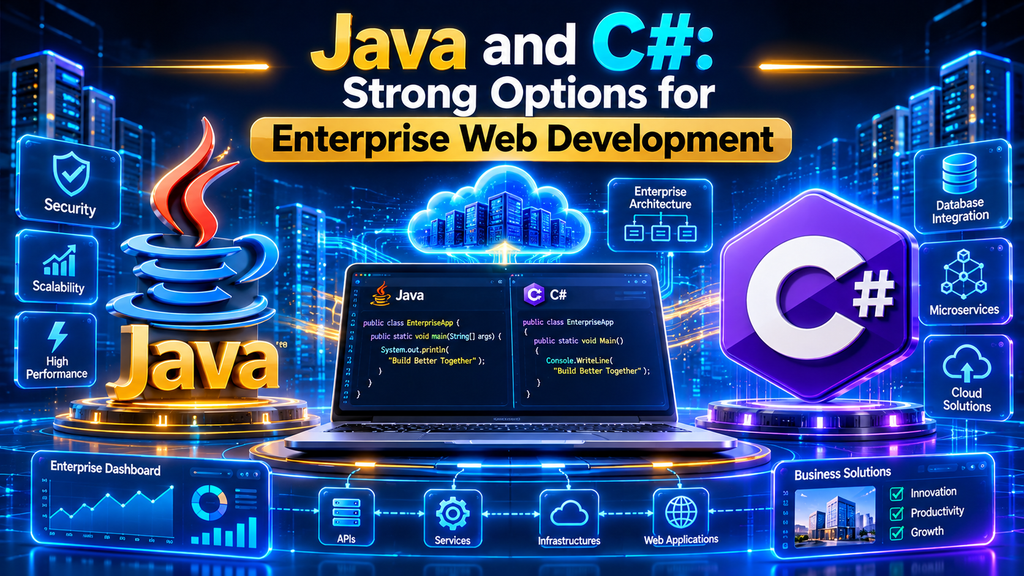
Java and C# are two established programming languages used to develop large-scale web applications, enterprise platforms, and business software.
Although they have different ecosystems, both offer strong development tools, structured programming features, and extensive frameworks.
Java for Web Development
Java is widely used in enterprise environments because of its mature ecosystem and platform independence.
Spring Boot is one of its most popular web development frameworks. It simplifies backend development and provides tools for building APIs, microservices, and enterprise applications.
Java is suitable for:
- Banking applications
- Enterprise management systems
- Large business platforms
- Backend services
- E-commerce systems
- Microservices architecture
Its structured approach makes it particularly valuable for applications that require long-term maintenance and complex business logic.
C# for Web Development
C# is developed by Microsoft and is commonly used with the .NET ecosystem.
ASP.NET Core provides a framework for building modern web applications and APIs. It supports cross-platform development and offers strong integration with Microsoft technologies.
C# is particularly useful for:
- Enterprise web applications
- Business management software
- Cloud-based platforms
- Secure backend systems
- API development
- Microsoft-based business environments
Java vs C#: Which One Should You Choose?
Java is a strong option for organizations using the Java ecosystem, while C# is especially attractive for businesses working with Microsoft technologies.
Both languages can support demanding applications. Your choice should depend on existing infrastructure, team experience, project requirements, and available development resources.
Go and Ruby: Specialized Languages for Efficient Web Development

Go and Ruby are two additional programming languages worth considering when selecting a web development technology stack.
They have different strengths and are suitable for different development approaches.
Go (Golang)
Go was developed by Google and is designed to provide simplicity, performance, and efficient concurrency.
It is particularly useful for backend services that need to handle many simultaneous requests.
Go offers:
- Fast execution.
- Built-in concurrency features.
- Simple language design.
- Efficient memory management.
- Strong support for API development.
Go is commonly used for cloud services, microservices, backend systems, and infrastructure-related applications.
Ruby
Ruby is known for its readable syntax and developer-friendly design.
Its most recognized web framework is Ruby on Rails, which follows conventions that help developers build applications quickly.
Ruby on Rails is useful for:
- Startup applications
- SaaS platforms
- Business websites
- Content-driven applications
- Prototypes and MVPs
Ruby can reduce the amount of repetitive code developers need to write, making it attractive for teams that value rapid development.
Which Is Better: Go or Ruby?
Go is generally a stronger choice when backend efficiency and concurrent processing are major priorities.
Ruby is attractive when rapid application development, established Rails conventions, and developer productivity are more important.
Neither language is universally better. The right choice depends on the application being developed.
How to Choose the Best Programming Language for Your Web Development Project
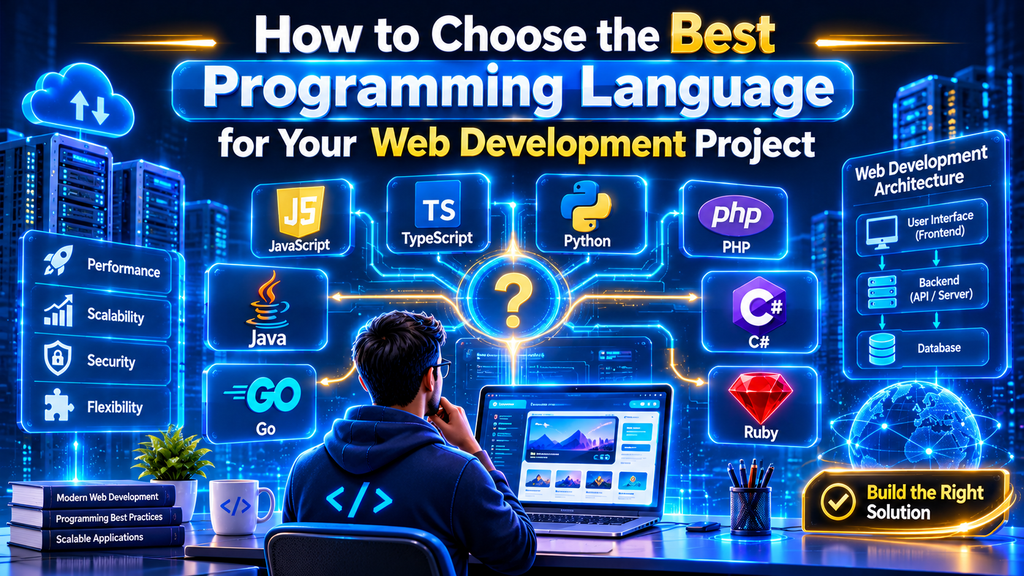
Selecting a programming language requires more than comparing popularity rankings. A language that works perfectly for a small business website may not be the best option for a large financial platform.
Before choosing a technology, consider the following factors.
1. Identify Your Project Requirements
First, understand what you want to build.
A simple informational website has different requirements from an e-commerce platform or an AI-powered application.
For example:
- Personal website: HTML, CSS, and JavaScript.
- Interactive frontend: JavaScript or TypeScript.
- AI-powered backend: Python.
- WordPress website: PHP.
- Enterprise application: Java or C#.
- High-concurrency backend: Go.
2. Consider Performance and Scalability
Performance is important when an application receives significant traffic or processes large amounts of information.
However, programming language alone does not determine website speed.
Database design, caching, hosting infrastructure, network performance, application architecture, and optimized code also play important roles.
3. Evaluate Learning Difficulty
Beginners should consider how easily they can understand a language and find learning resources.
Python and JavaScript are accessible starting points for many learners.
Java, C#, and TypeScript may require additional understanding of programming concepts, depending on your experience.
4. Check Framework Availability
Frameworks can significantly improve development speed.
For example, React and Next.js support JavaScript and TypeScript frontend development, while Django and FastAPI provide powerful Python backend solutions.
Choosing a language with a suitable framework can make development more organized and efficient.
5. Think About Long-Term Maintenance
A web application may need updates, security improvements, new features, and performance optimization for many years.
Consider whether the language has active community support, reliable libraries, clear documentation, and developers available to maintain the project.
6. Understand Your Career Goals
If you want to work as a frontend developer, JavaScript and TypeScript should be your priorities.
If you prefer backend development, Python, PHP, Java, C#, and Go offer different career opportunities.
For developers interested in future technology careers, understanding AI-related skills can also be valuable. DevFreeHub’s article Top AI Careers Expected to Thrive and Grow by 2030 provides additional career-related reading.
Quick Comparison of Programming Languages
| Language | Best Use Case | Learning Level |
| JavaScript | Frontend and full-stack | Beginner to intermediate |
| TypeScript | Large web applications | Intermediate |
| Python | Backend and AI applications | Beginner |
| PHP | WordPress and backend websites | Beginner to intermediate |
| Java | Enterprise applications | Intermediate |
| C# | Business and enterprise platforms | Intermediate |
| Go | Scalable backend services | Intermediate |
| Ruby | Rapid web application development | Beginner to intermediate |
The most effective approach is to choose a language that matches your project rather than attempting to learn every available technology.
Final Verdict: Which Programming Language Is Best for Web Development in 2026?
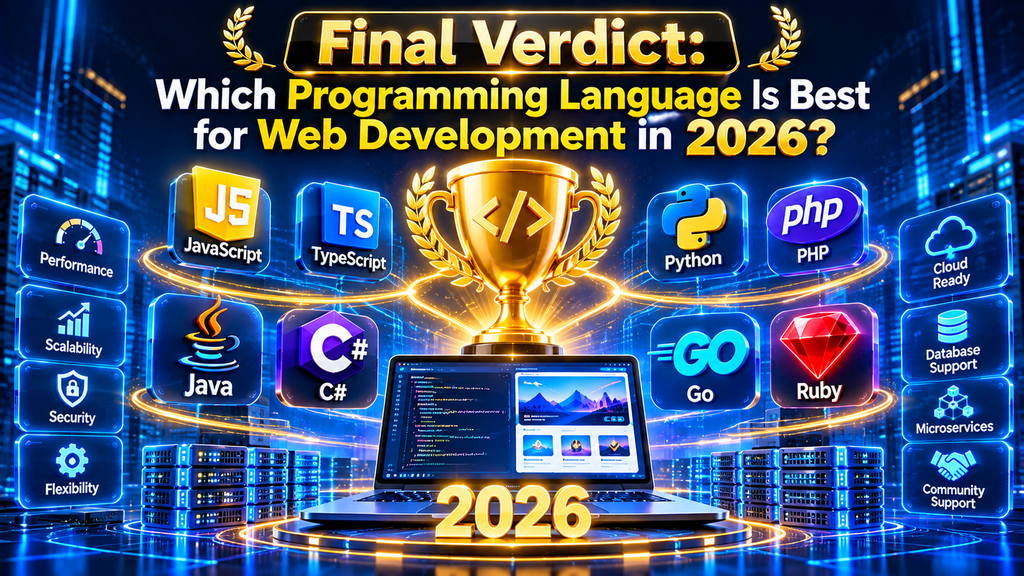
There is no single programming language that is perfect for every web development project. Each language offers different advantages, and the right choice depends on what you want to build.
JavaScript remains one of the most versatile options because it supports browser-based development and server-side applications through Node.js.
TypeScript is an excellent choice for large and maintainable applications. Python is particularly valuable for backend development, automation, and AI-powered platforms. PHP remains practical for WordPress and traditional web development.
Java and C# are strong choices for enterprise systems, while Go provides an efficient option for scalable backend services. Ruby remains useful for teams that prioritize rapid development.
Our Recommendations:
- Best overall choice: JavaScript.
- Best for modern large-scale frontend projects: TypeScript.
- Best for beginners interested in backend development: Python.
- Best for WordPress development: PHP.
- Best for enterprise applications: Java and C#.
- Best for scalable backend services: Go.
- Best for rapid application development: Ruby.
If you are completely new to web development, start with HTML, CSS, and JavaScript. Once you understand the fundamentals, explore TypeScript or a backend language such as Python.
Build practical projects, understand how databases work, learn basic web security, and gradually expand your skills.
The best programming language is ultimately the one that helps you solve real problems, create reliable applications, and achieve your development goals.
Conclusion
Choosing the best programming language for web development depends on your project requirements, experience, and long-term goals. JavaScript remains an excellent choice for frontend and full-stack development, while TypeScript offers better code organization for large applications. Python is ideal for backend development and AI-powered websites, whereas PHP remains a reliable option for WordPress and content management systems. Java and C# are suitable for enterprise applications, while Go provides excellent capabilities for scalable backend services.
If you are a beginner, start with HTML, CSS, and JavaScript before exploring advanced programming languages and frameworks. Focus on building practical projects, improving your coding skills, and understanding modern web technologies. The right programming language is the one that helps you build secure, fast, scalable, and user-friendly websites successfully.
Frequently Asked Questions About Web Development Languages
1. Which programming language is best for web development in 2026?
JavaScript is one of the best overall choices because it supports frontend and backend development. TypeScript, Python, and PHP are also excellent options depending on project requirements.
2. Which programming language should a beginner learn first?
Beginners interested in web development should start with HTML, CSS, and JavaScript. These technologies provide the foundation for building interactive websites.
3. Is Python better than JavaScript for web development?
Neither is universally better. JavaScript is essential for interactive browser experiences, while Python is particularly useful for backend development, APIs, automation, and AI integration.
4. Is TypeScript better than JavaScript?
TypeScript provides static typing and additional development features that can improve code organization and maintenance. JavaScript is simpler to start with and remains essential to the web ecosystem.
5. Is PHP still relevant for web development?
Yes. PHP remains widely used for server-side development, especially with WordPress and PHP-based frameworks such as Laravel and Symfony.
6. Which programming language is best for backend development?
Python, PHP, Java, C#, JavaScript, and Go are all capable backend languages. The best choice depends on application complexity, performance needs, ecosystem, and developer experience.
7. Can I build a complete website using JavaScript?
Yes. JavaScript can be used for frontend development and server-side functionality through Node.js. You can also use frameworks and libraries to create full-stack applications.
8. Which language is best for building e-commerce websites?
JavaScript, TypeScript, PHP, Python, Java, and C# can all support e-commerce development. PHP is particularly common in WordPress-based stores, while other languages are useful for custom platforms.
9. How long does it take to learn a web development programming language?
The learning period depends on your experience, available study time, and project complexity. You may understand basic concepts within weeks, but becoming comfortable with professional development usually requires consistent practice over several months or longer.
10. Should I learn multiple programming languages for web development?
You should first become comfortable with one main language and its ecosystem. After building a few practical projects, learning additional languages can expand your development skills and
career opportunities.