
Introduction

Shopify SEO involves more than adding keywords to product descriptions and blog posts. Search engines also need to understand what each page represents, including products, prices, reviews, articles, collections, and other important information. This is where structured data and schema markup can help. Schema markup uses specialized code to give search engines extra context about a webpage, making it easier for them to understand the page’s content, purpose, and important information beyond the visible text.
For Shopify stores, structured data can be particularly useful because ecommerce websites contain many details that search engines need to understand. Product names, prices, availability, ratings, brands, and other information can be described through structured data.
What Is Schema Markup?

Schema markup is a standardized form of structured data that can be added to a webpage to help search engines understand and categorize its content more clearly.
One commonly used format is JSON-LD, which allows website owners to describe different types of content in a way that search engines can process.
For instance, a product page can include important details such as:
- Product name
- Brand
- Price
- Currency
- Availability
- Product image
- Reviews
- Ratings
The information may already be shown to customers, but schema markup helps search engines better understand its meaning and context.
Schema does not replace normal SEO. It works alongside useful content, proper page structure, technical SEO, internal linking, and other optimization practices.
How Schema Markup Benefits Shopify SEO

1. Helps Search Engines Understand Product Pages
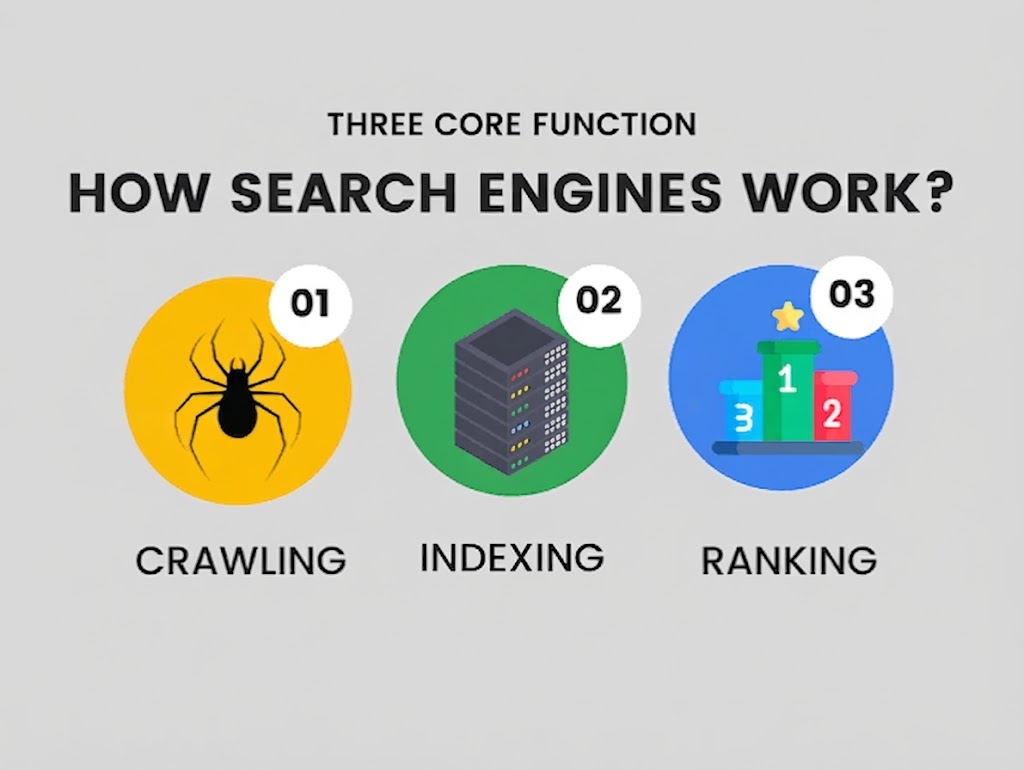
One of the major schema markup benefits is improved understanding of webpage content.
An ecommerce product page can contain many different elements, such as a product title, price, stock status, customer reviews, and shipping information.Structured data helps search engines recognize important details on a page, making it easier to understand the product and the information associated with it.
2. Supports Rich Search Results

Structured data can make pages eligible for certain enhanced search-result features when the required information and search-engine guidelines are satisfied.
For example, product-related structured data may help search engines understand details such as price, availability, and ratings.
Adding schema markup can make a page eligible for enhanced search features, but it does not ensure that a rich result will be displayed.
Search engines decide when and how enhanced results are displayed.
3. Provides Better Product Information

Shopify stores often have large product catalogs. Structured data helps search engines receive clear and consistent details about individual products. A well-configured product schema can highlight key information such as:
- Product name
- Description
- Brand
- Image
- Price
- Currency
- Availability
- Aggregate rating
It is important to keep structured data accurate and up to date so that it matches the information visitors can actually see on the webpage.
4. Can Improve Search Visibility

Schema markup does not automatically lead to better search rankings. However, accurate structured data can help search engines interpret a webpage and may make it eligible for enhanced search features. When search results show useful extra details, users may get a clearer idea of the page before visiting it. Therefore, schema markup should be used as one part of a complete Shopify SEO strategy rather than as a standalone ranking method.
5. Helps Organize Ecommerce Information

A Shopify store can include products, collections, articles, FAQs, organizations, breadcrumbs, and other types of content.
Structured data provides a standardized way to describe these different elements.
Breadcrumb structured data can show search engines how different pages are organized and connected within a website’s navigation structure.
This can be especially useful for stores with many categories and products.
Common Schema Types for Shopify Stores
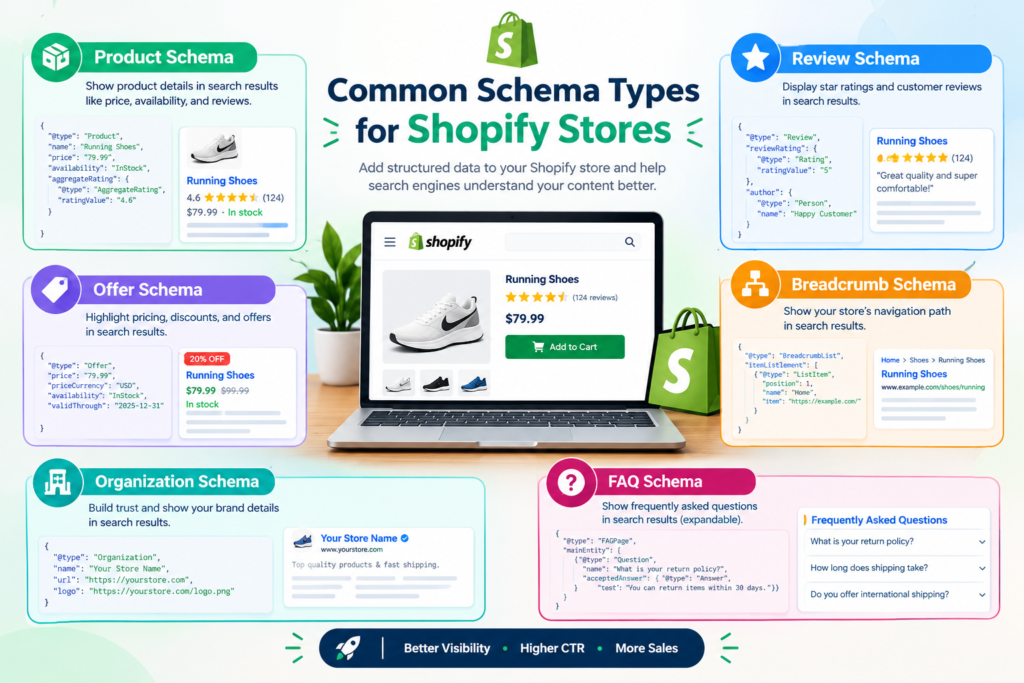
Different types of structured data can be used depending on the content and purpose of each webpage.
Product Schema

Product schema is highly relevant to ecommerce websites. It can describe information such as product names, images, prices, availability, brands, and reviews.
Breadcrumb Schema
Breadcrumb structured data outlines a webpage’s navigation hierarchy, helping search engines understand where the page fits within the overall site structure.
For example:
Home → Clothing → Men’s Shoes → Running Shoes
This provides search engines with additional information about the page’s position within the website.
Organization Schema

Organization structured data provides search engines with key details about a company or organization, including its name, website, and other important business information.
Article Schema
For Shopify blog pages, article structured data can help search engines recognize the page as a blog post and better understand its content type.
FAQ Schema
FAQ content can be marked up when it meets the relevant search-engine requirements. Store owners should only use structured data when it accurately matches their content and supports search features that are relevant to the page.
How to Add Structured Data to Shopify
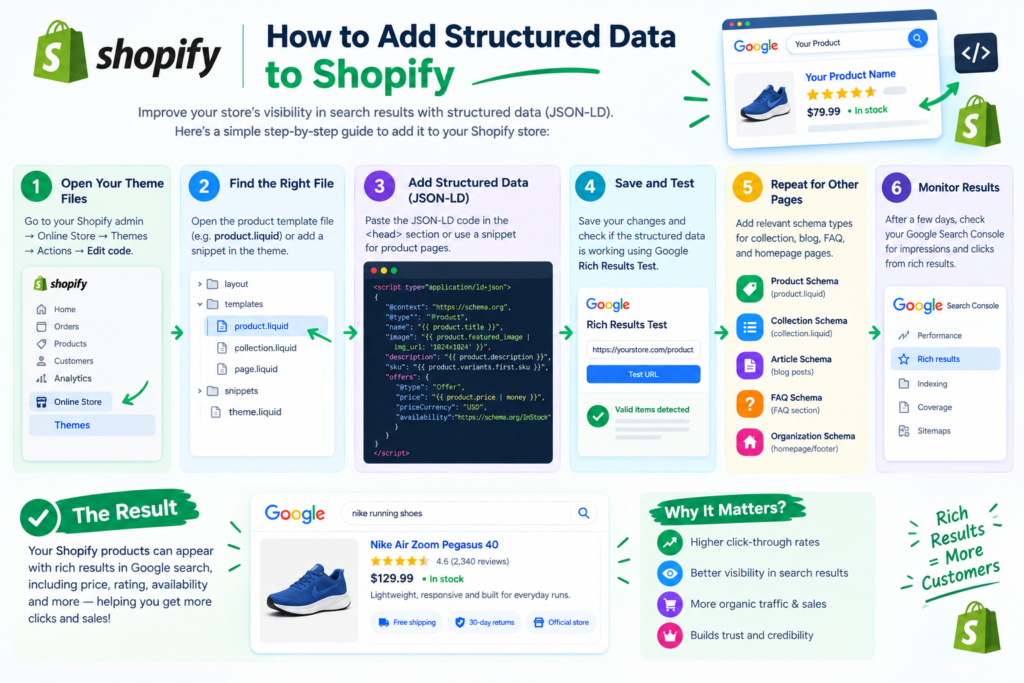
Shopify stores may already include some structured data depending on the theme and installed applications.
Before adding additional schema, check the existing implementation. Adding multiple versions of the same structured data can create unnecessary duplication or conflicts.
A Shopify store owner can generally approach schema implementation in three ways:
- Use structured data provided by the Shopify theme.
- Use a reputable SEO or structured-data application.
- Add or customize structured-data code manually when appropriate.
Manual editing requires technical knowledge because incorrect code can create validation errors or describe information that does not match the visible page.
Schema Markup Best Practices

To get the most value from structured data, follow a few important practices.
Keep Information Accurate
The schema markup should accurately reflect the information and content available on the webpage.
If a product is unavailable, the structured data should not incorrectly indicate that it is in stock.
Avoid Duplicate Markup
Check whether your Shopify theme or an application is already generating product schema. Multiple implementations can sometimes produce conflicting information.
Use Relevant Schema

Use structured data only when it correctly reflects the actual content of the webpage.
Avoid marking up unrelated or misleading information.
Validate Your Implementation
After adding structured data, test the pages with available structured-data testing and search-result validation tools. Check for any errors or warnings, and make sure the structured data matches the content that users can actually see on the page.
Keep Content User-Focused
Structured data should enhance a helpful webpage, not take the place of valuable, well-written content.
Product descriptions, images, navigation, page speed, mobile usability, and other SEO factors still matter.
Schema Markup vs Traditional Shopify SEO

Schema markup and traditional SEO have different roles.
Traditional Shopify SEO focuses on elements such as:
- Keyword research
- Search intent
- Product titles
- Meta descriptions
- URLs
- Internal links
- Content quality
- Technical SEO
- Site speed
- Mobile usability
Schema markup focuses on providing structured information that helps search engines interpret webpage content.
Using both approaches can create a more complete SEO strategy.
Common Mistakes to Avoid

A few mistakes can reduce the usefulness of structured data.
Adding inaccurate information: Never use schema to provide information that users cannot find on the page.
Installing too many SEO apps: Multiple applications may generate overlapping structured data.
Ignoring validation errors: Errors should be reviewed after implementation.
Using schema as a ranking shortcut: Structured data does not automatically improve rankings.
Forgetting product updates: Prices, stock levels, reviews, and other product information can change. Structured data should remain consistent with the current page.
Conclusion
The schema markup benefits for Shopify SEO mainly come from giving search engines clearer information about webpage content. Product, breadcrumb, organization, article, and other structured-data types can help describe different parts of an ecommerce website.
Schema markup should not be treated as a replacement for keyword research, useful content, technical optimization, or other SEO practices. Instead, it works as an additional layer that helps search engines interpret information more clearly.
For Shopify store owners, the best approach is to use relevant structured data, keep it accurate, avoid duplication, and regularly check the implementation. When combined with a strong SEO foundation, structured data can support better communication between a Shopify store and search engines.
FAQs
1. What are the main schema markup benefits for Shopify SEO?
Schema markup helps search engines better understand webpage content and can make eligible pages suitable for certain enhanced search-result features.
2. Does schema markup improve Google rankings?
Schema markup does not guarantee higher rankings. Its primary purpose is to provide structured information that helps search engines understand a webpage.
3. Does Shopify automatically add schema markup?
Some Shopify themes and apps can generate structured data automatically. The exact implementation depends on the theme, apps, and store configuration.
4. What schema is useful for Shopify product pages?
Product structured data is commonly used for ecommerce product pages because it can describe information such as product name, price, availability, image, and reviews.
5. Can I add schema markup manually to Shopify?
Yes, structured data can be customized manually, but technical knowledge is recommended to avoid errors, duplication, or inaccurate markup.
6. Is schema markup necessary for every Shopify page?
No. Structured data should be used when it accurately describes the content of a page and is relevant to that page type.
7. Can incorrect schema hurt SEO?
Incorrect or misleading structured data can cause validation problems and may prevent eligibility for certain search features. Schema should always accurately represent visible page content.
8. How often should Shopify schema be checked?
It is useful to review structured data after theme changes, SEO app installations, major product-template changes, or other technical updates.