
Introduction

Product titles are one of the most important elements of a Shopify product page. They tell shoppers what a product is and help search engines understand the page’s main topic. A clear and properly optimized title can make it easier for potential customers to discover your products through search.
Shopify Product Title SEO is the process of creating product names that are descriptive, relevant, readable, and naturally aligned with what customers search for.
A strong product title should be created with customers in mind, not just search engines.
. It should also help shoppers quickly understand what they are looking at. The best approach is to combine keyword relevance with clarity and useful product information.
Why Product Titles Matter for Shopify SEO

Search engines use different parts of a webpage to understand its content. The product title is an important signal because it identifies the main subject of the product page.
For example, a title such as “Wireless Bluetooth Headphones with Noise Cancellation” gives users and search engines a much clearer idea of the product than a generic name such as “Premium Headphones.”
A descriptive title can also improve the shopping experience. Customers can quickly understand the product without opening multiple pages.
However, adding keywords repeatedly does not automatically improve rankings. Your title should sound natural and accurately describe the product.
1. Use the Main Keyword Naturally
Start by identifying the primary phrase that potential customers might use when searching for your product.
For example, if you sell a specific type of product, your main keyword could be:
“Leather Laptop Backpack”
Instead of creating a vague title, you could use:
Leather Laptop Backpack for Work and Travel
The keyword appears naturally while additional words provide useful context.
Avoid repeating the same keyword several times. Search engines are designed to understand natural language, so keyword stuffing can make your titles less useful.
2. Keep Product Titles Clear
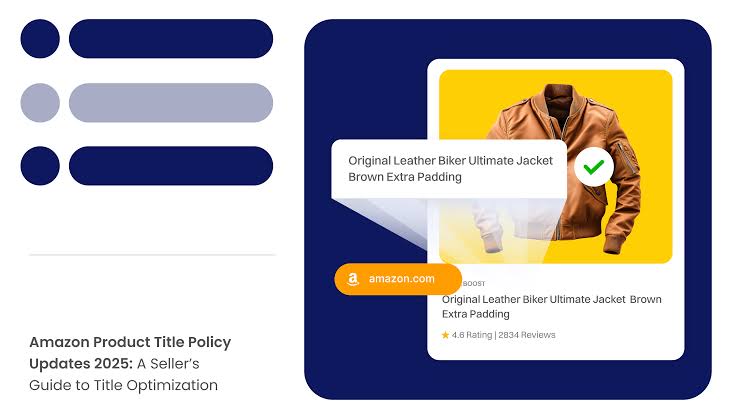
A product title should immediately explain what the customer is viewing.
Include important information when it genuinely helps identify the product, such as:
- Product type
- Brand
- Material
- Model
- Size
- Color
- Important feature
- Intended use
For example:
Men’s Cotton Casual Shirt – Slim Fit Blue
This title communicates the product type, target audience, material, style, fit, and color.
There is no need to add every detail; focus only on the information that matters most.
Keep the title focused on information that helps customers understand and identify the product.
3. Put Important Information Near the Beginning

The most important words should generally appear toward the beginning of the title.
For example:
Running Shoes for Men – Lightweight Sports Sneakers
is more immediately descriptive than a title that starts with unnecessary promotional wording.
Leading with the product type or primary keyword can make the title easier to understand.
Avoid starting every product title with phrases such as “Best,” “Amazing,” or “Limited Offer” unless those words are genuinely useful to the customer.
4. Avoid Keyword Stuffing
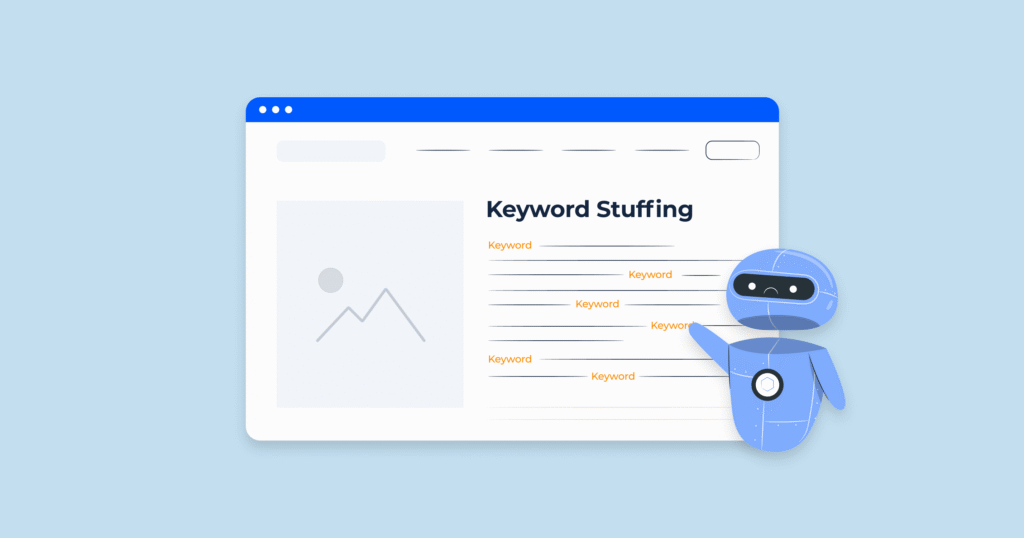
Keyword stuffing means adding the same keyword repeatedly in an unnatural way.
For example:
Running Shoes, Best Running Shoes, Running Shoes for Men, Cheap Running Shoes
This looks artificial and does not provide a pleasant shopping experience.
A better title would be:
Men’s Lightweight Sports Shoes – Comfortable Running Sneakers
The second version communicates the product clearly while using relevant terminology naturally.
5. Match Search Intent
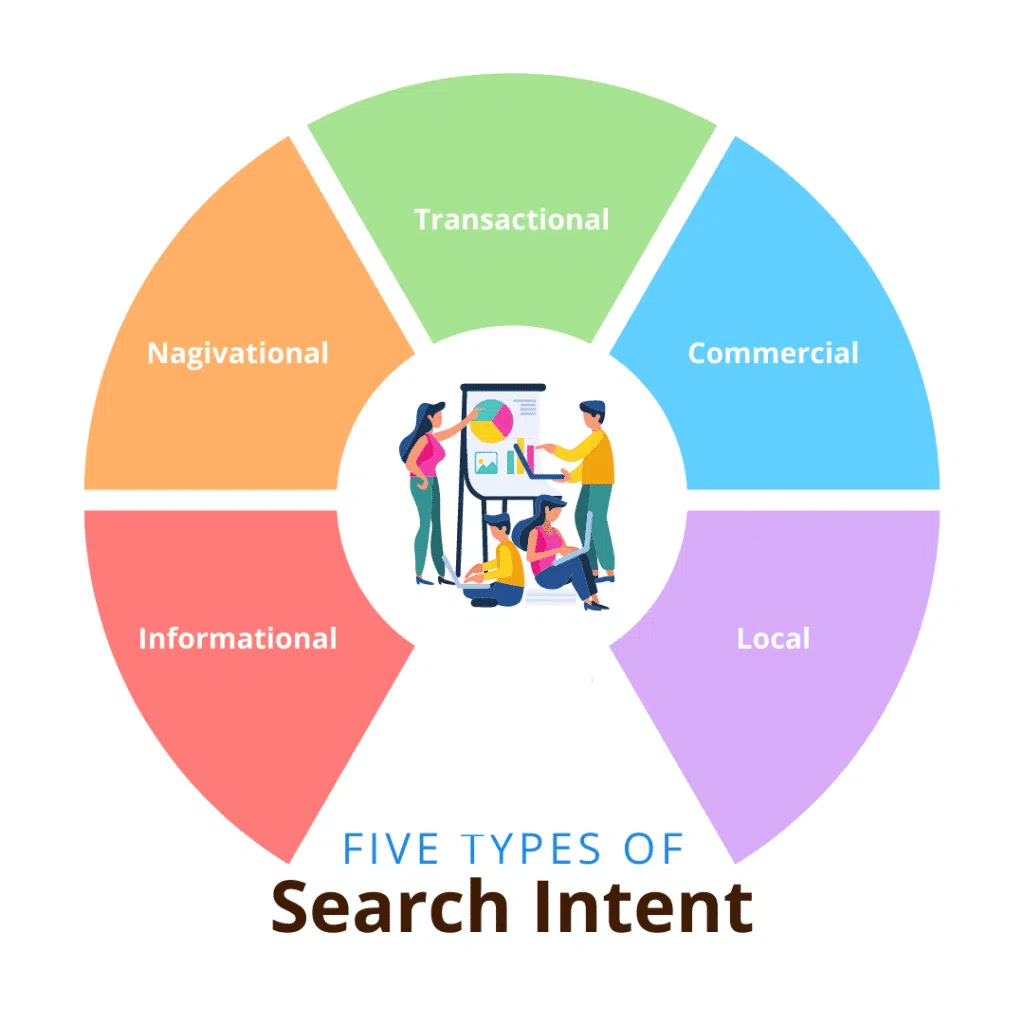
Understanding search intent can help you create better product titles.
A person searching for “black leather wallet for men” is looking for a specific product. Your product title should clearly reflect those characteristics if they are actually part of your product.
For example:
Men’s Black Leather Wallet – Slim Bifold Design
This title matches the searcher’s likely expectations.
Avoid mentioning features your product does not offer simply to target popular search terms.
The title should accurately represent the product.
6. Make Titles Unique
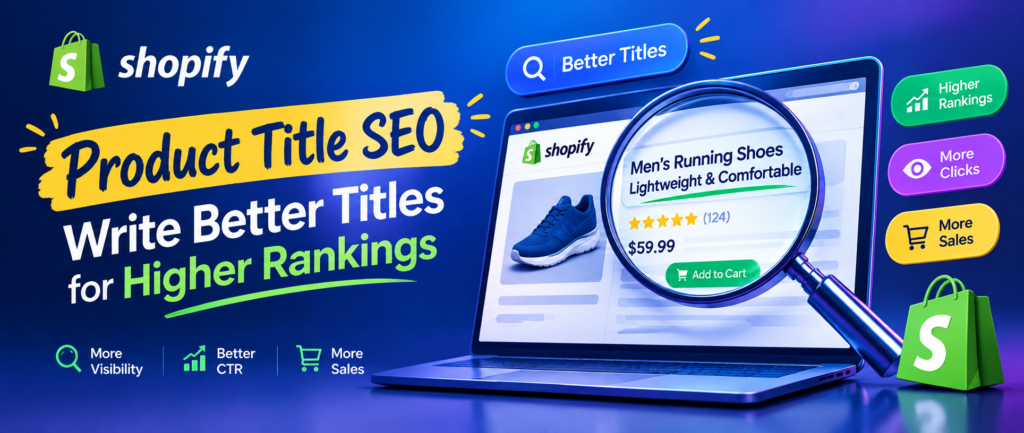
Each product page needs a clear, relevant title that sets it apart from other products.
Using the exact same title for multiple products can make it difficult for customers and search engines to understand the differences between those pages.
For example, instead of having several products titled:
Women’s Summer Dress
you could create more specific titles such as:
- Women’s Floral Summer Dress – Short Sleeve
- Women’s Cotton Summer Dress – Casual Fit
- Women’s Maxi Summer Dress – Floral Print
Unique titles provide additional context and help customers identify the correct product.
7. Include Product Variations Carefully
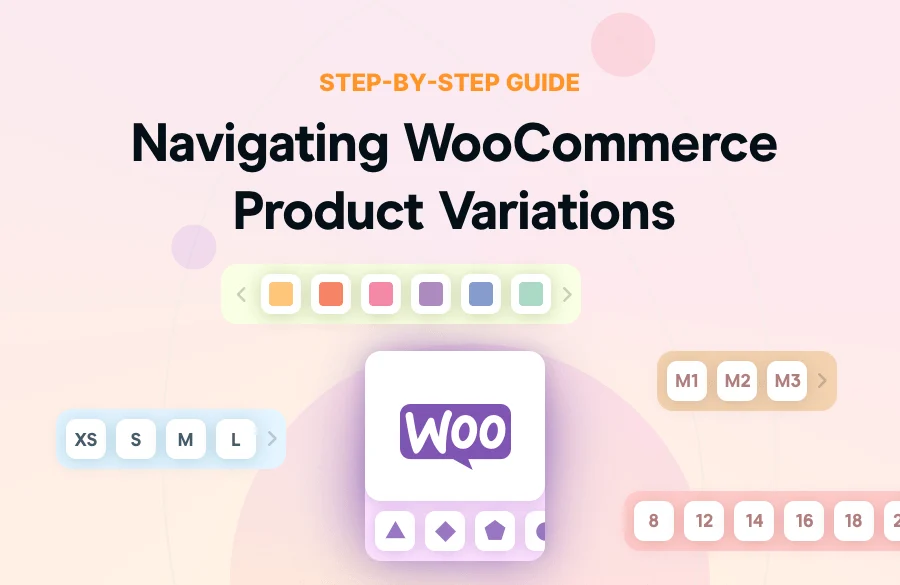
If products have meaningful differences, those differences can sometimes be included in the title.
Useful information may include:
- Size
- Color
- Material
- Model
- Style
- Quantity
However, avoid creating unnecessarily long titles by adding every available variation.
For example:
Stainless Steel Water Bottle – 1 Liter
is simple and useful.
If the same product comes in several colors, Shopify’s product options can usually handle those variations without requiring every color to be placed in the main title.
8. Write for Customers First

SEO should support the shopping experience rather than make product titles difficult to read.
Imagine seeing these two titles:
Men’s Leather Wallet – Slim RFID Blocking Bifold
and
Wallet Men Leather Wallet RFID Wallet Best Wallet
The first title is easier to understand because it describes the product naturally.
Clear titles can help customers quickly decide whether a product is relevant to their needs.
9. Avoid Unnecessary Promotional Words

Words such as “Amazing,” “Best,” “Cheap,” and “No.These words can make product titles lengthy without adding meaningful value.
Instead, use descriptive language that explains what the product actually offers.
For example:
Portable USB-C Laptop Charger – 65W Fast Charging
provides useful product information.
A title such as:
Best Amazing Premium Laptop Charger
provides much less specific information.
10. Keep Your Product Titles Consistent
A consistent naming structure can make a Shopify store look more professional.
For example, a clothing store could use:
[Product Type] – [Material/Style] – [Key Feature]
Examples:
- Cotton T-Shirt – Regular Fit – Black
- Linen Shirt – Relaxed Fit – White
- Denim Jacket – Classic Fit – Blue
A consistent structure makes it easier for customers to browse different products and understand product information quickly.
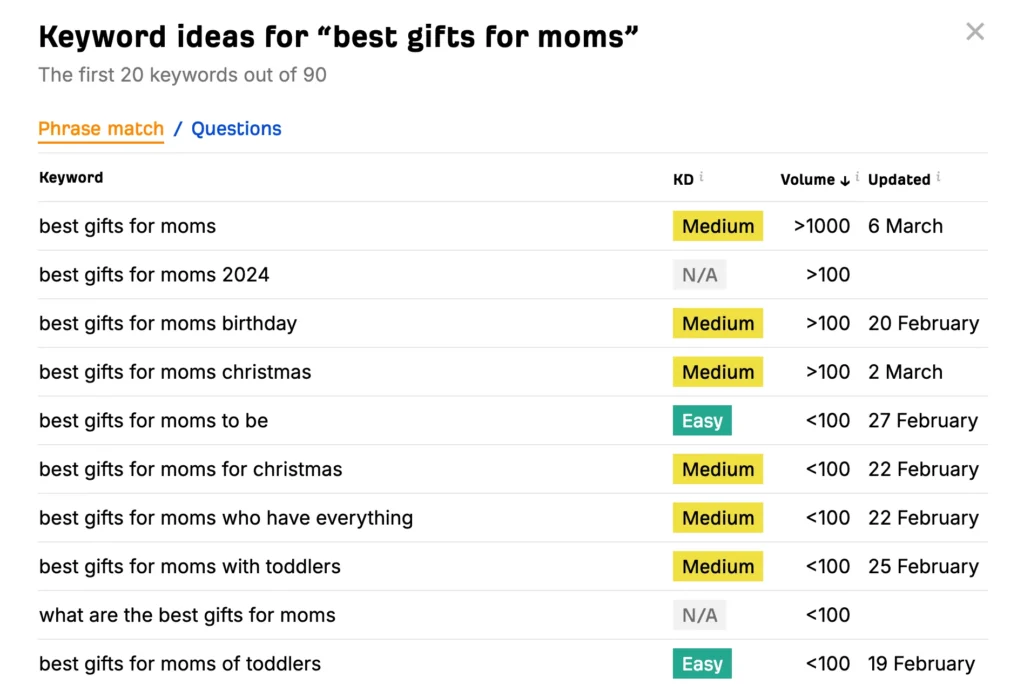
11. Research Keywords Before Writing Titles
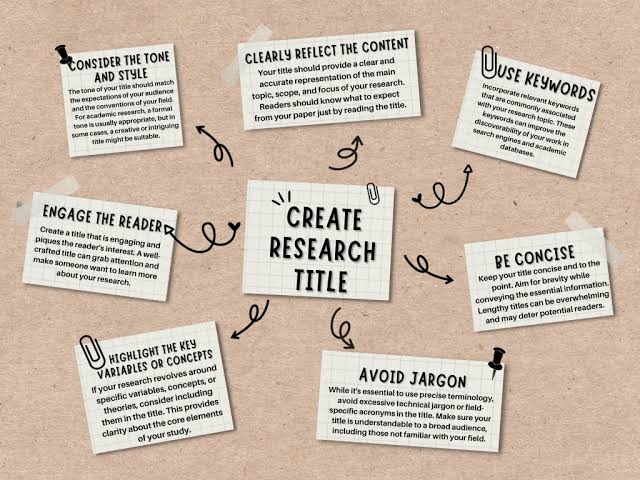
Keyword research can help you understand how customers describe products.
Before optimizing a title, investigate relevant search phrases and consider:
- Search volume
- Search intent
- Keyword difficulty
- Relevance
- Related keywords
- Long-tail phrases
Do not choose a keyword only because it has high search volume. The keyword should accurately describe the product you sell.
Long-tail keywords can sometimes be useful because they are more specific and may better match the customer’s search intent.
12. Optimize Titles Along With the Product Page
Product title optimization is only one part of Shopify SEO.
After creating a strong title, also pay attention to:
- Product description
- Meta title
- Meta description
- Product images
- Image alt text
- Internal links
- URL structure
- Product schema
- Mobile experience
All these elements work together to help search engines and users understand the product page.
Common Shopify Product Title SEO Mistakes
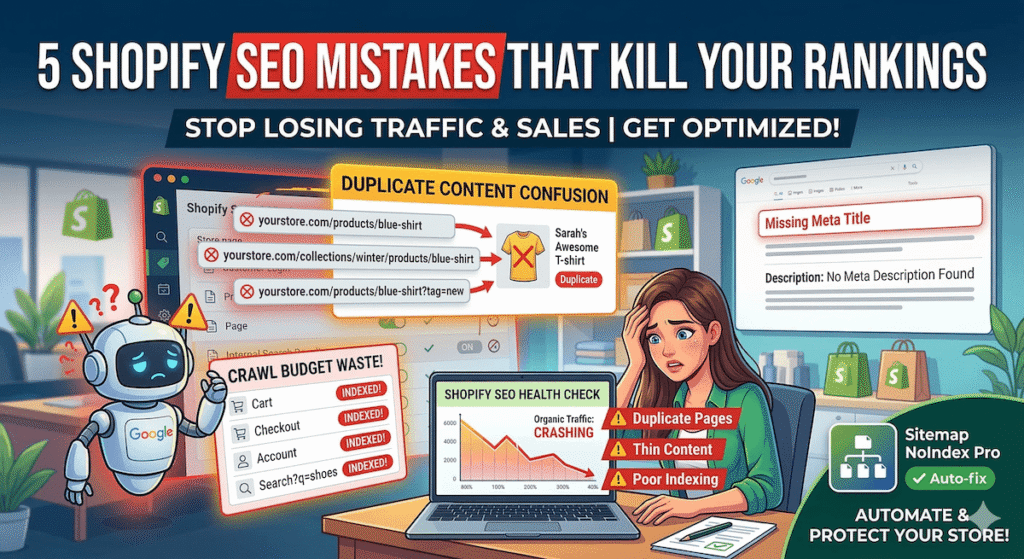
Avoid these common problems:
- Repeating keywords unnecessarily
- Using vague product names
- Making every product title identical
- Adding inaccurate keywords
- Writing extremely long titles
- Using excessive promotional language
- Ignoring customer search intent
- Copying competitors’ product titles
- Adding unnecessary symbols
- Creating titles that are difficult to read
Shopify Product Title SEO Checklist
Before publishing a product, check the following:
- Is the product clearly identified?
- Is the main keyword relevant?
- Does the title sound natural?
- Does it match search intent?
- Is the title unique?
- Does it describe the actual product?
- Is important information easy to find?
- Have unnecessary words been removed?
- Is keyword repetition avoided?
- Does the title make sense to customers?
Conclusion
Shopify Product Title SEO can help make product pages clearer, more relevant, and easier to understand. A strong title combines useful product information with natural keyword usage.
Instead of trying to add as many keywords as possible, focus on creating titles that accurately describe your products and match the language your customers use when searching.
Use relevant keywords, keep important information near the beginning, create unique titles, and avoid unnecessary repetition. When product titles are combined with strong descriptions, optimized images, useful metadata, and a good user experience, they can become an important part of a broader Shopify SEO strategy.
FAQs
1. What is Shopify Product Title SEO?
Shopify Product Title SEO means optimizing product names so they clearly describe the product and naturally include relevant search terms.
2. How long should a Shopify product title be?
There is no single ideal length for every product. Keep the title concise while including the information customers need to identify the product.
3. Should I add keywords to Shopify product titles?
Yes, when the keywords are relevant and naturally fit the product title. Avoid repeating keywords unnecessarily.
4. Can product titles improve Shopify SEO?
Well-written titles can help search engines understand the subject of a product page. However, rankings depend on many SEO factors, not just the product title.
5. Should every Shopify product have a unique title?
Yes. Unique and descriptive titles help distinguish products and give customers clearer information.
6. Should I include product colors in the title?
Include a color when it meaningfully identifies the product or distinguishes it from other products. Do not overload the title with unnecessary variations.
7. What is the biggest Shopify product title SEO mistake?
One common mistake is keyword stuffing. Product titles should be written naturally for shoppers while accurately describing the product.
8. Is keyword research necessary for product titles?
Keyword research can help you understand the terms customers use when searching, but relevance and accuracy should remain the priority.