
Introduction

Artificial intelligence is becoming increasingly useful for companies of all sizes. In the past, advanced technology was often associated with large organizations that had dedicated technical teams and substantial budgets. Today, many AI tools are easier to access and can support everyday tasks such as writing, planning, customer communication, data analysis, and workflow automation.
For small companies, AI for Small Business can provide practical support when time and resources are limited. Business owners often manage several responsibilities at once, including marketing, customer service, sales, administration, and planning. AI can help reduce the amount of time spent on repetitive work, allowing people to focus more attention on important business activities. Practical AI use cases commonly include customer service, marketing, operations, sales, and data analysis.
However, AI should be viewed as a tool that supports people rather than a complete replacement for human judgment. The best results usually come from using AI for suitable tasks, reviewing its output, and keeping humans involved when decisions require experience, accuracy, or personal understanding.
What Is AI for Small Business?
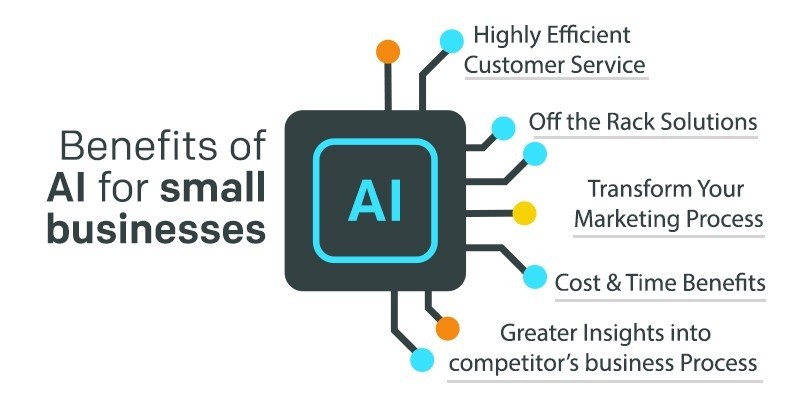
AI for small business refers to the use of artificial intelligence tools to make business tasks easier, faster, or more efficient. These tools can process information, identify patterns, generate content, summarize material, assist with communication, and automate selected workflows.
A small business does not need to build its own AI system to benefit from this technology. Many modern applications already include AI-powered features that can be used with simple instructions.
For example, a business owner may use AI to:
- Draft emails
- Create social media ideas
- Write product descriptions
- Summarize meetings
- Organize information
- Answer common customer questions
- Analyze basic business data
- Support marketing activities
The goal is not to automate everything. Instead, businesses can identify tasks that are repetitive or time-consuming and determine whether AI can safely assist with them.
How AI Can Improve Customer Service
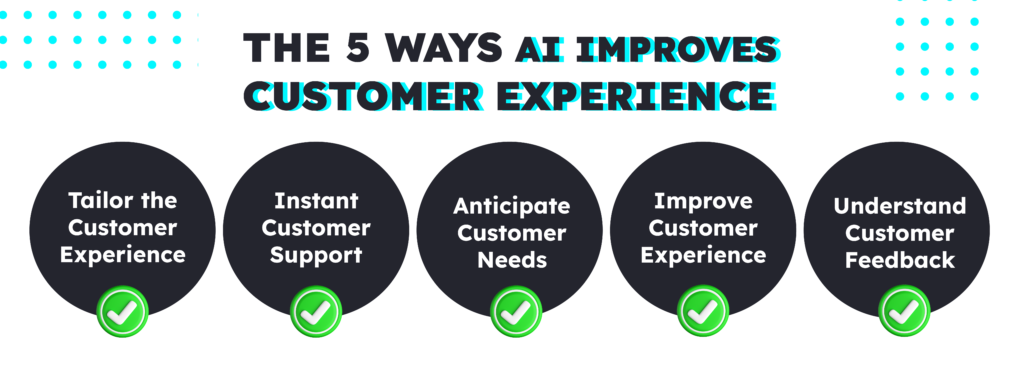
Customer communication is one of the most useful areas for AI support. Small businesses may receive similar questions repeatedly about products, prices, business hours, delivery, appointments, or services.
AI can help prepare responses to common questions and support customer service workflows. Chatbots and virtual assistants can also handle straightforward requests or direct customers toward useful information.
This can help businesses respond more quickly, particularly when a small team is managing many inquiries. However, complicated complaints and sensitive situations should still receive human attention.
AI-supported customer service works best when businesses regularly review the quality of responses. Incorrect information or an unsuitable tone can negatively affect customer trust, so human oversight remains important. AI tools are increasingly used to automate routine questions while leaving more complex interactions to people.
AI for Marketing and Content Creation
Marketing requires consistent effort, which can be difficult for a small team. AI can assist by generating ideas and creating first drafts for different types of content.
For example, a business can use AI to develop:
- Blog topic ideas
- Social media captions
- Email drafts
- Product descriptions
- Advertisement concepts
- Video scripts
- Content calendars
AI can speed up the initial stage of content creation. Instead of starting with a blank page, a business owner can use a draft as a starting point and then edit it to match the company’s voice.
Human review is essential because automatically generated content may contain mistakes, generic wording, or information that does not accurately represent the business. The strongest approach is to combine AI speed with human knowledge and creativity.
AI Can Help Save Time
Time is one of the most valuable resources for any small business. Routine activities can consume many hours each week, especially when one person manages several responsibilities.
AI can assist with tasks such as summarizing documents, organizing notes, drafting messages, scheduling activities, and processing information. By reducing repetitive manual work, employees may have more time for customer relationships, strategy, and other high-value activities.
Businesses can start with one simple process rather than trying to transform every workflow immediately. Testing one use case makes it easier to understand whether the tool is actually saving time and producing useful results. Starting with a single workflow and expanding gradually is also a commonly recommended approach for AI adoption.
AI for Better Business Decisions
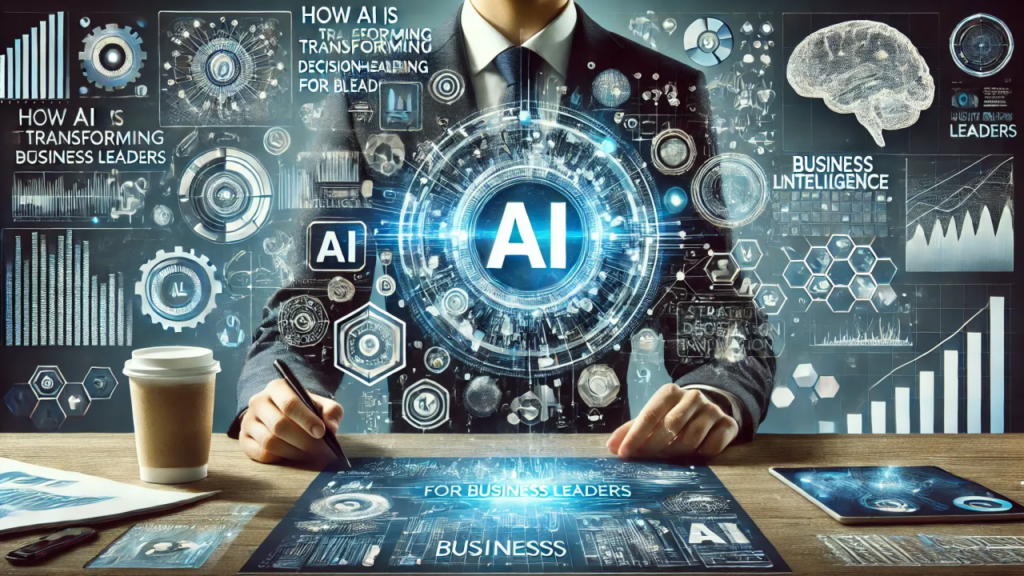
Small businesses collect information from sales, customers, websites, marketing campaigns, and other daily activities. Reviewing all this information manually can be challenging.
AI tools can help organize and analyze data to identify patterns and trends. Depending on the available data and tool, AI may support forecasting, customer analysis, sales insights, and operational planning.
For example, a business may use data to understand which products perform well or identify changes in customer behavior.
However, AI-generated insights should not automatically become final business decisions. Data can be incomplete, outdated, or incorrectly interpreted. Business owners should combine AI recommendations with their own knowledge and understanding of the market.
AI is most valuable when it provides useful information that helps people make more informed decisions.
AI and Business Automation

Automation is another important benefit of AI. Traditional automation usually follows fixed instructions, while AI can provide additional flexibility in areas involving language, content, and information.
A business might automate selected steps in a workflow, such as:
- Receiving a customer inquiry
- Identifying the topic
- Preparing a draft response
- Sending the request for review when needed
- Recording relevant information
This can reduce repetitive effort without completely removing human control.
Before automating a process, businesses should understand how the workflow currently operates. A poor process does not automatically become effective simply by adding AI.
Start with a clear goal, test the process carefully, and measure whether it improves speed, quality, or efficiency.
Choosing the Right AI Tools

The best AI tool depends on the needs of the business. A marketing agency, online store, local service provider, and training institute may all require different solutions.
Before selecting a tool, consider:
Purpose: What specific problem should the AI help solve?
Ease of Use: Can the team realistically learn and use it?
Cost: Does the expected value justify the expense?
Privacy: What information will be shared with the tool?
Integration: Can it work with existing software?
Accuracy: How often must the output be reviewed?
Avoid selecting a tool simply because AI is popular. The technology should solve a real business problem.
Challenges of Using AI in Small Business
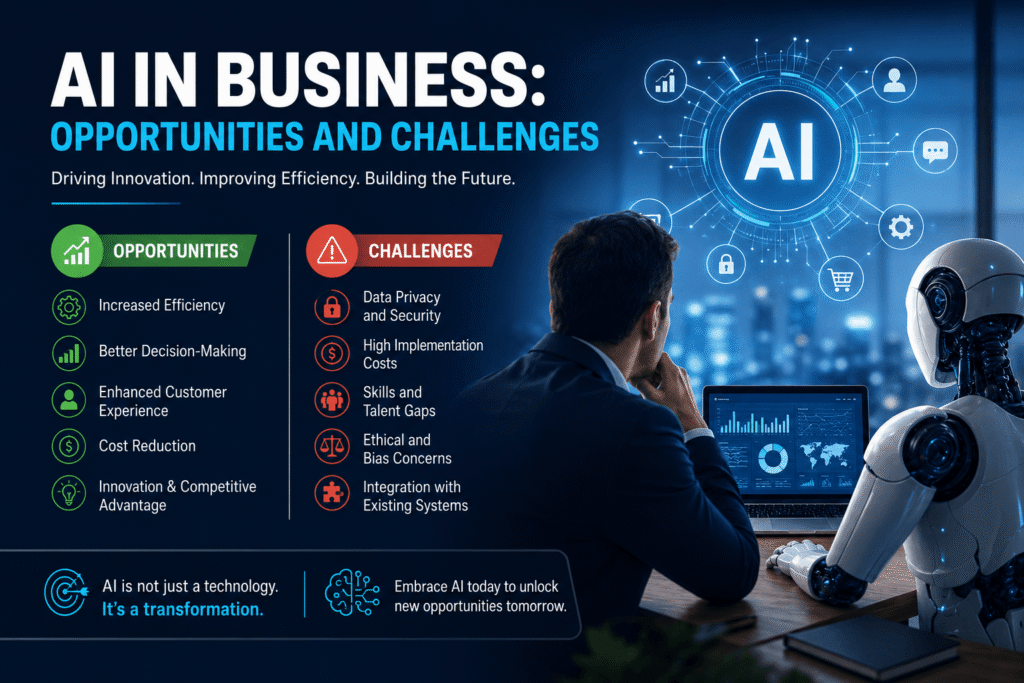
Although AI offers useful opportunities, businesses should also understand its limitations.
AI can produce inaccurate answers. It may misunderstand instructions or generate content that requires correction. Privacy and data security should also be considered before entering sensitive business or customer information into an AI system.
Employees may also need time to learn new workflows.
For this reason, AI adoption should be gradual. Start with low-risk tasks, review the results, and expand only when the process becomes reliable. AI can improve productivity, but human judgment remains necessary for quality control and important decisions.
The Future of AI for Small Businesses
AI is likely to become a more common part of everyday business software. Tools are increasingly designed to help with communication, productivity, planning, marketing, and workflow management.
Small businesses may gain access to capabilities that previously required larger teams or specialized technical knowledge. However, successful use will depend on choosing practical applications instead of following every new trend.
The best strategy is simple: identify a genuine problem, test an appropriate AI solution, measure the results, and improve the process over time.
Businesses that use AI carefully can potentially save time, improve efficiency, and give their teams more capacity for meaningful work.
Conclusion
AI for Small Business offers practical opportunities for companies that want to work more efficiently. It can support customer service, marketing, content creation, automation, data analysis, and everyday productivity.
The key is to use AI with a clear purpose. Start with one repetitive or time-consuming task and evaluate whether AI can genuinely improve that process. Keep people involved in reviewing important outputs and decisions.
AI is not a guaranteed solution to every business challenge. When used responsibly, however, it can become a valuable tool that helps small businesses save time, improve workflows, and focus more attention on growth.
FAQs
What is AI for small business?
AI for small business means using artificial intelligence tools to support tasks such as marketing, customer service, automation, content creation, productivity, and data analysis.
How can small businesses use AI?
Small businesses can use AI to draft content, answer common customer questions, organize information, automate selected tasks, analyze data, and support marketing activities.
Can AI help small businesses save time?
Yes. AI can reduce the time required for certain repetitive tasks, such as drafting responses, summarizing information, and creating initial content.
Is AI expensive for small businesses?
Costs vary depending on the tool and features. Businesses can begin with affordable or basic solutions and only invest more when a tool provides clear value.
Will AI replace employees in small businesses?
AI is better viewed as a support tool. It can handle certain repetitive tasks, while people remain important for creativity, judgment, relationship building, and complex decision-making.
How should a small business start using AI?
Start with one clear problem or repetitive workflow. Test an AI tool, review the results, measure its usefulness, and gradually expand its use if it provides real benefits.