
Introduction

Artificial intelligence is playing an increasingly significant role in today’s digital environment. Businesses, freelancers, marketers, and technology professionals are increasingly using AI to complete repetitive activities, organize information, improve communication, and create faster workflows. This growing interest has also increased searches for terms such as Droven IO AI Automation Tools.
AI automation uses intelligent technology to handle tasks and workflows with minimal manual effort.
Instead of requiring a person to complete every step manually, software can perform specific actions based on triggers, instructions, or available information.
Droven.io is commonly discussed in connection with AI, automation, technology, and digital solutions. However, it is important to understand that Droven.io should not automatically be considered a traditional automation software platform. It is better to examine the technology and automation concepts associated with it before choosing an actual automation tool.
What Is Droven.io?
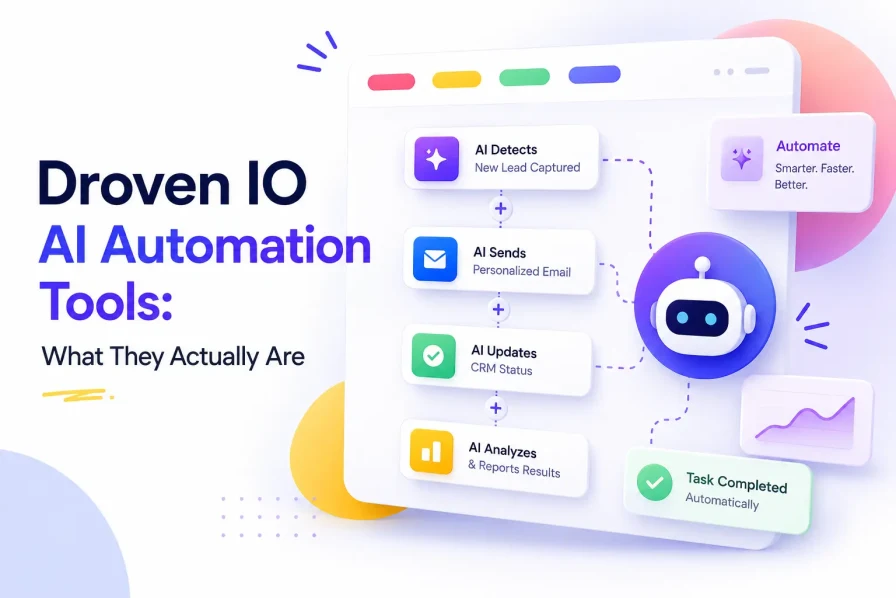
Droven.io is associated with technology-focused information and topics surrounding modern digital solutions. AI and automation are among the areas that can be explored when researching the platform and related technology concepts.
AI automation itself refers to using intelligent software to perform tasks that would otherwise require manual effort. These tasks can include processing information, managing customer requests, organizing data, generating content, and connecting different applications.
For users researching Droven.io, understanding the difference between an informational technology platform and an actual automation application is important. A dedicated automation platform normally provides tools for creating, managing, and executing workflows.
What Are AI Automation Tools?
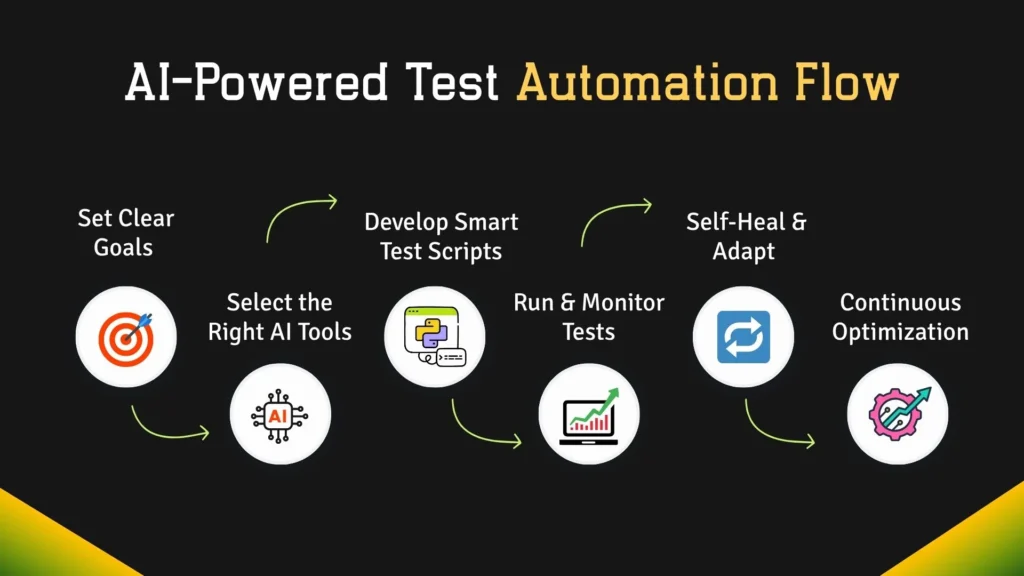
AI automation tools are software solutions that combine artificial intelligence with automated workflows. They can analyze information, recognize patterns, generate responses, classify data, and perform actions automatically.
Traditional automation usually follows fixed rules. AI-powered automation can handle certain tasks that require interpretation or decision-making.
For example, a basic automation could send an email whenever someone fills out a contact form. An AI-powered workflow could analyze the person’s message, identify what they need, create a suitable response, and send the information to the appropriate team.
AI automation can streamline a wide range of business operations.
How AI Automation Works
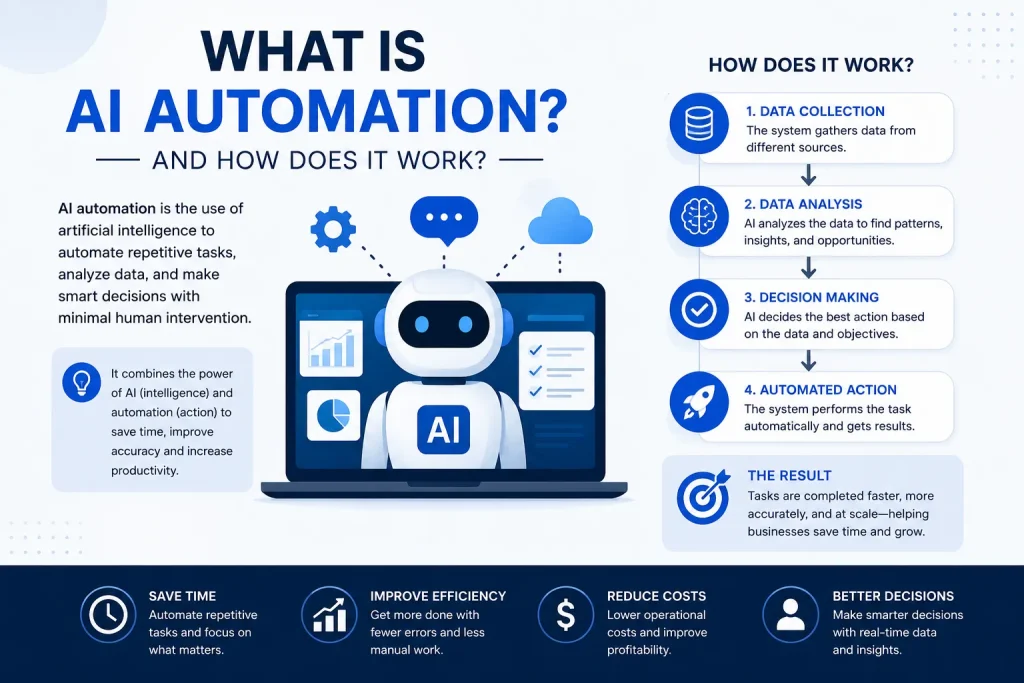
AI automation generally starts with a trigger. A trigger could be a new email, website form submission, customer order, calendar event, or database update.
After the trigger occurs, the automation system processes the information. AI may then analyze the data, summarize it, classify it, or generate new content.
The system can then perform another action automatically. For example, it might update a customer database, send an email, create a task, or notify an employee.
A typical AI automation workflow includes:
- Trigger: An event starts the workflow.
- Data collection: Required information is gathered.
- AI processing: Artificial intelligence analyzes the information.
- Decision: The system determines the next step.
- Action: An automated task is completed.
- Monitoring: The result is recorded or reviewed.
This process can reduce the amount of repetitive work performed manually.
Popular AI Automation Tools
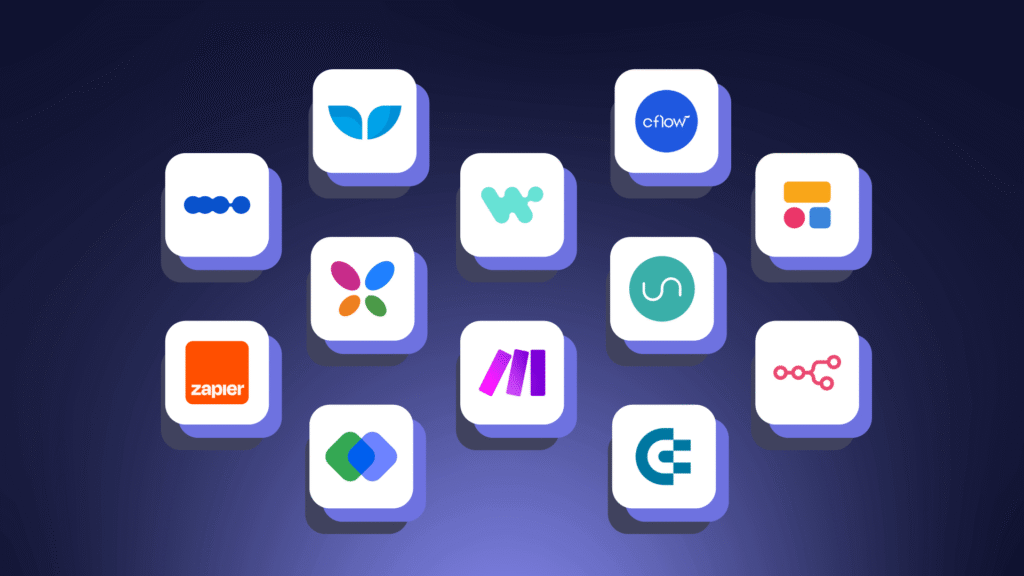
While researching Droven IO AI Automation Tools, users may also want to understand the dedicated platforms available for actual workflow automation.
Zapier
Zapier is a popular automation platform that connects different applications. Users can create workflows that automatically transfer information or perform actions when a specific event occurs.
It can be useful for email marketing, lead management, notifications, customer communication, and administrative work.
Make
Make provides a visual environment for building automated workflows. It allows users to connect applications and create multi-step processes.
Its visual workflow approach can be useful for businesses that need more detailed automation logic.
n8n

n8n is a flexible workflow automation platform that allows users to connect different services and build customized workflows. It can be particularly useful for technical users who need greater control.
UiPath
UiPath focuses heavily on robotic process automation. Organizations can use RPA technology to automate repetitive computer-based tasks and structured business processes.
Microsoft Power Automate
Microsoft Power Automate helps businesses automate workflows between applications and services. It can be especially useful for organizations that already use Microsoft’s business ecosystem.
Benefits of AI Automation Tools
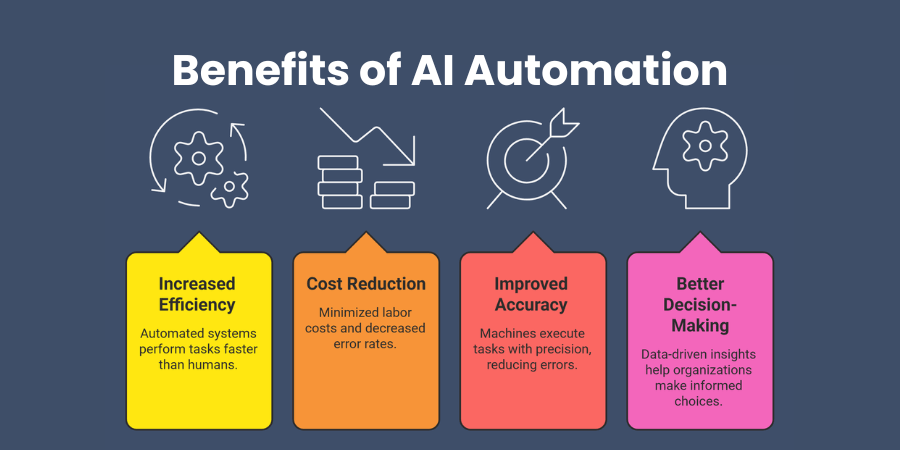
Saves Time
A major benefit of AI automation is that it helps businesses save valuable time. Automated tools can manage routine and repetitive tasks with minimal human input. This allows employees to focus more on strategic planning, creative work, customer engagement, and other important areas that contribute to business growth.
Improves Productivity
Automation can help teams complete more work within the same amount of time.Rather than spending time on repetitive duties, employees can concentrate on tasks that depend on creativity, judgment, and other uniquely human abilities.
Reduces Repetitive Tasks
Data entry, email organization, notifications, and similar activities can become repetitive. Many of these tasks can be completed automatically through automation systems.
Reduces Certain Human Errors
Manual data entry and repetitive processes can sometimes lead to mistakes. Properly configured automation can make these workflows more consistent.
Faster Customer Responses

AI-powered systems can respond to common customer questions quickly. This can enhance the customer experience while also easing the workload of support staff.
AI Automation Use Cases
AI-powered automation has applications in a wide range of industries and business sectors.
Marketing Automation
Marketing teams can automate lead collection, email campaigns, customer segmentation, reporting, and content workflows.
AI can examine customer data to understand individual preferences and support more personalized communication.
Customer Support

AI chatbots can handle common questions and offer initial assistance to customers. When an issue requires deeper attention, it can be escalated to a human support agent.
Sales
Sales teams can automate lead qualification, follow-up reminders, CRM updates, and notifications.
Sales teams can focus more on building relationships and engaging with prospective buyers.
Ecommerce

Online businesses can automate order notifications, customer messages, inventory alerts, and other routine activities.
Content Creation
AI can help with brainstorming, drafting, summarizing, editing, and organizing content. Automation can connect these activities into a larger publishing workflow.
How to Choose the Right AI Automation Tool
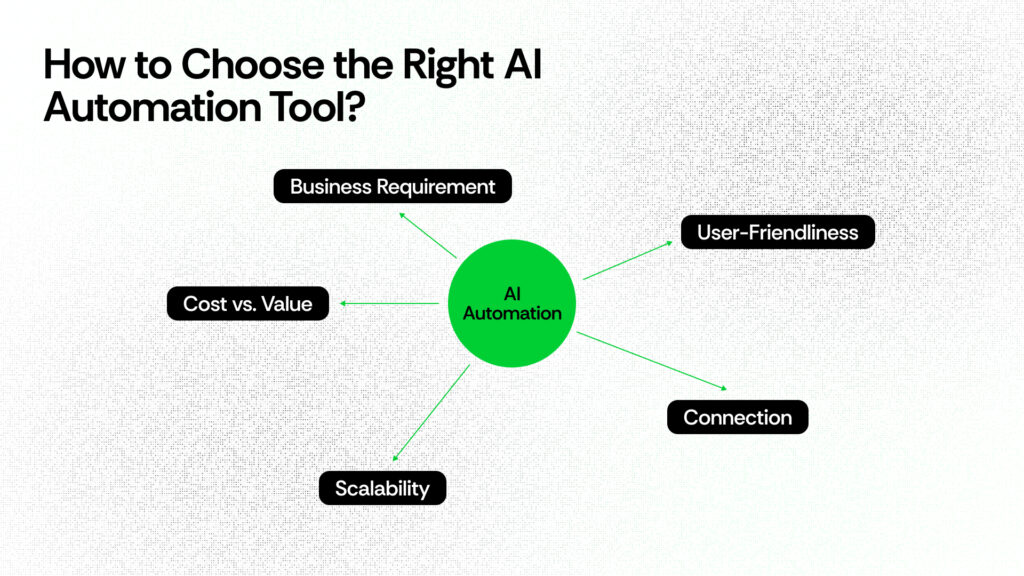
Selecting an automation tool should begin with identifying the task you want to automate.
Start by identifying the routine tasks that take up a significant amount of your time.
Then identify the applications involved in those activities.
After that, compare automation platforms based on their integrations, AI capabilities, pricing, ease of use, security, and scalability.
A freelancer may only need a simple automation tool, while a larger business may require advanced workflow management and administrative controls.
It is also important to test an automation before using it for important business processes.
Challenges of AI Automation
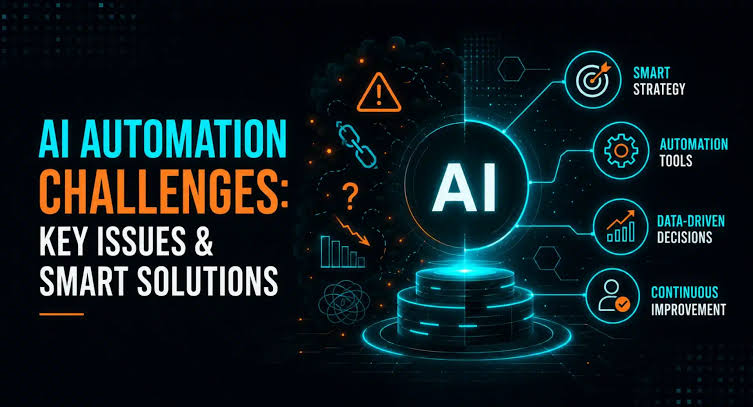
AI automation provides many advantages, but it also has limitations.
AI systems can sometimes misunderstand information or produce inaccurate results. An incorrectly configured workflow can also perform the wrong action.
Security is another important consideration. Businesses should understand how sensitive customer and company information is processed.
Human oversight is especially important when automation is being used for financial, legal, security, or other high-impact activities.
For this reason, organizations should test workflows carefully and regularly monitor their results.
Future of AI Automation

The future of AI automation is expected to become more advanced as artificial intelligence continues to improve.
AI agents may increasingly work with multiple applications and perform longer sequences of tasks. Instead of simply responding to one instruction, future systems may be capable of managing complete workflows within predefined limits.
Businesses may use AI to automate customer communication, data processing, research, reporting, marketing, and internal operations.
However, human involvement will remain important. People will still need to establish goals, review important decisions, manage security, and ensure that automated systems are working correctly.
Conclusion
Droven IO AI Automation Tools is a useful search topic for people interested in artificial intelligence, automation, and modern business technology. It is important, however, to distinguish between information about AI automation and dedicated software that actually executes automated workflows.
AI automation tools can help businesses save time, reduce repetitive work, improve productivity, and manage large amounts of information more efficiently.
Platforms such as Zapier, Make, n8n, UiPath, and Microsoft Power Automate represent different approaches to workflow and business automation.
The best strategy is to identify a specific repetitive task, choose a suitable platform, create a simple workflow, test it carefully, and then expand automation gradually. When implemented responsibly, AI automation can become a valuable part of a modern digital workflow.
FAQs
What are Droven IO AI Automation Tools?
The term generally refers to AI automation technologies and tools discussed in connection with Droven.io and related technology topics. It should not automatically be treated as the name of one specific automation software.
Is Droven.io an AI automation software?
Droven.io is generally associated with technology and informational content rather than being clearly established as a conventional workflow automation SaaS platform.
What are AI automation tools used for?
AI automation tools can be used for marketing, customer support, sales, data processing, content workflows, email management, ecommerce operations, and many other repetitive tasks.
Can AI automation save time?
Yes. AI automation can perform many repetitive processes automatically, allowing people to spend more time on important and creative responsibilities.
Which AI automation tool is best for beginners?
The best choice depends on the user’s requirements. Visual platforms such as Zapier and Make can be suitable for users who want to create workflows without extensive programming knowledge.
Is AI automation safe?
AI automation can be safe when workflows are properly designed, tested, monitored, and protected. Businesses should pay particular attention to permissions, privacy, and sensitive information.
Will AI automation replace human workers?
AI automation may reduce some repetitive tasks, but human judgment, creativity, communication, and decision-making remain important. In many situations, AI works best as a tool that supports people rather than completely replacing them.