
Introduction

Artificial intelligence is changing the way people complete everyday tasks. From writing emails to managing customer information, modern technology can now handle many repetitive activities with little human effort. AI automation tools combine artificial intelligence with automation features to help individuals and businesses work faster and more efficiently.
Instead of performing the same task manually again and again, users can create automated workflows that allow software to complete specific actions automatically. This can save time, reduce repetitive work, and allow people to concentrate on more important responsibilities.
AI automation is useful for freelancers, marketers, content creators, online businesses, developers, and large organizations. As these tools continue to improve, they are becoming an important part of modern digital workflows.
What Are AI Automation Tools?
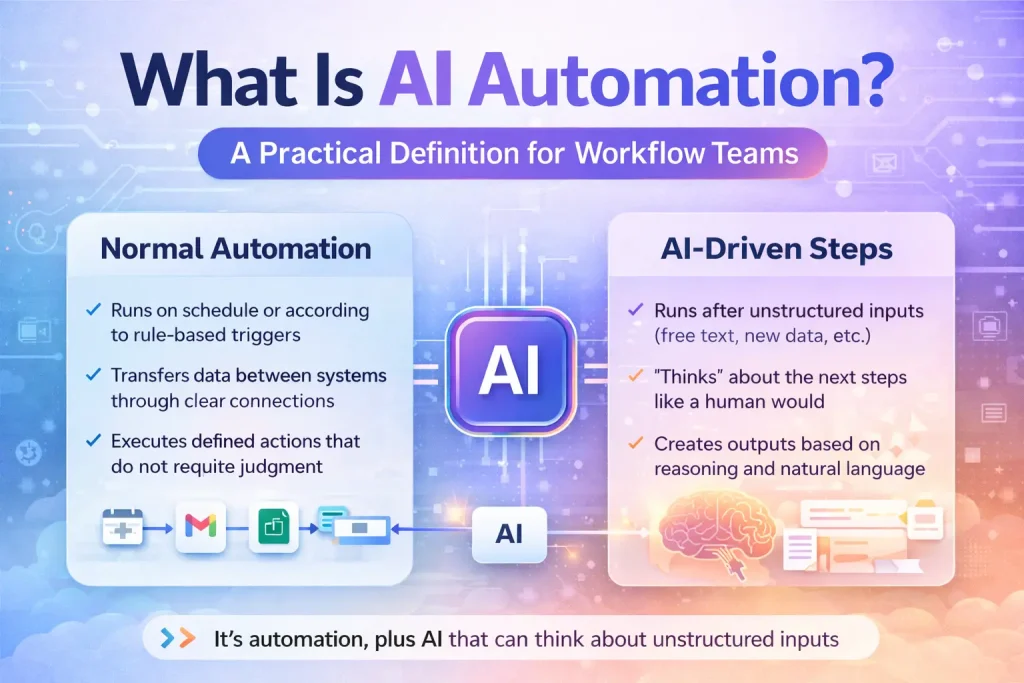
AI automation tools are software platforms that use artificial intelligence to perform tasks or manage workflows automatically. Traditional automation usually follows fixed instructions, while AI-powered automation can understand information, recognize patterns, generate content, and make decisions based on available data.
For example, a traditional automation system may send the same email whenever someone fills out a form. An AI-powered system can analyze the customer’s message and create a more relevant response before sending it.
These tools can connect different applications and create workflows between them. This makes it possible to automate tasks across email platforms, spreadsheets, customer relationship systems, websites, communication applications, and other digital services.
Why Are AI Automation Tools Important?
Businesses and individuals deal with many repetitive tasks every day. Manually completing these activities can consume valuable time and increase the possibility of mistakes.
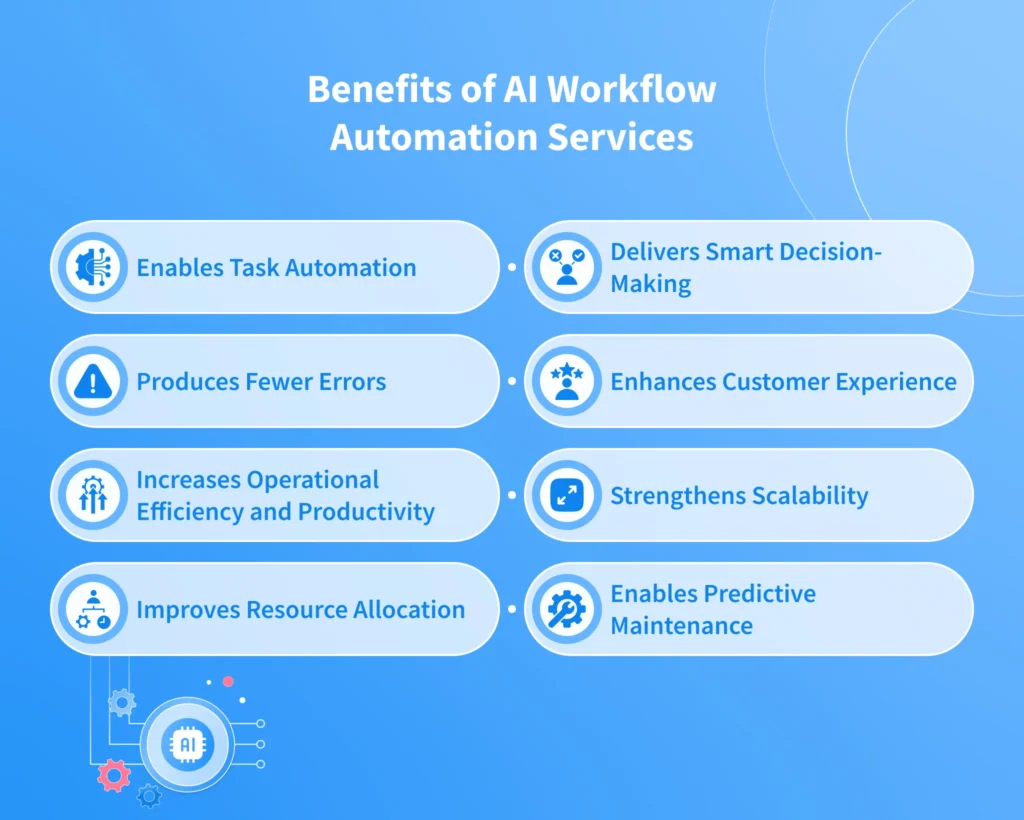
AI automation tools help solve this problem by handling routine processes automatically. Employees can spend less time on repetitive activities and more time on creative thinking, planning, customer service, and strategic work.
Another major advantage is consistency. Once an automation workflow is correctly configured, it can perform the same process repeatedly without requiring someone to remember every step.
Automation can also help small businesses compete more effectively because they can accomplish more work without continuously increasing their workload.
Best Uses of AI Automation Tools
1. Email Automation

Email management is one of the easiest areas to automate. AI tools can help organize incoming messages, identify important emails, generate responses, and create follow-up reminders.
For businesses, automated email workflows can also be used for customer communication, newsletters, appointment reminders, and marketing campaigns.
2. Content Creation
Content creators can use AI automation to speed up research, writing, editing, and publishing processes. AI can generate initial ideas, create drafts, summarize information, and assist with social media content.
However, human review remains important. Automatically generated content should be checked for accuracy, originality, and usefulness before publication.
3. Social Media Management

Managing several social media accounts can take a considerable amount of time. AI automation can help prepare posts, organize content calendars, generate captions, and schedule publications.
Some systems can also analyze engagement data and provide suggestions about content performance.
4. Customer Support
AI-powered automation can assist customer service teams by answering common questions and directing complex issues to human representatives.
Chatbots can provide quick responses at any time of day. When a problem requires human attention, the system can transfer the conversation to the appropriate employee.
This can improve response times while reducing the number of repetitive questions handled manually.
5. Lead Management
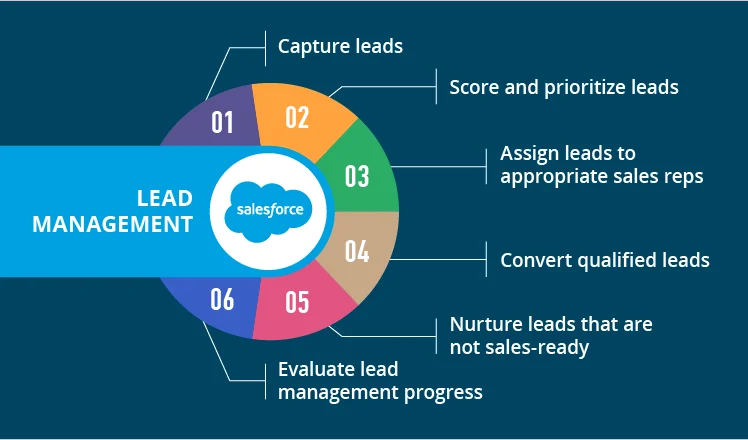
Businesses often receive potential customers through websites, advertisements, social media, and other channels. AI automation can collect these leads and organize their information automatically.
A workflow may add a new lead to a database, send a welcome email, assign the lead to a salesperson, and create a follow-up task.
This reduces the chance of losing valuable prospects because of delayed manual processing.
Popular AI Automation Platforms
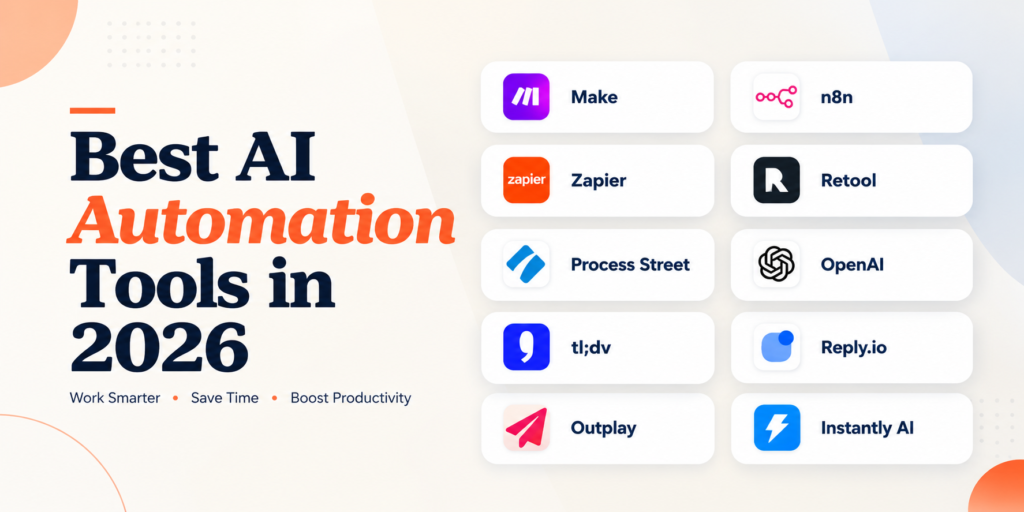
Several platforms are available for creating automated workflows. The best choice depends on the user’s requirements, technical knowledge, budget, and existing software.
Some automation platforms allow users to connect different applications without writing complicated code. Others provide more advanced workflow-building features for businesses and technical teams.
When selecting an automation platform, users should consider the number of integrations, AI capabilities, pricing, ease of use, security features, and scalability.
A simple platform may be suitable for a freelancer, while a growing company may need advanced workflow management and stronger administrative controls.
Benefits of AI Automation
Saves Time
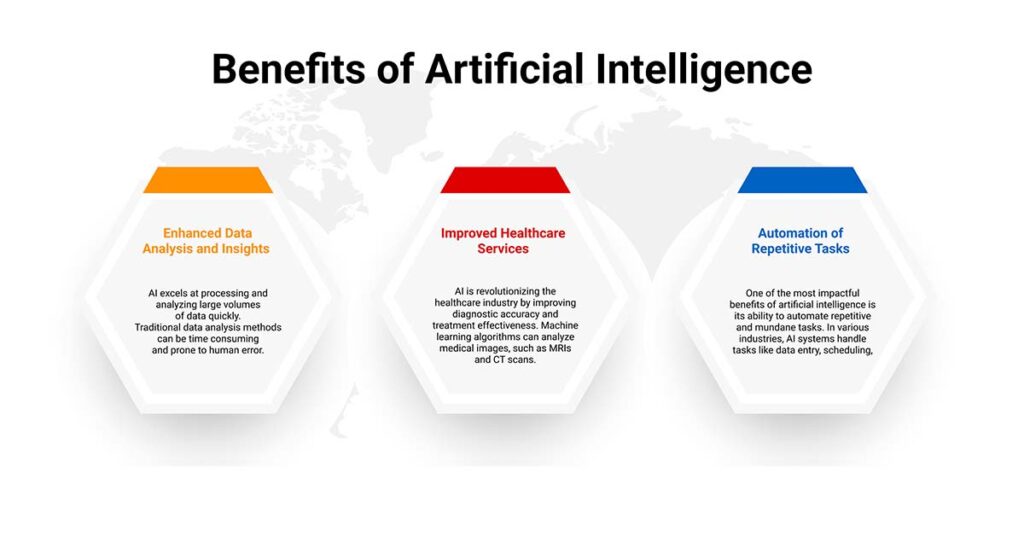
The biggest benefit is time savings. Automated systems can handle repetitive tasks quickly without requiring constant human involvement.
Reduces Manual Errors
People can make mistakes when repeatedly entering information or following long processes. Automation can reduce these errors when workflows are configured correctly.
Improves Productivity
Employees can spend more time on meaningful activities instead of routine administrative work.
Supports Business Growth

Automation allows businesses to handle increasing workloads more efficiently. A company can process more customer requests, leads, and internal tasks without increasing every manual responsibility.
Provides Faster Responses
AI systems can operate continuously, allowing businesses to respond to customers and process information outside normal working hours.
How to Choose the Right AI Automation Tool
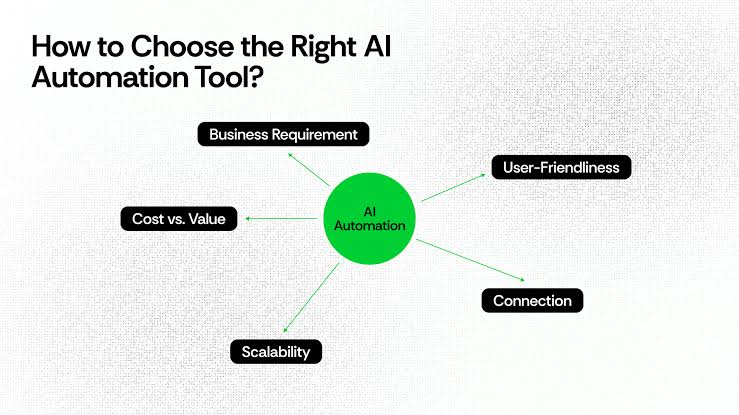
Choosing the right tool should begin with identifying the problem you want to solve. Do not select software simply because it has many AI features.
First, list the repetitive tasks that consume the most time. Then determine which applications are involved in those processes.
Next, check whether the automation platform supports the required integrations. Pricing should also be considered, especially for small businesses and freelancers.
Security is another important factor. Businesses should understand how sensitive information is processed, stored, and shared.
Finally, choose a tool that matches your technical skills. A powerful platform can become difficult to use if its workflow system is unnecessarily complicated for your needs.
AI Automation for Small Businesses
Small businesses can benefit significantly from automation because they often operate with limited staff and resources.
For example, a small online store can automate order notifications, customer emails, lead collection, and basic support requests. A marketing agency can automate reporting, client notifications, and content workflows.
Freelancers can also use automation to manage invoices, client onboarding, project notifications, and repetitive administrative tasks.
The goal is not to automate everything. Instead, businesses should automate repetitive processes while keeping humans involved in tasks that require judgment, creativity, and personal communication.
Challenges of AI Automation

Although automation provides many advantages, it also has limitations. AI systems can sometimes produce incorrect information or misunderstand unusual requests.
Poorly designed workflows can also create problems. For example, an automation may send the wrong message if its conditions are not configured correctly.
Privacy and security should also be taken seriously when automation involves customer or business data.
For these reasons, important workflows should be tested before they are used at scale. Regular monitoring can help identify problems and improve performance.
Future of AI Automation

AI automation is expected to become more common as artificial intelligence continues to improve. Future systems may be able to manage increasingly complex workflows with less human configuration.
Businesses may use AI agents to coordinate multiple applications, analyze information, complete routine decisions, and communicate with customers.
However, human involvement will remain important. Organizations will still need people to define goals, review important decisions, maintain security, and ensure that automation supports business objectives.
Conclusion
AI automation tools are becoming valuable solutions for individuals and businesses that want to reduce repetitive work and improve productivity. They can assist with email management, content creation, customer support, social media, lead management, and many other processes.
The best approach is to identify repetitive tasks first and then select a tool that fits the workflow, budget, technical requirements, and security needs.
AI automation does not simply mean replacing human work. When used correctly, it can remove unnecessary repetitive tasks and give people more time to focus on creative, strategic, and valuable activities.
FAQs
What are AI automation tools?
AI automation tools are software applications that use artificial intelligence to perform tasks, analyze information, generate content, or manage workflows automatically.
Are AI automation tools useful for small businesses?
Yes. Small businesses can use them to automate customer communication, lead management, marketing tasks, administrative processes, and other repetitive activities.
Can AI automation save time?
Yes. Automation can handle repetitive processes automatically, allowing users to spend more time on important and creative tasks.
Are AI automation tools difficult to use?
Some advanced platforms require technical knowledge, but many modern tools provide visual workflow builders that beginners can use without programming.
Can AI automation replace employees?
AI automation can reduce certain repetitive tasks, but it does not eliminate the need for human judgment, creativity, decision-making, and relationship building.
How should I choose an AI automation tool?
Consider your specific task, required integrations, ease of use, pricing, AI capabilities, security, and ability to scale with your future needs.